Serving Jacksonville, NC & nearby
(910) 445-2641
Jacksonville, NC

What That Grinding or Popping Sound Actually Means

What a grinding, popping, or grinding opener really means on a Jacksonville house built 1980-2013, and when that sound is worth a call versus a weekend wait.

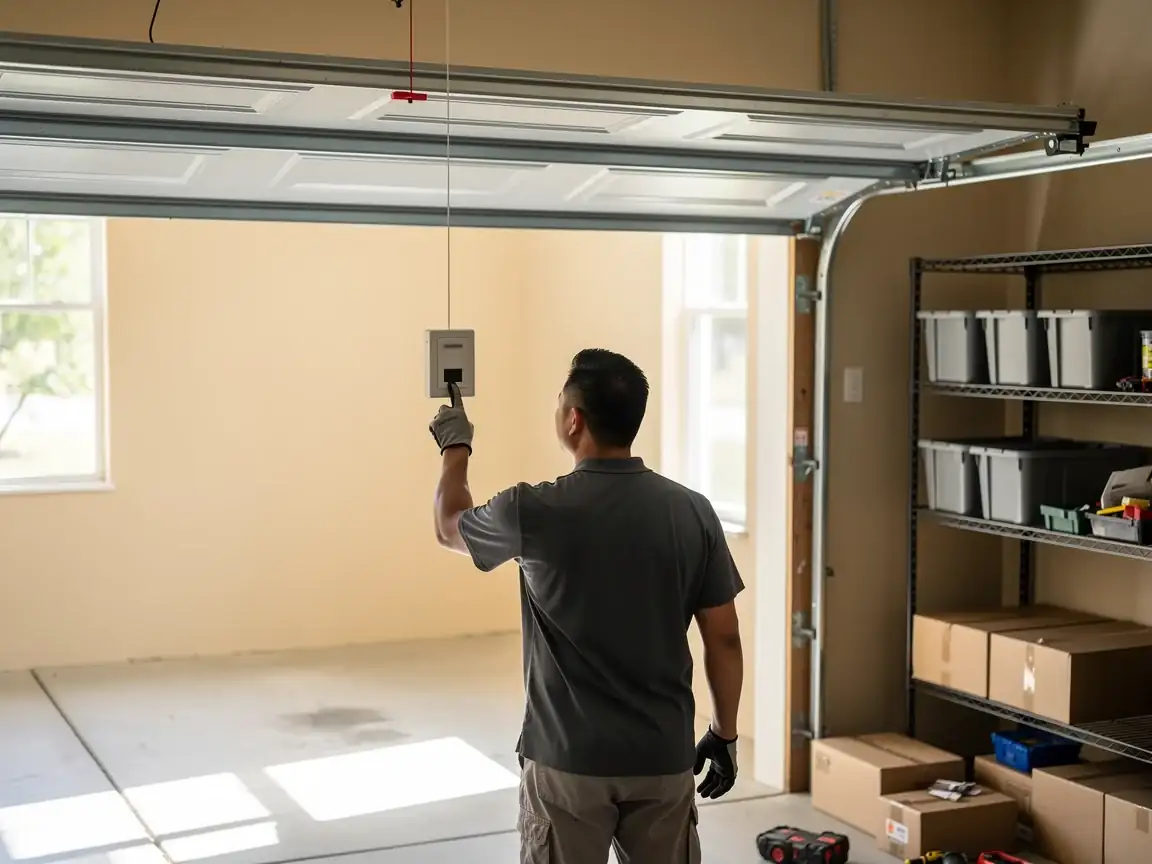
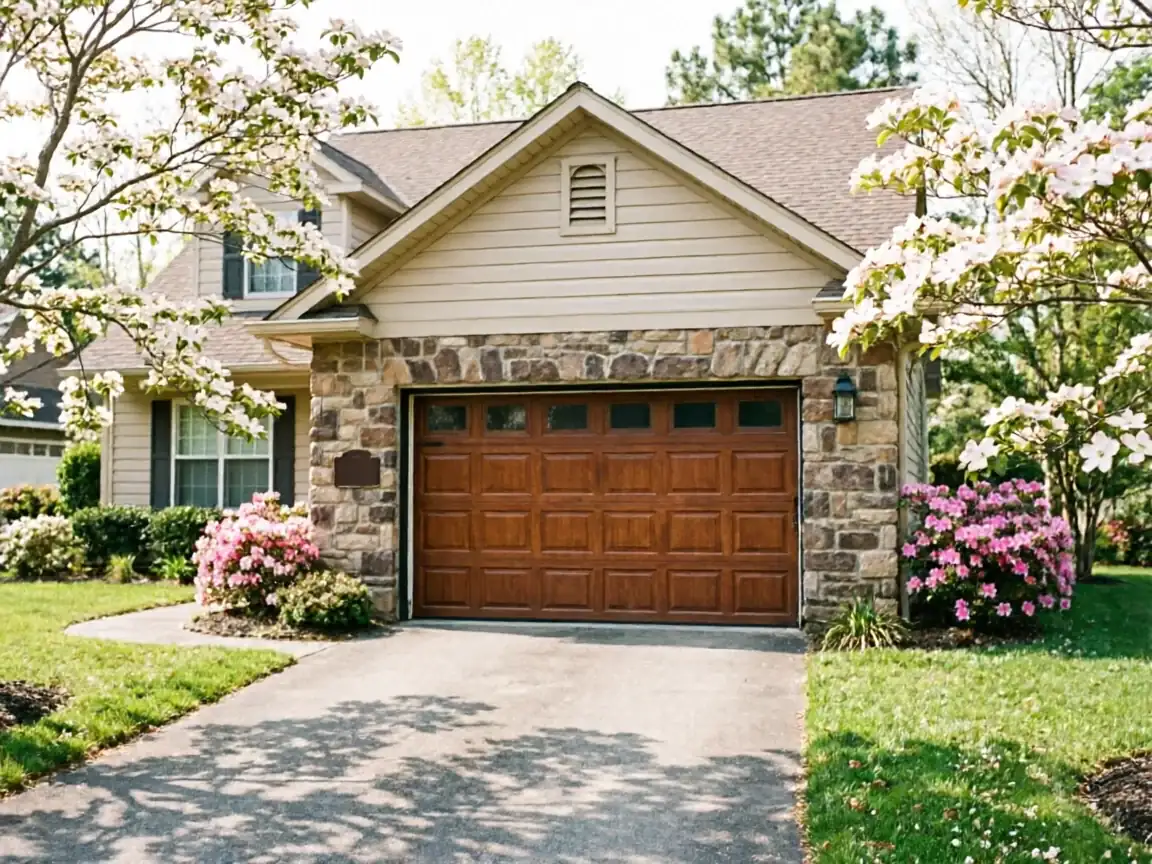
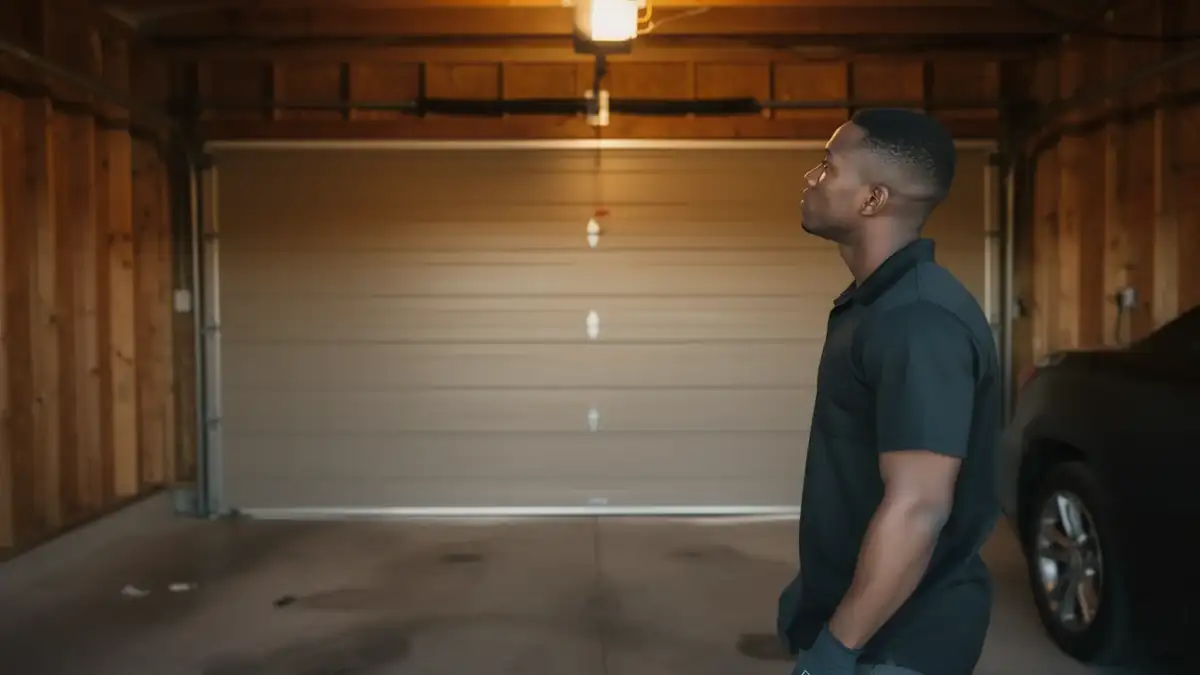
A technician in a black shirt looks up at a closed garage door.

What It Costs

We don't post a price list here, because what a noise costs to fix depends on what's actually making it - a bent roller is a different job than a torsion spring that's lost half its coils, and the opener itself is a third category entirely. What we can tell you is what drives the number: whether the part is still made for your door's era, whether the spring is a standard size or something a 1990s builder special-ordered, and how many trips the job takes. Houses in this area built between 1980 and 2013 mostly carry torsion hardware that's still common, which keeps parts on the truck instead of on backorder. The exception is original openers from the earlier end of that build window - chain-drive units from the late 80s sometimes need a part nobody stocks locally anymore, and that's the one case where we tell a homeowner straight that replacement beats repair on cost and wait time. Ask for a number on the phone before we come out; we'll give you a range once we know the door, not before.

The Situation

Across the eleven named areas this shop covers, the housing stock skews heavily to the 1980s and 90s, with the overall range running 1980 to 2013 and a median build year of 1993. That matters for noise because torsion springs are rated for a number of cycles, not a number of years, and a door original to a 1990s build has usually put in more open-and-close cycles than its springs were sized for. The sound you hear - a rhythmic thump on the way up, a sharp pop followed by the door going dead - is usually the spring telling you it's near the end, not the opener. Across the roughly 16,650 households and 12,123 owner-occupied houses in the wider service area, that same pattern repeats: original hardware aging out around the same time, because the houses went up around the same time. A noise that started suddenly and gets worse each day is not the same situation as one that's been there for months and hasn't changed.

When Waiting Is Fine

Not every sound is a call-today sound. A single squeak on an otherwise smooth cycle, especially right after a cold snap, is often just dry rollers or a track that needs a wipe-down - that's a Saturday job, not an emergency. If the door still opens and closes evenly, holds its position, and the noise doesn't change week to week, you've got time to watch it rather than drop everything. Where we'd tell you to stop waiting: a noise that's gotten louder over a week, a door that's started drifting or opening unevenly on one side, or any sound that coincides with the door hesitating partway through its travel. That combination usually means a spring or cable is losing tension, and those don't get better on their own - they let go, usually without much warning. Given the median household income of $65,179 across this service area, most homeowners we talk to would rather spend on a planned repair than an emergency call, which is the right instinct. Waiting on a quiet, consistent door costs nothing. Waiting on one that's changing costs you the choice of when to fix it.
How Local Conditions Play In

This area sits in a cold-moderate climate band - not the deep freeze-thaw cycling you'd get further inland, but enough winter temperature swing to change how steel hardware behaves. Torsion springs and steel tracks contract slightly in cold weather, which tightens clearances that were set when it was 70 degrees out. On a door that's already marginal - worn rollers, a spring near its cycle limit - that tightening is often what turns a quiet problem into an audible one. We see it most on houses in the 1980s-90s stock that makes up most of this area, where original hardware is now dealing with three-plus decades of that seasonal swing. It's also why a noise that shows up specifically in the first cold stretch of the year, then seems to ease up once things warm, is worth a look rather than a shrug - it's telling you the margin on that hardware is thinner than it used to be, even if the door still technically works.

How it works

From “it’s stuck” to “it’s fixed”

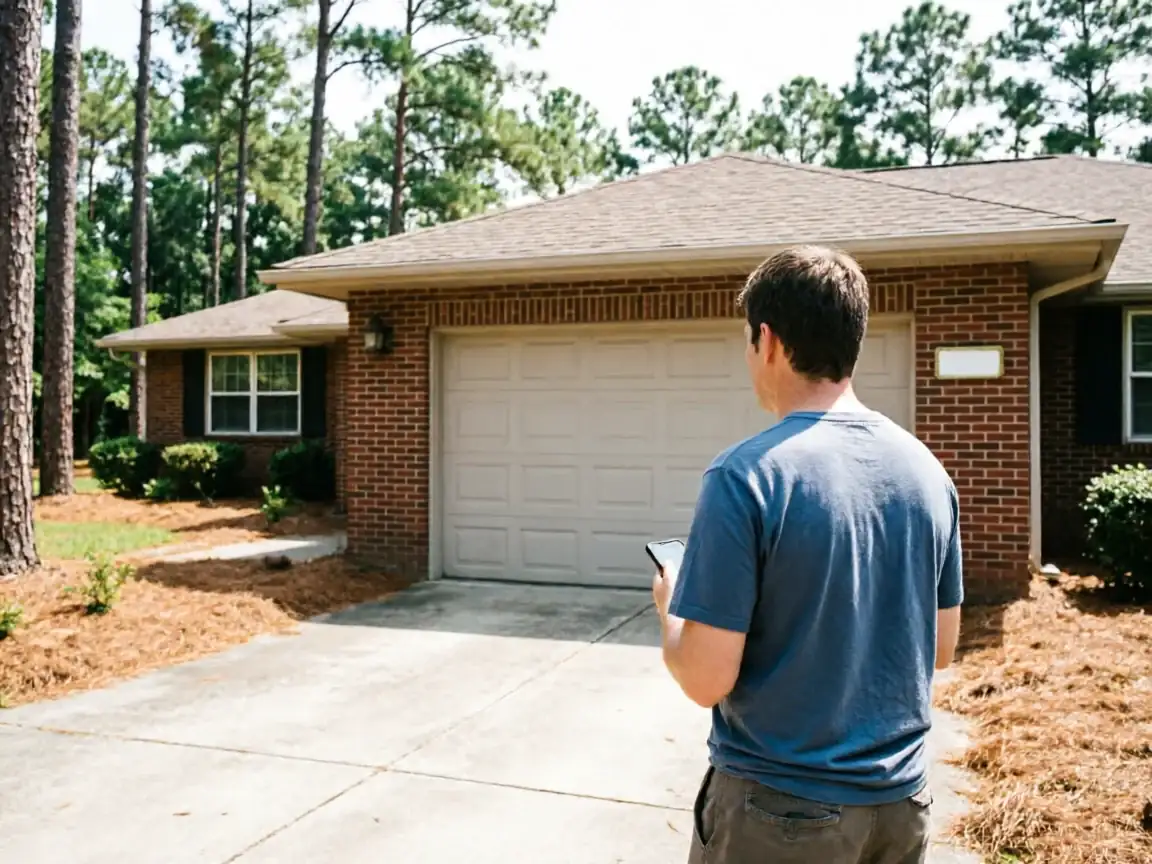
A man stands in a driveway looking at a phone in front of a brick house.

Tell us what’s wrong

Describe the symptom - won’t open, loud bang, opener runs but the door won’t move.

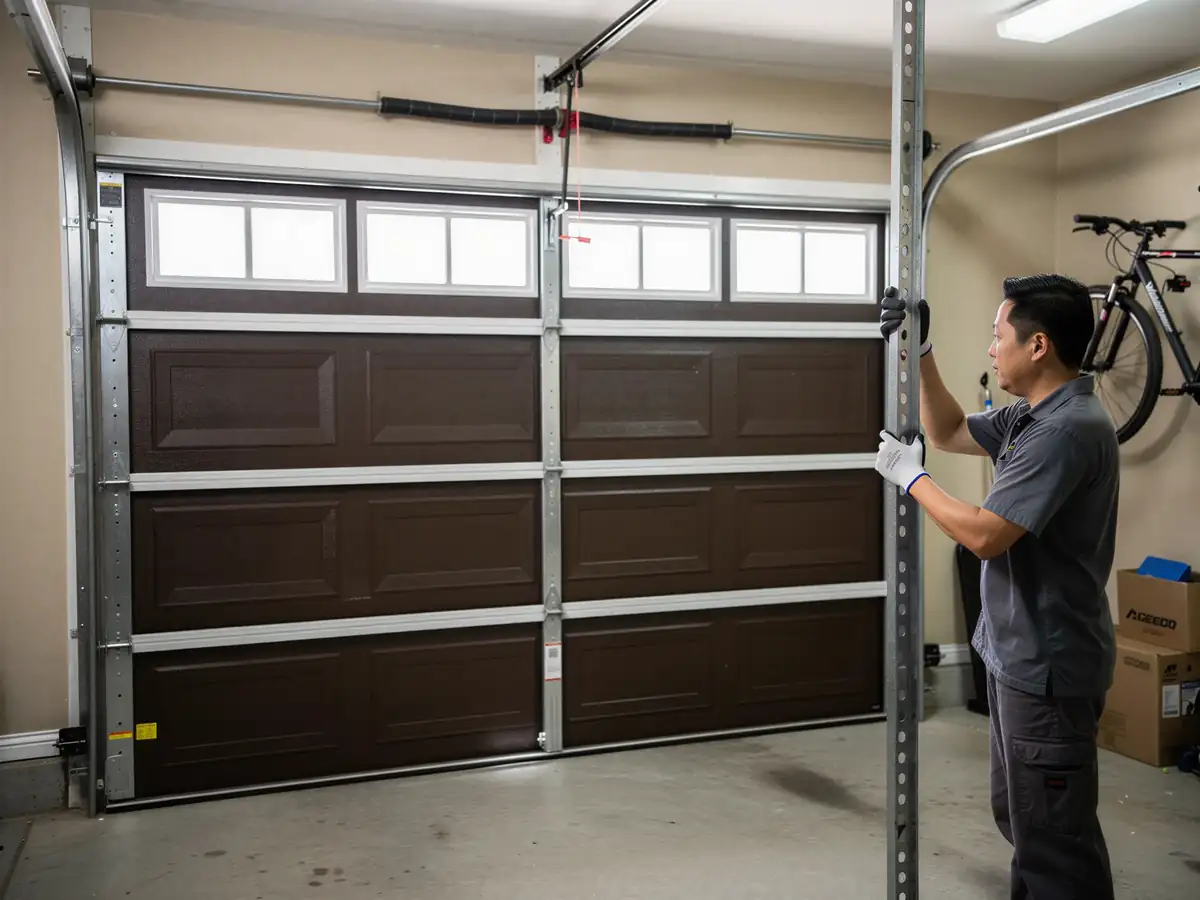
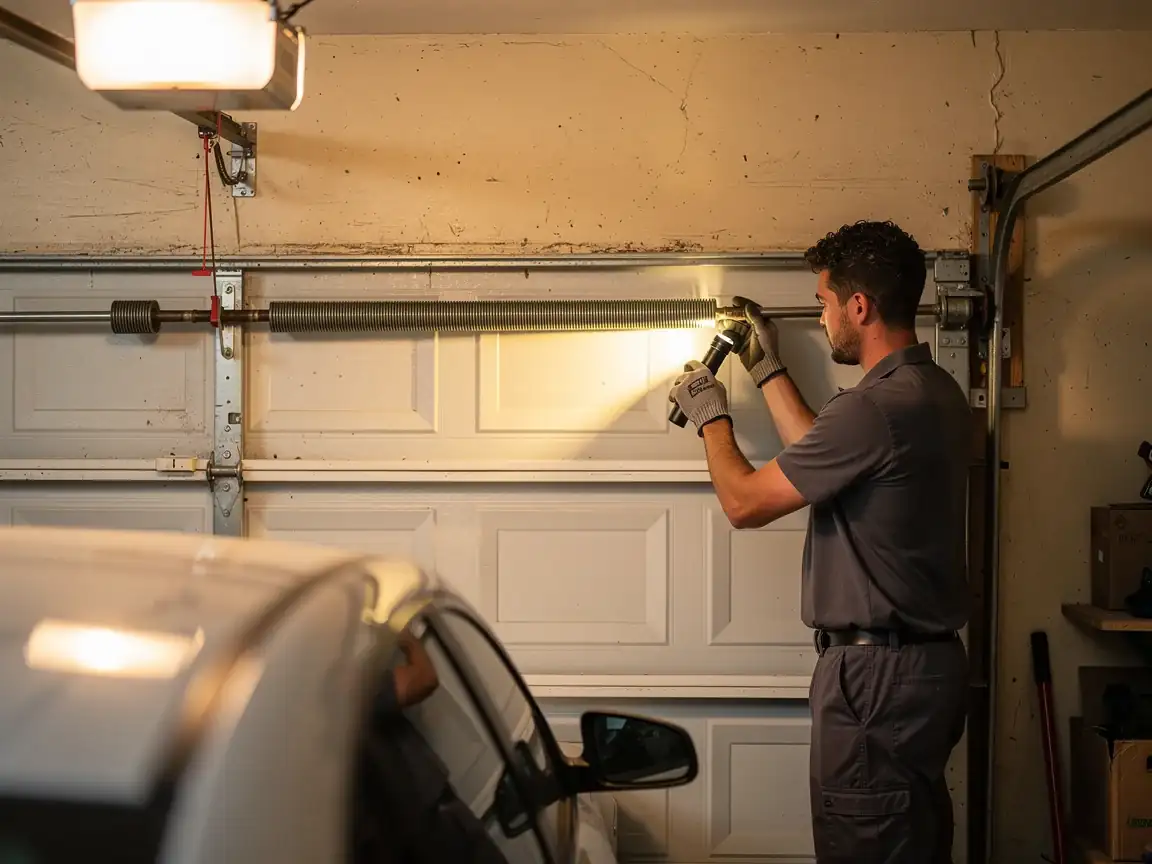
A technician inspects a garage door torsion spring with a flashlight.

On-site diagnosis

A technician tests the door under power and by hand and finds what actually failed.

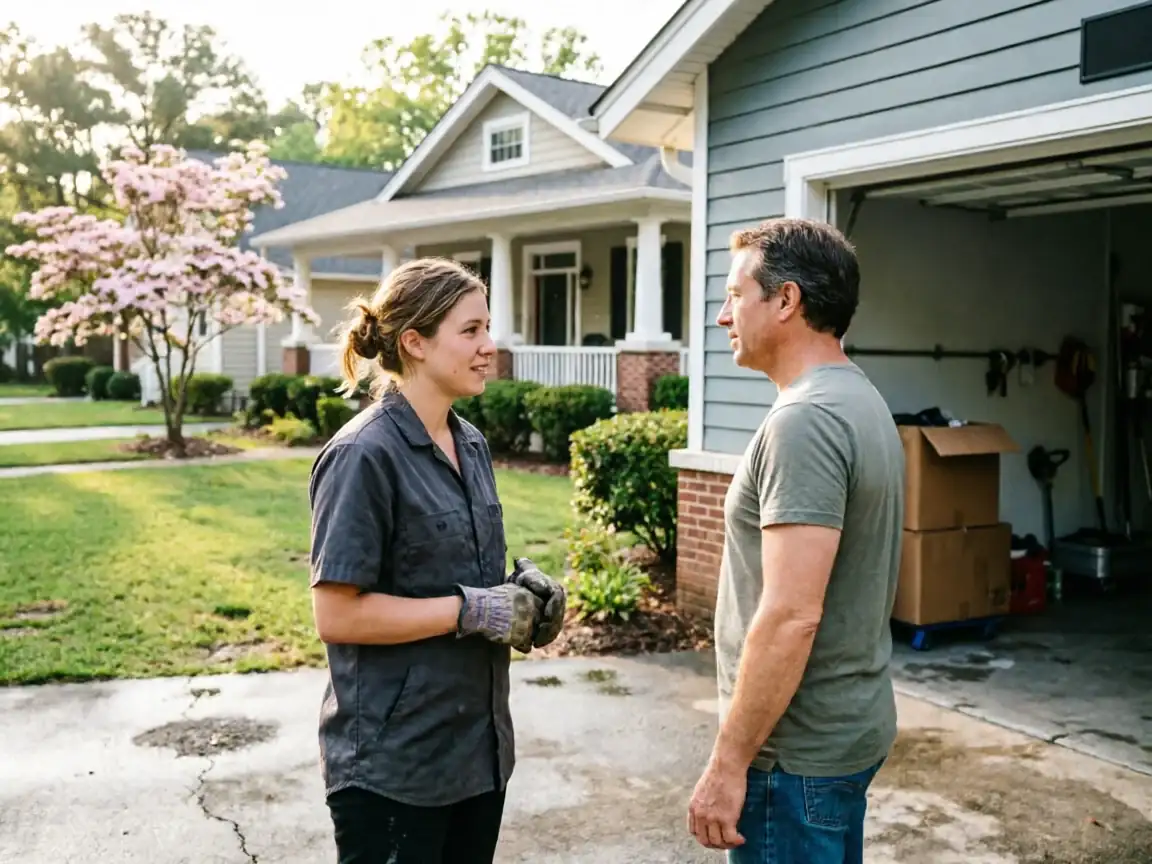
A technician in work gloves talks to a man in front of a house with an open garage.

Clear, up-front plan

You get the fix that’s needed and what drives the cost - before any work starts.

A technician presses a button on a garage door opener control panel.

Repaired & tested

The repair is done, the door is set true and tested, and the work area left clean.

Not sure which repair your door needs in Jacksonville, NC? Describe what it’s doing - every job starts with a diagnosis.

How we work

What to expect

Diagnosis firstEvery visit starts by finding what actually failed - not a pre-written parts list.
The right part for the doorSprings and openers matched to the door’s weight and age, so the fix holds up.
Straight answersWhen a repair makes more sense than a replacement - or the reverse - you hear it plainly.
Clean, careful workTension released safely, hardware set true, the door tested under power before we leave.
What we do

Garage Door Services

Repair and installation work for Jacksonville homes and businesses.

Questions

Frequently asked

Straight answers about garage door repair in Jacksonville. Still unsure? Ask us directly.

My door makes a popping sound only in the morning. Is that serious?

Usually it means a spring or hinge is tight from overnight cold and loosening up as the day warms - common in this climate band. If it only happens in cold weather and the door still runs smooth by afternoon, it's worth watching rather than an emergency call. If it starts happening all day, that's a different story.

How old does a door have to be before noise means replace, not repair?

Age alone doesn't decide it - cycle count and part availability do. A lot of houses here were built in the 1980s and 90s, and most of that original torsion hardware is still a common size we can repair. The harder calls are early chain-drive openers from that same era, where parts can be the deciding factor.

Can I just oil the noisy parts myself?

For rollers, hinges, and track, yes - a light coat of garage-door-specific lubricant twice a year is good practice and won't hurt anything. Don't touch the torsion spring itself; that's under heavy tension and not a DIY lubrication job.

Ready to get your garage door sorted?

Tell us what it’s doing and where you are in Jacksonville - we’ll take it from there.

Request a QuoteCall