The Usual Work Here
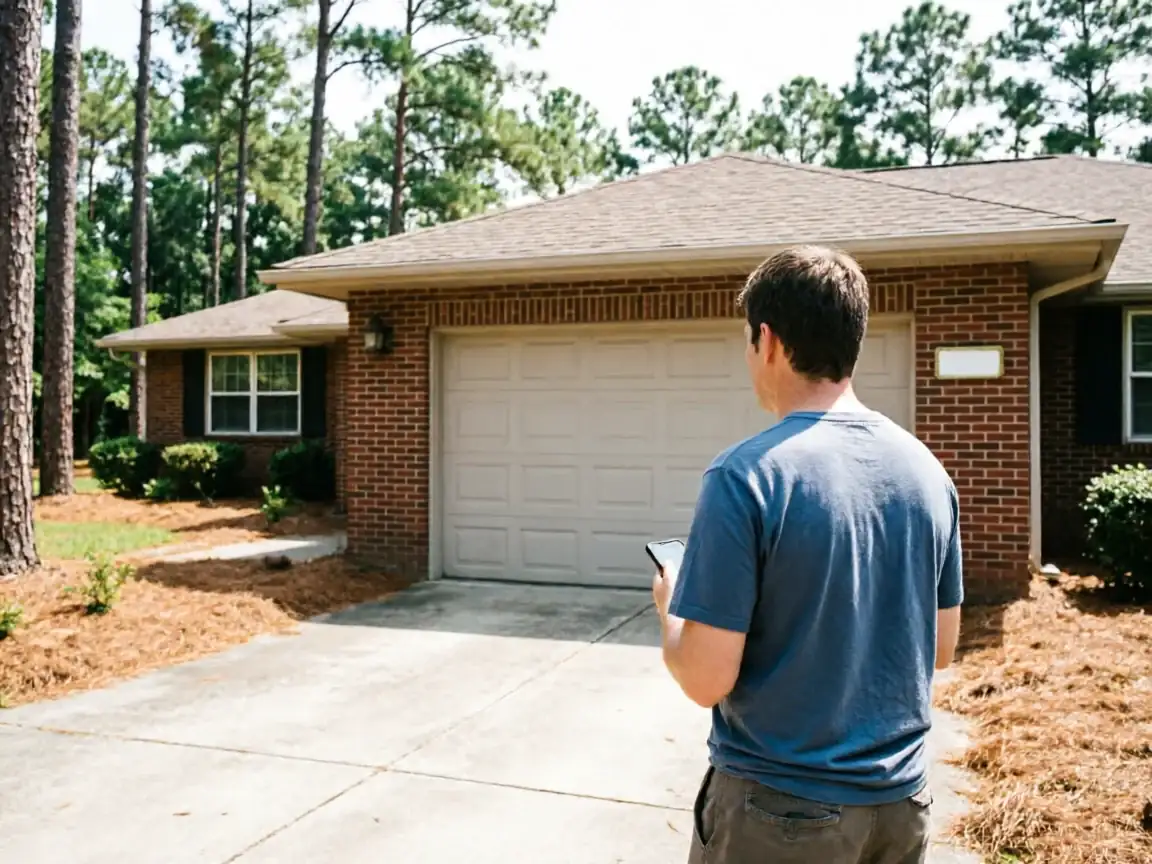
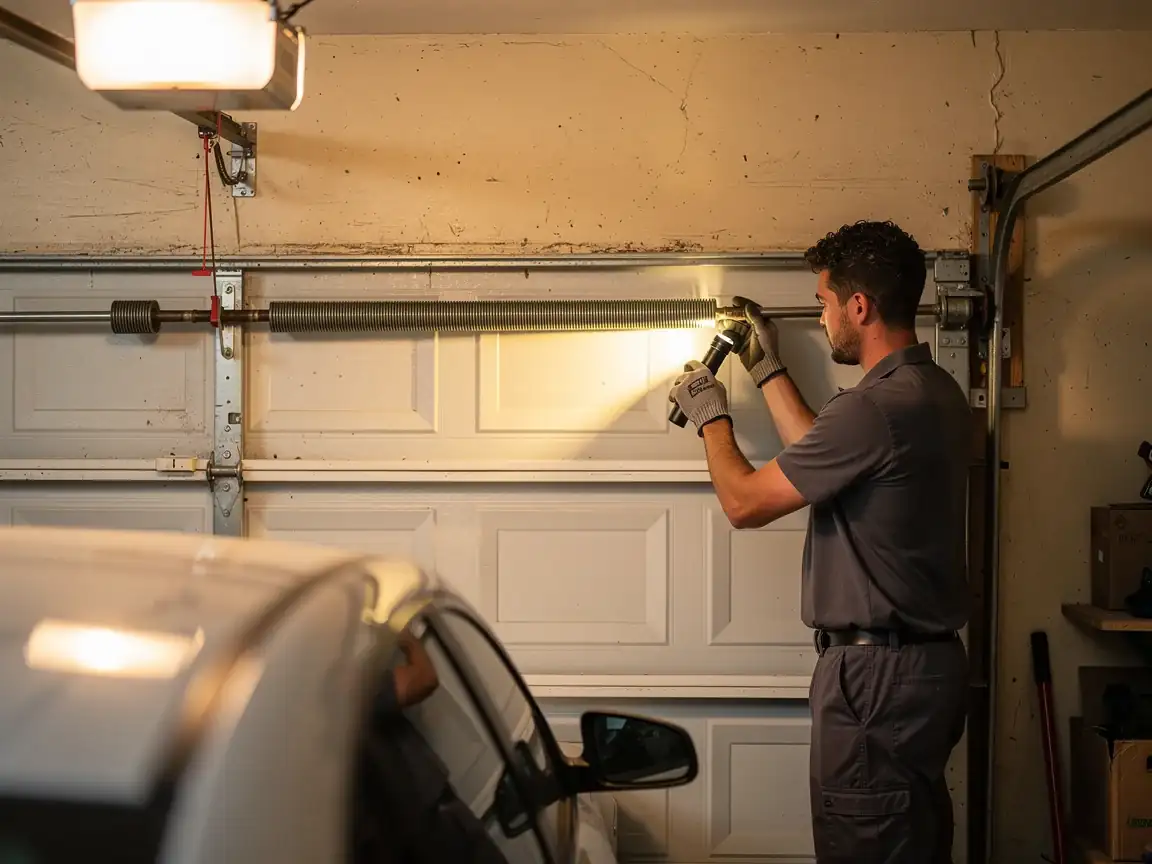
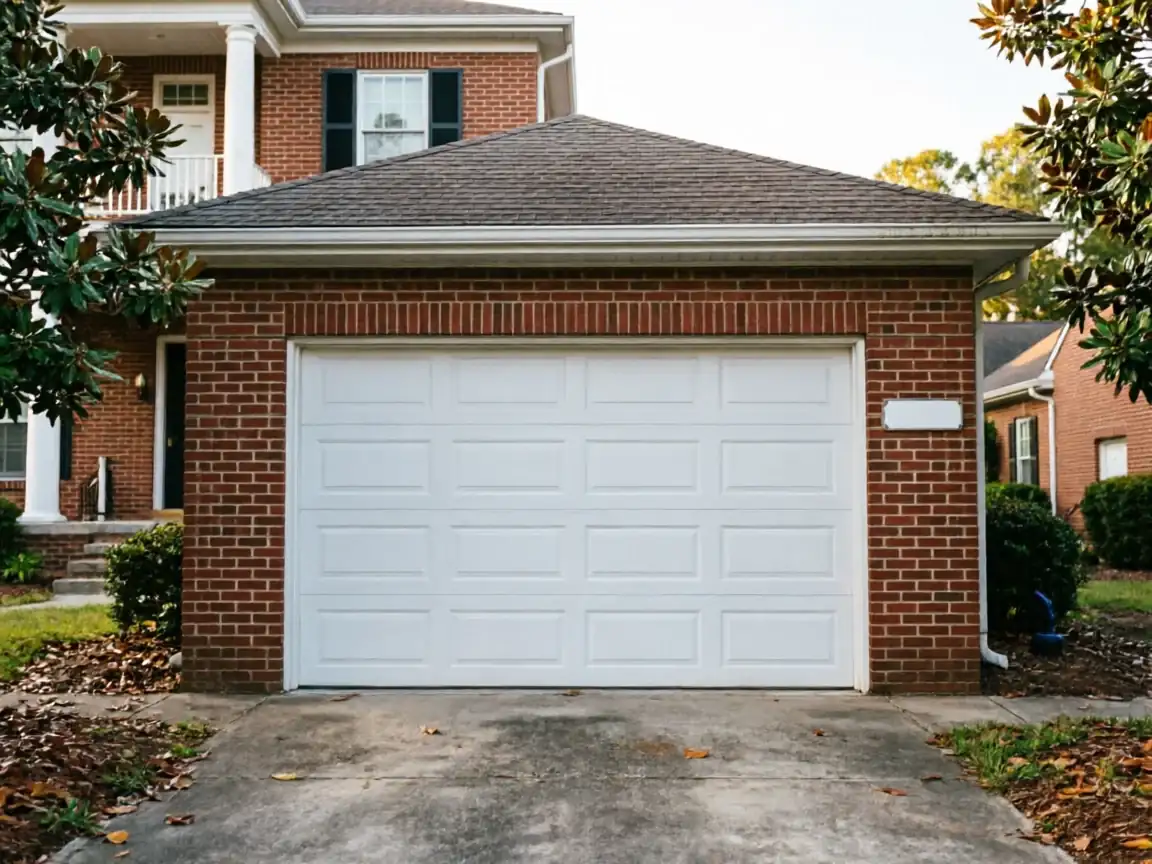
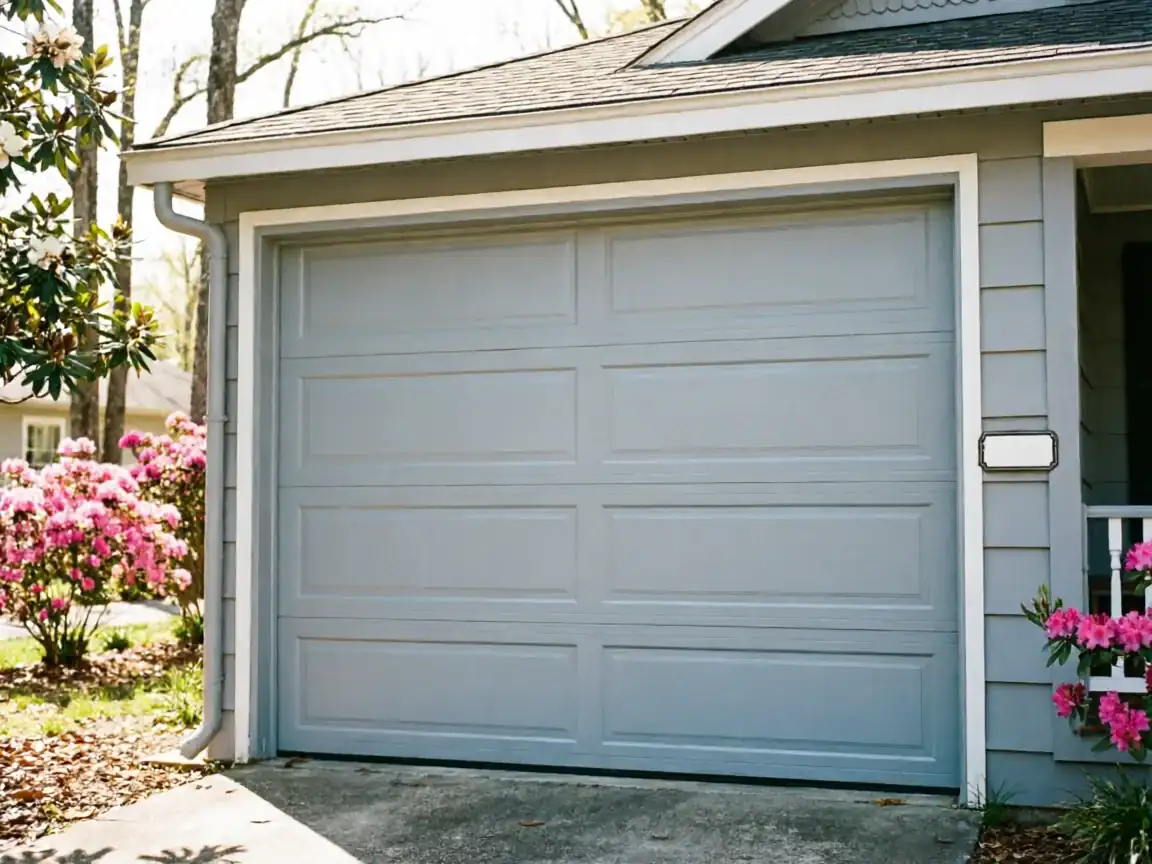
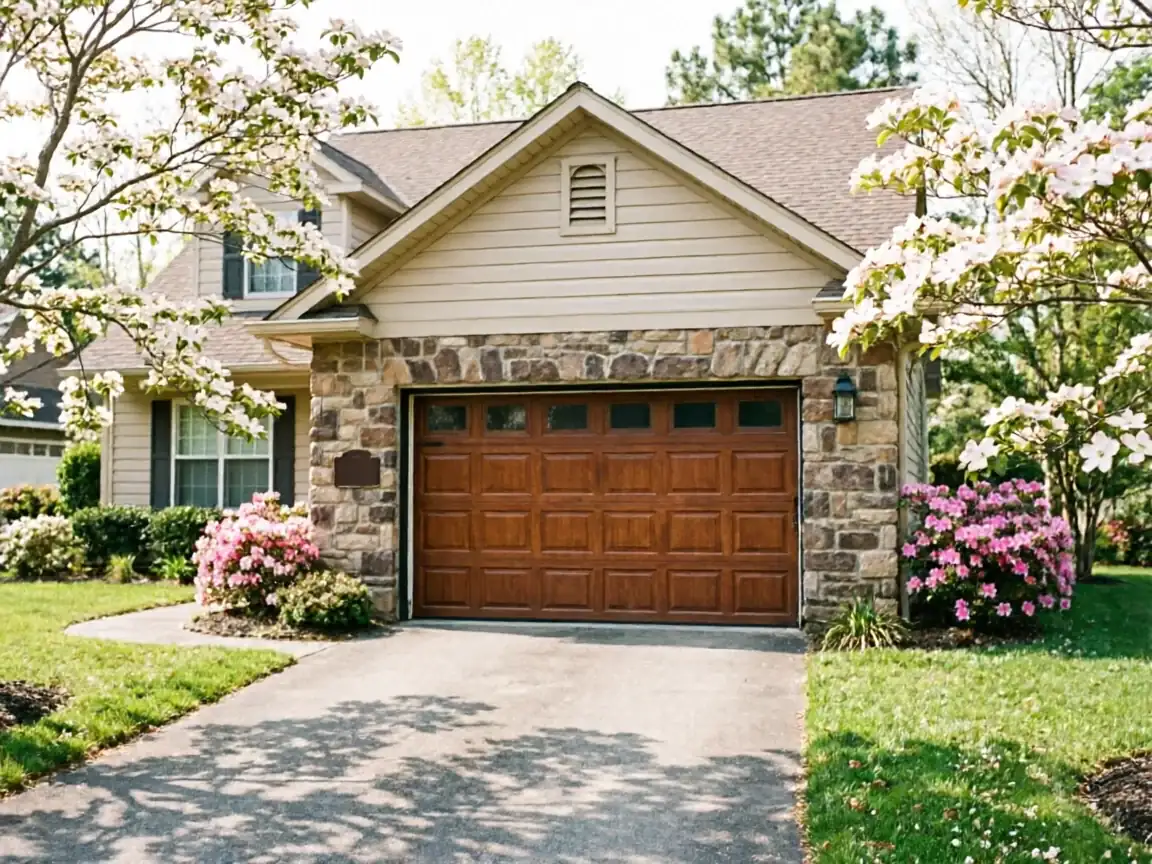
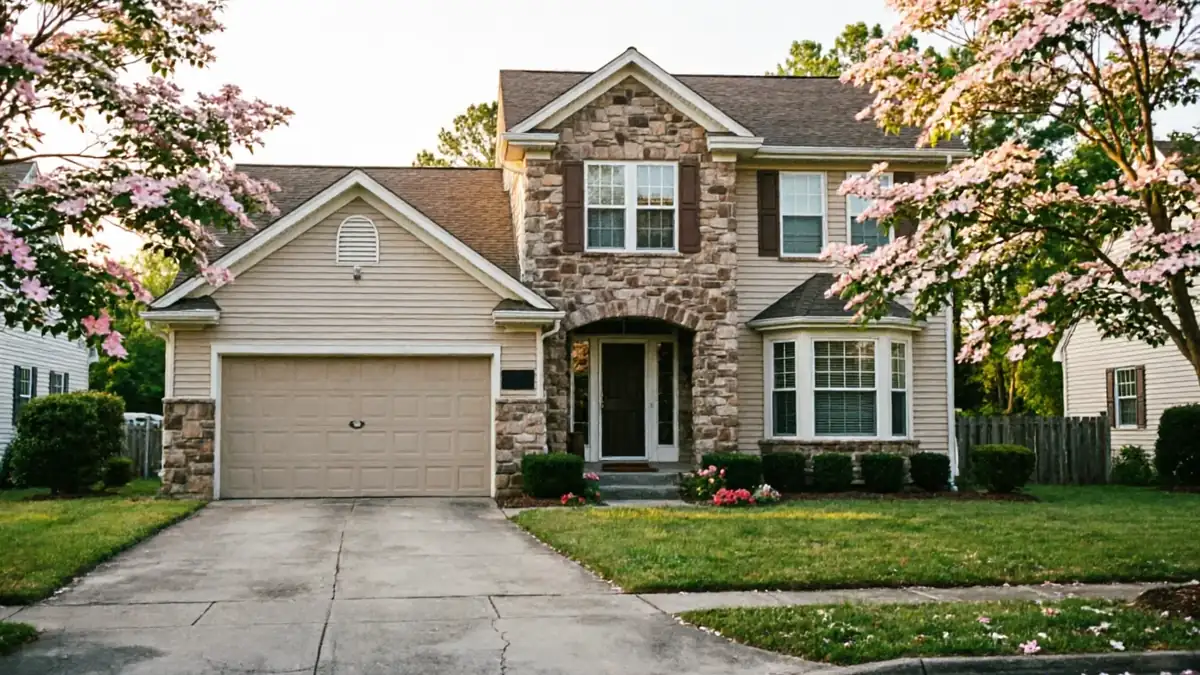
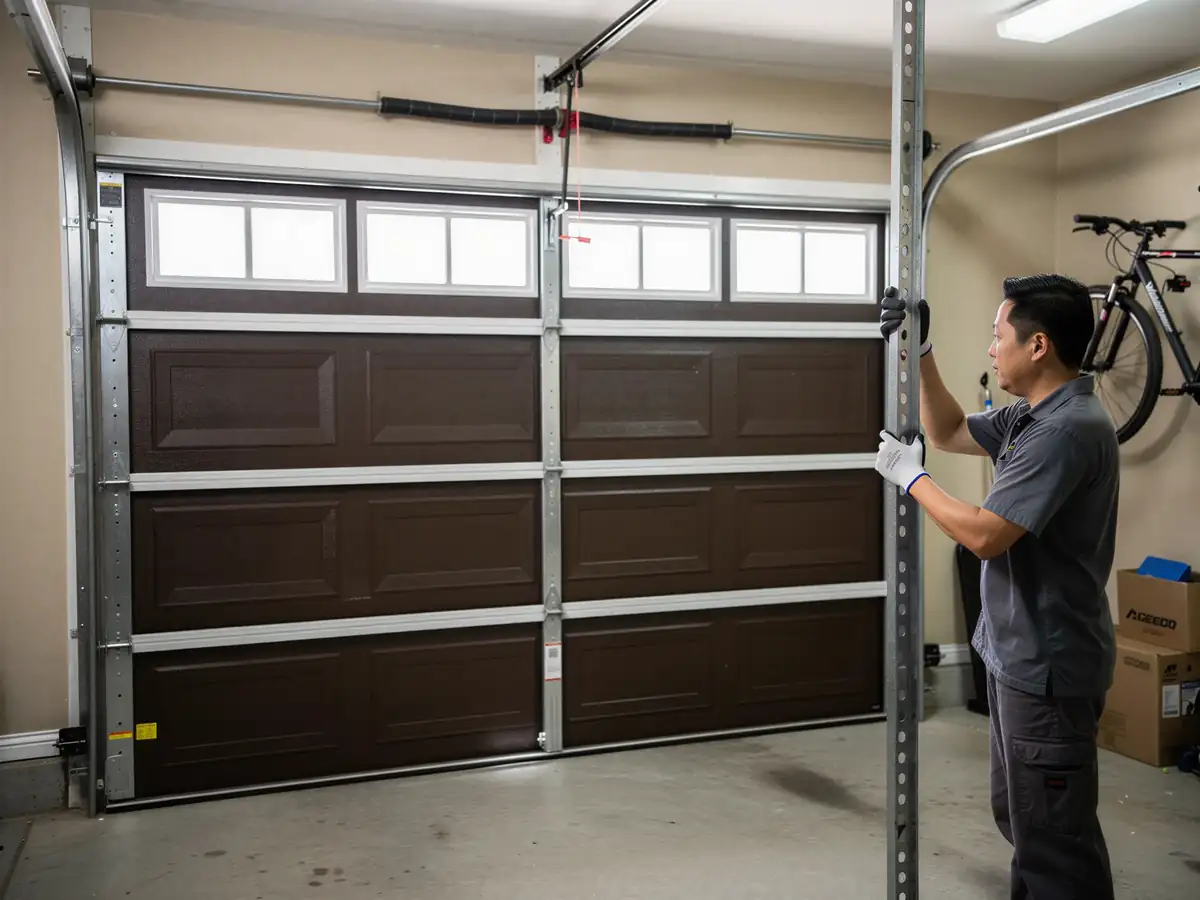
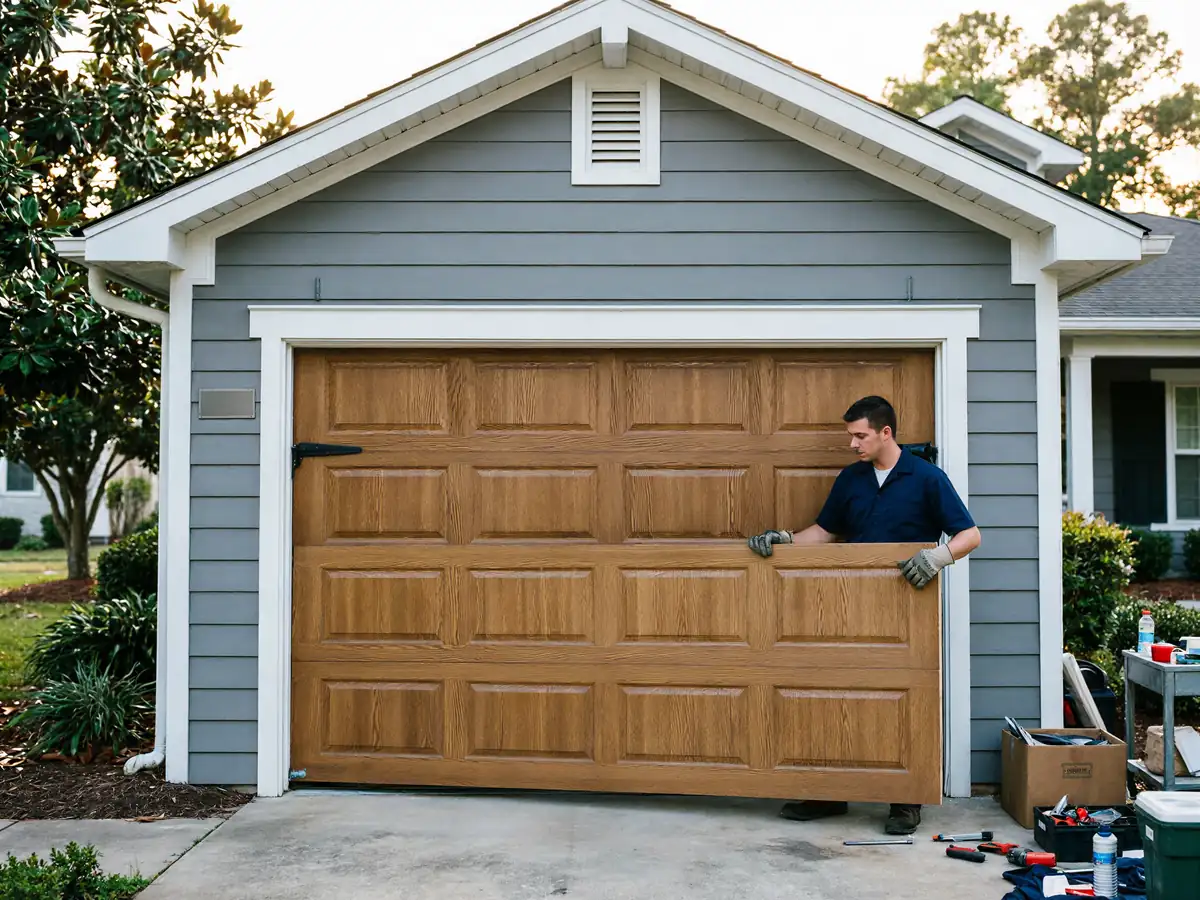
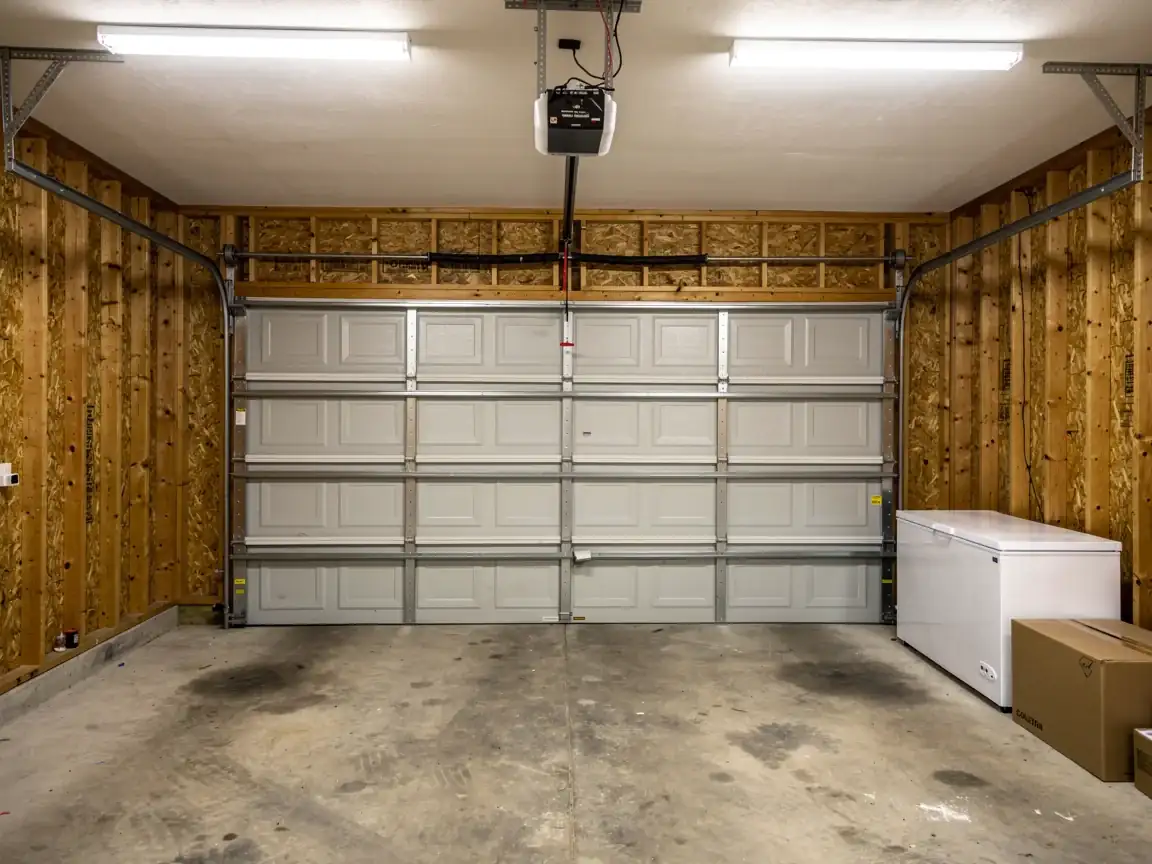
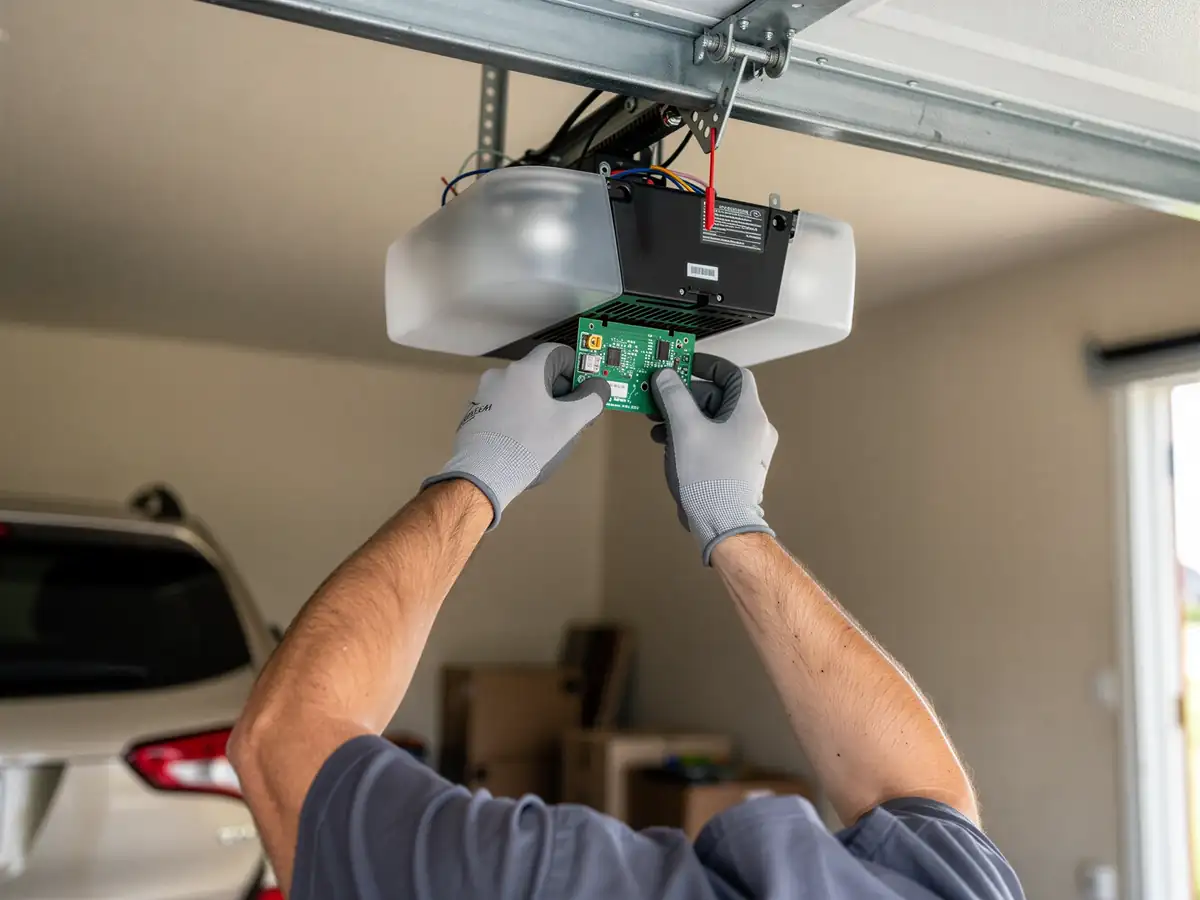
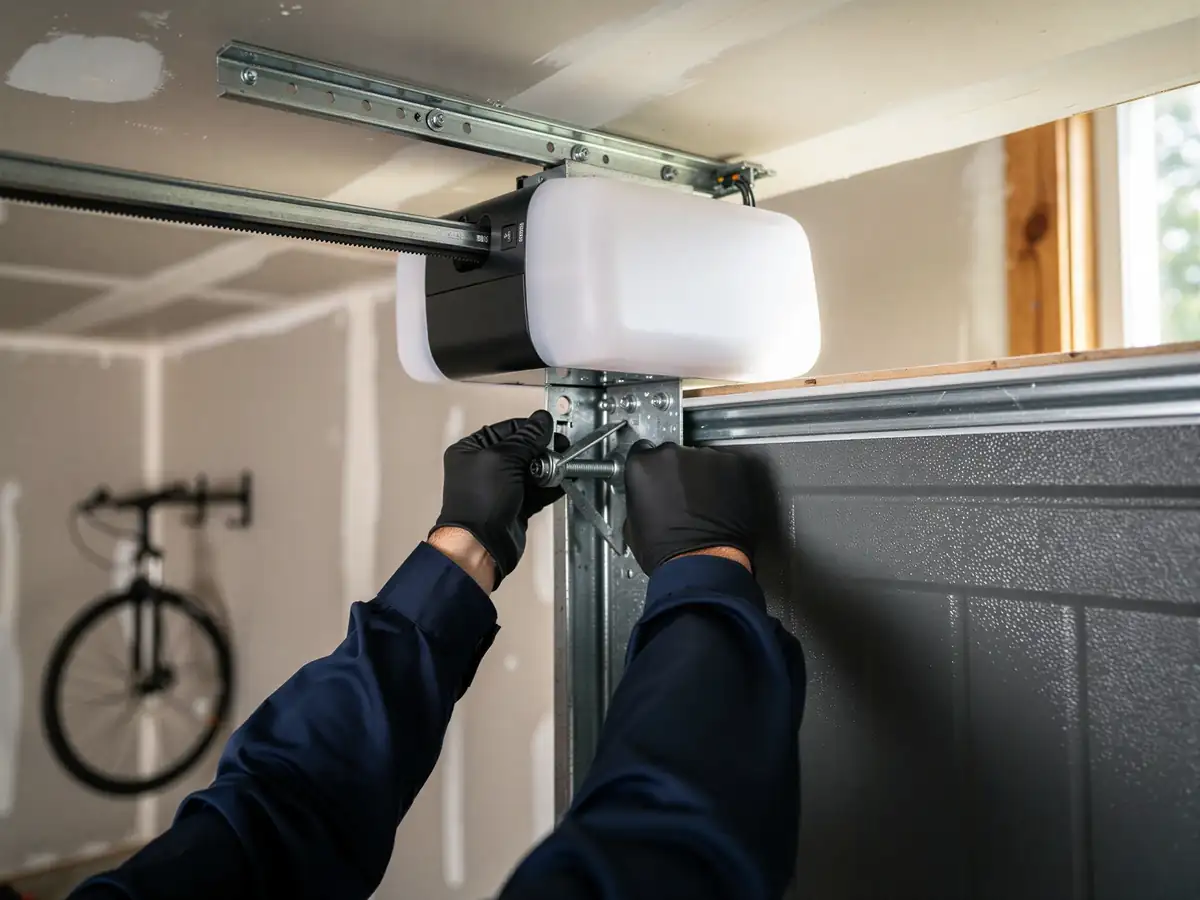
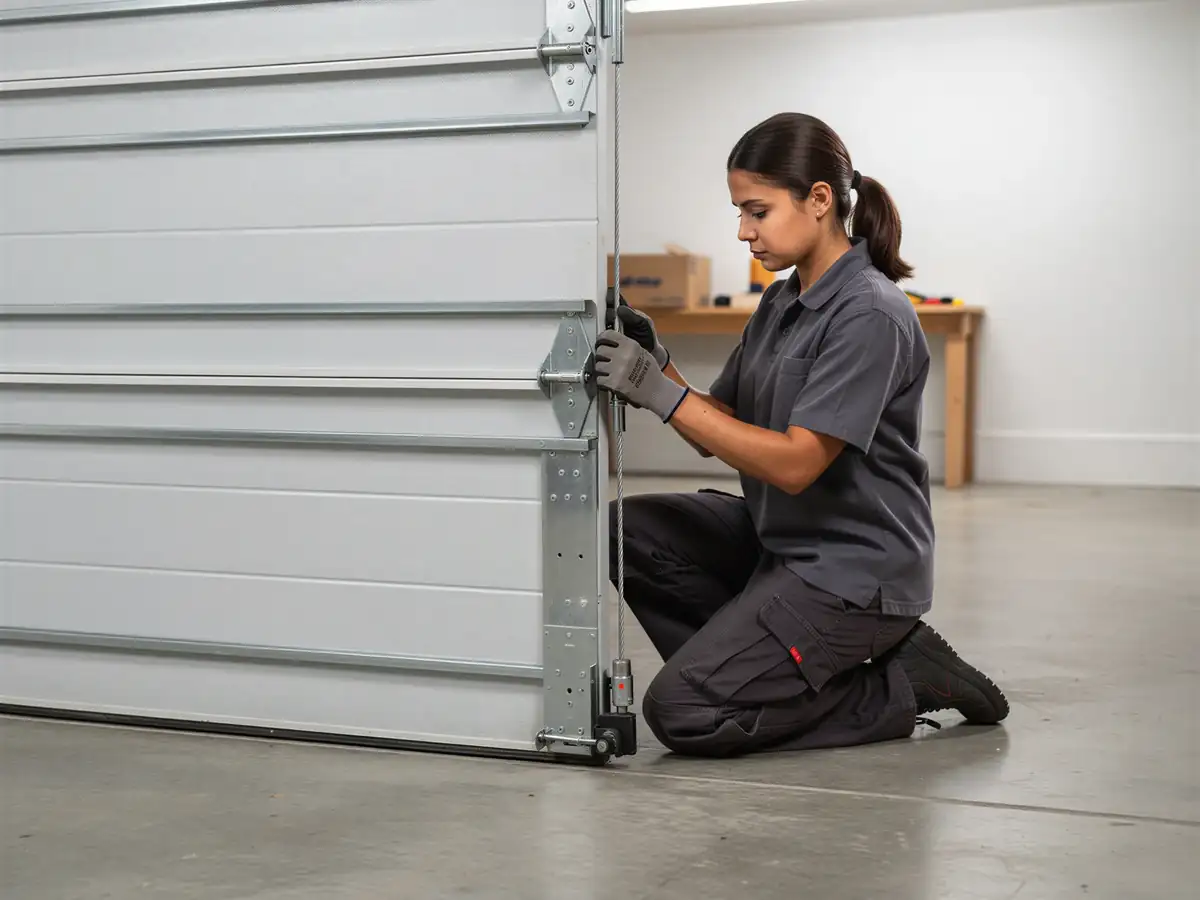
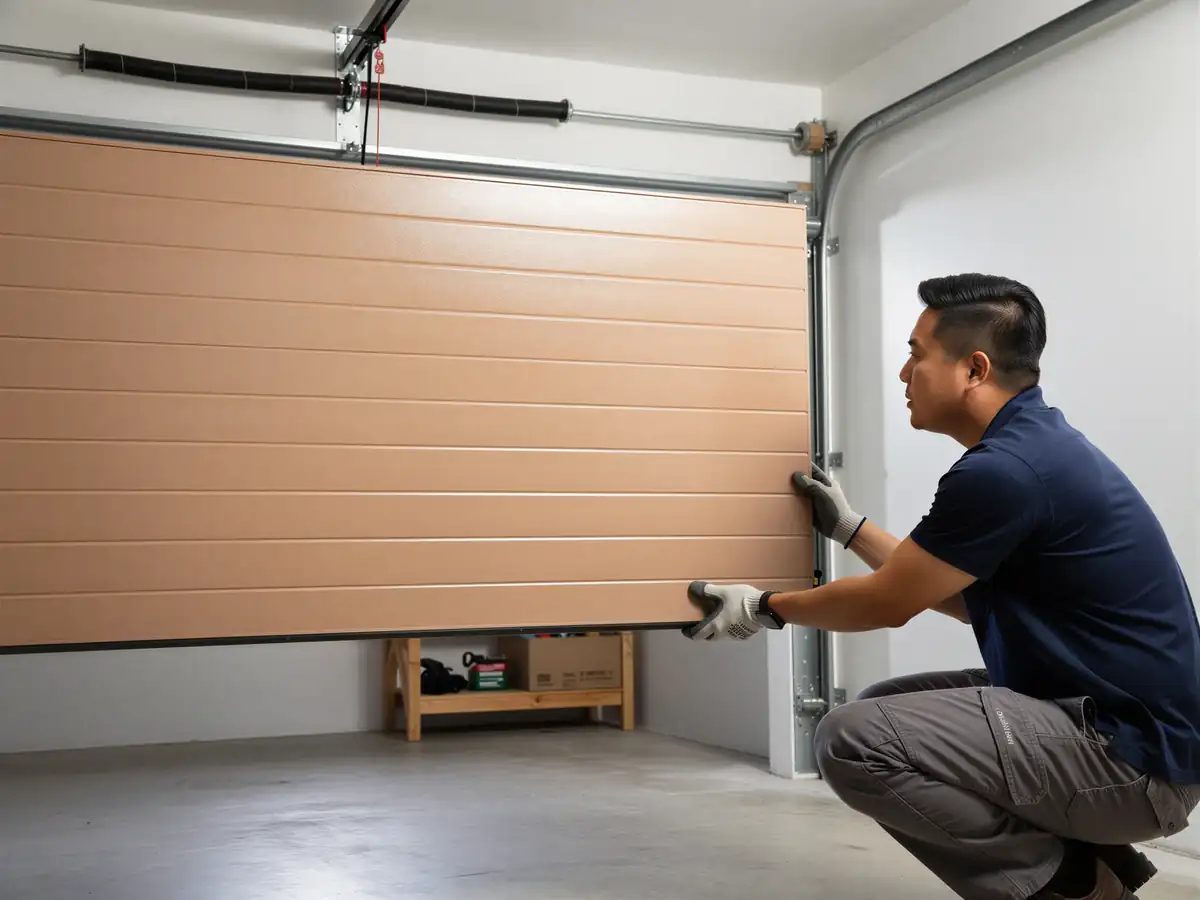
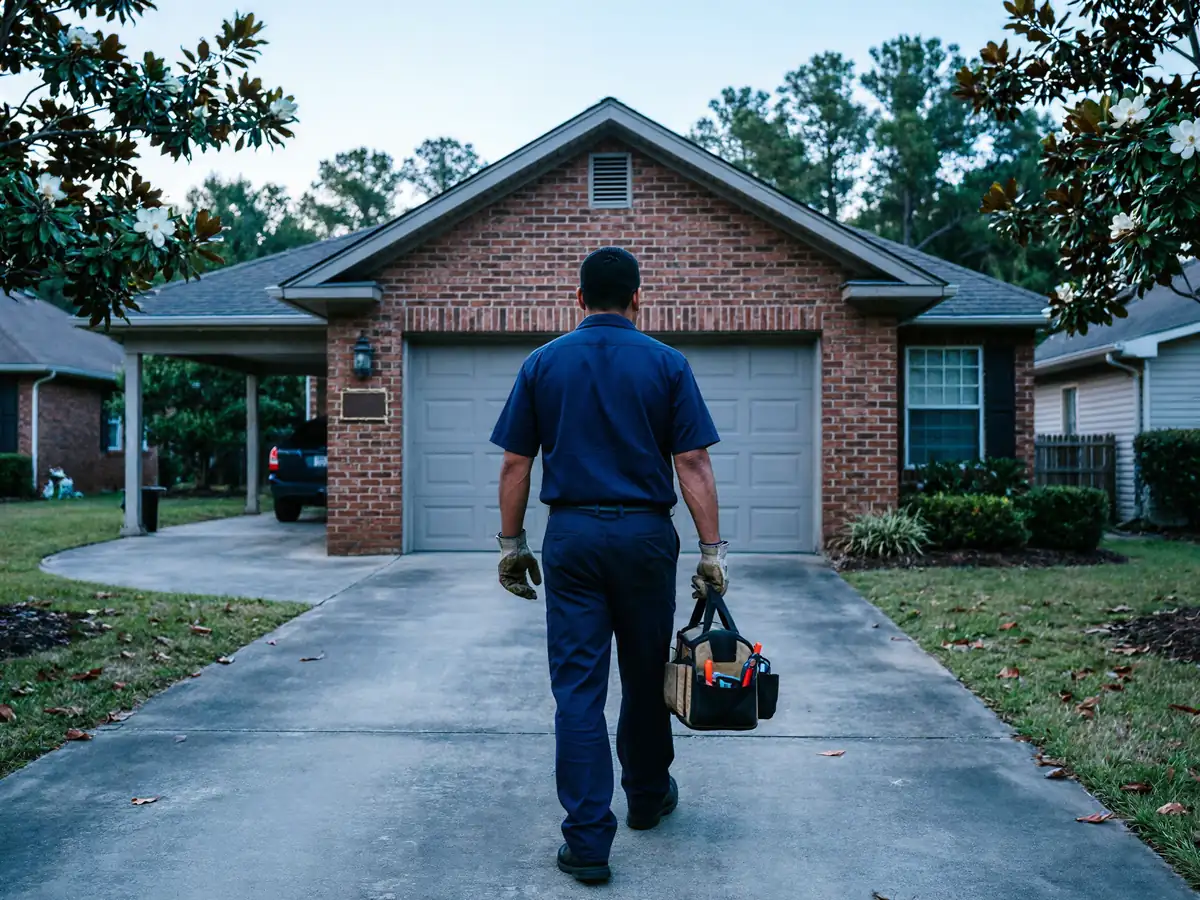
On a street where most houses were built around 1980, the calls we get are pretty consistent. Original torsion springs that have never been swapped - they're past their rated cycle count and they let go, usually on a cold morning. Steel doors from that period are single-layer, no insulation, and they've taken 40-plus years of expansion and contraction; seams split, bottom panels rust through near the weather seal. Openers in these garages have often been replaced once already, but the track and rollers are frequently still original, which means noise and binding even after a new opener goes in. We also see a fair number of extension-spring setups instead of torsion, which was common on houses from that build era and needs different parts on the truck. What we don't see as much here: the newer composite doors and insulated steel common in the 1993-and-later housing elsewhere in the area. That's a different repair conversation, and it's one reason we ask the build year before we quote anything.
What the Housing Means for Your Door
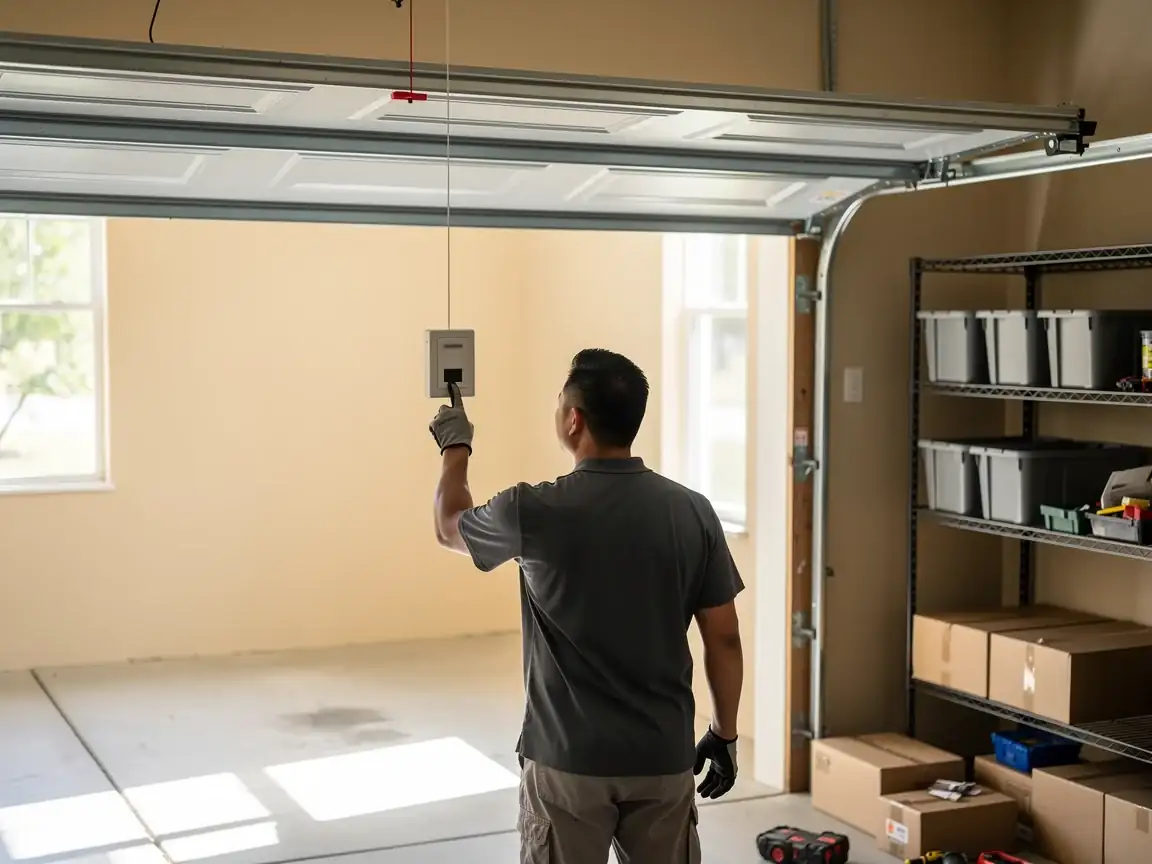
A door built around 1980 was engineered for a lighter car and a different set of expectations than a door built in 2005. The track clearances, the drum sizes, the spring wind - all of it was sized for the original door weight, and a lot of homeowners have since swapped in a heavier insulated replacement door without updating the spring or the opener's lift capacity. That mismatch is one of the more common reasons we find a door that opens hard, reverses on its own, or drops fast on the way down. In our cold-moderate climate, steel contracts enough in winter that a track bolted to studs 40-plus years ago can work loose, and a seal that was fine in summer lets in a draft by January. None of this is dramatic - it's slow wear on hardware that's outlasted its design life. The honest limitation: if your springs, track, and opener are all original to a 1980 build, patch repairs buy you time but they don't buy you much. At some point replacing the whole system costs less than three separate service calls.