What It Costs
We don't quote a price over the phone for a door we haven't seen
And we're not going to start now. What drives the bill is almost always the part, not the drive out. A broken torsion spring on a single-spring setup costs less than a snapped cable that's also chewed up a roller track, and an opener board that's died costs different money than a spring. The honest answer is that we price the job once we're looking at the door, not before.
What we can tell you is what tends to break in this area specifically
Pumpkin Center's housing runs older than the broader Jacksonville service area - median build year here sits around 1980, about thirteen years ahead of the wider area's 1993 median. Doors from that era were often built with single torsion springs rated for lighter sectional panels, and those springs have had four decades of cold-moderate winters to fatigue. That's usually the failure we're driving out for, more often than a modern opener-logic board problem.
We don't pad invoices with a diagnostic fee just to show up
But if the job needs a part we don't carry on the truck, you'll hear that before we start, not after.
Parts We Carry
The truck is stocked for what actually fails on doors from the 1980-2013 window that makes up most of this service area, and that skews toward older torsion springs, worn extension-spring assemblies, galvanized cable, and steel rollers rated for a cold-moderate climate where metal contracts and lubricant thickens in winter. We carry standard torsion spring sizes for single-car and double-car sectional doors, plus the cable and drum hardware that usually fails alongside a spring rather than on its own.
What we don't carry on the truck: specialty panel sections for doors with a discontinued finish, and certain older opener logic boards that manufacturers stopped stocking years back. If your door needs one of those, we'll tell you straight that it's a special-order part and give you a real timeline instead of a guess.
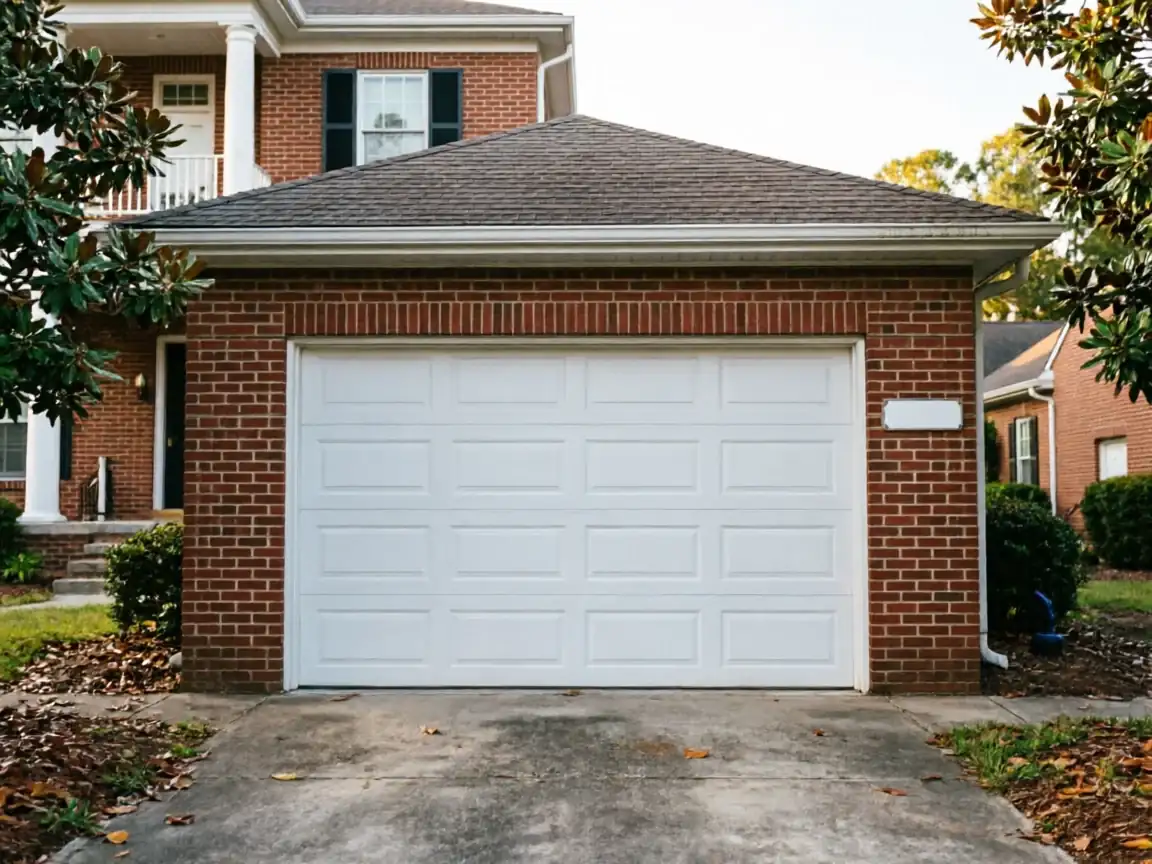
For a house built close to 1980, the hardware is often simpler than what went into homes built in the late 1990s and 2000s elsewhere in the service area - fewer safety-reverse sensors, heavier steel doors, single springs instead of dual. That's not better or worse. It's just a different repair, and it's why we ask the age of the house before we ask what's wrong with the door.
How to Book
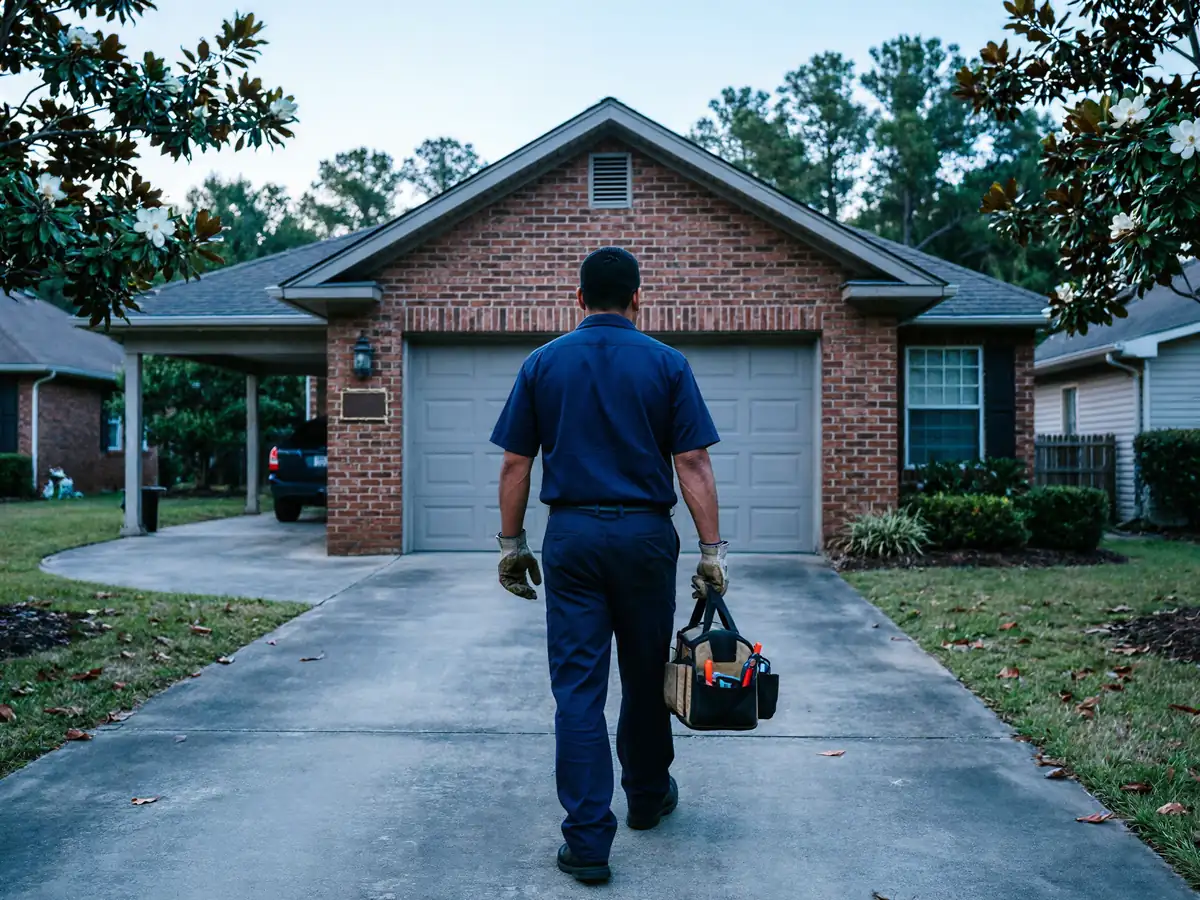
Pumpkin Center sits about four miles from our Jacksonville shop. There's no branch or depot out here - we travel the distance on the call, and four miles is short enough that it's never the bottleneck. What takes time is parts, not the drive.
To book, use the Pumpkin Center garage door repair page, or if you're dealing with a door that's actually stuck open or a spring that's snapped with the car trapped inside, the emergency repair line covers the whole service area including this stretch.
Tell us the house's approximate age if you know it. A door from around 1980 and a door from the late 1990s fail differently, and knowing which one we're driving to means we load the right spring size before we leave rather than guessing.
What the Repair Takes
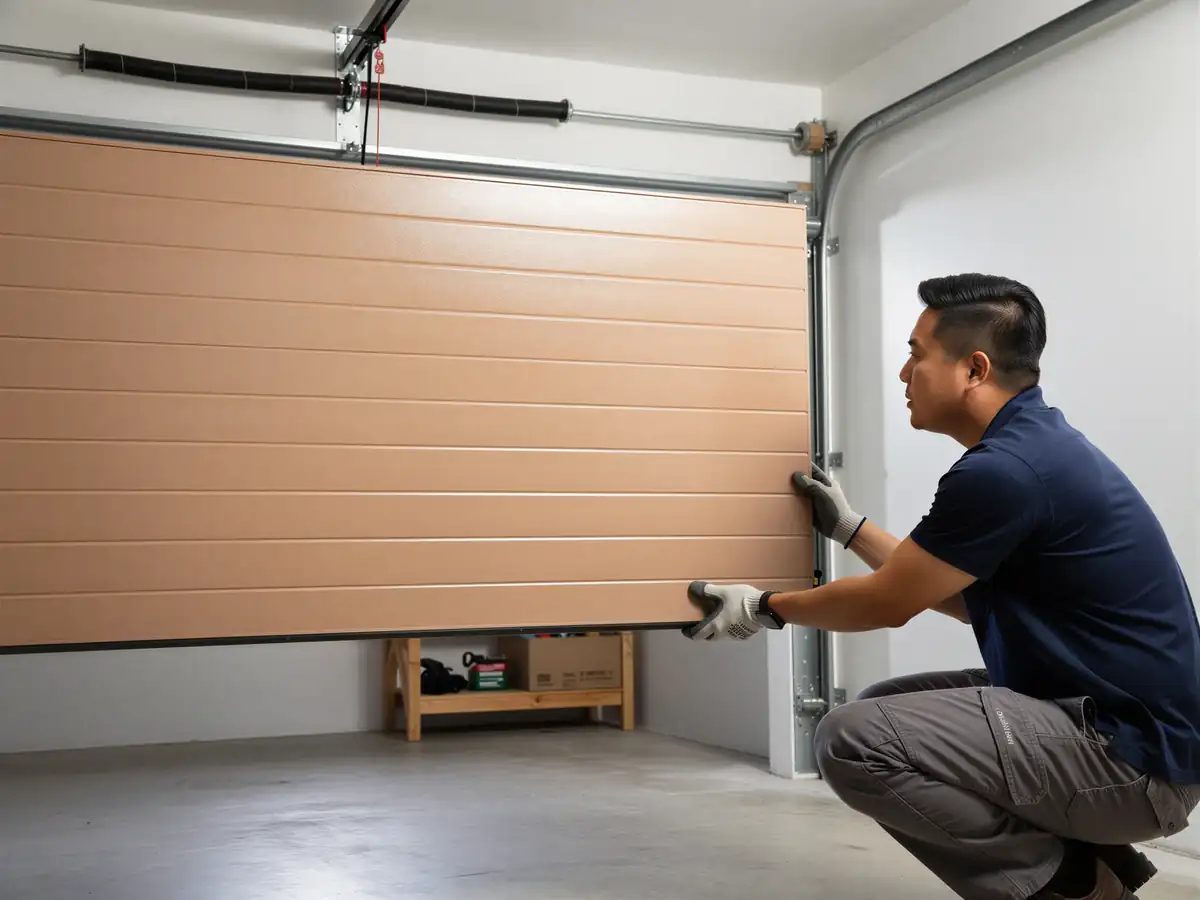
Most emergency calls here are a spring, a cable, or a roller off its track
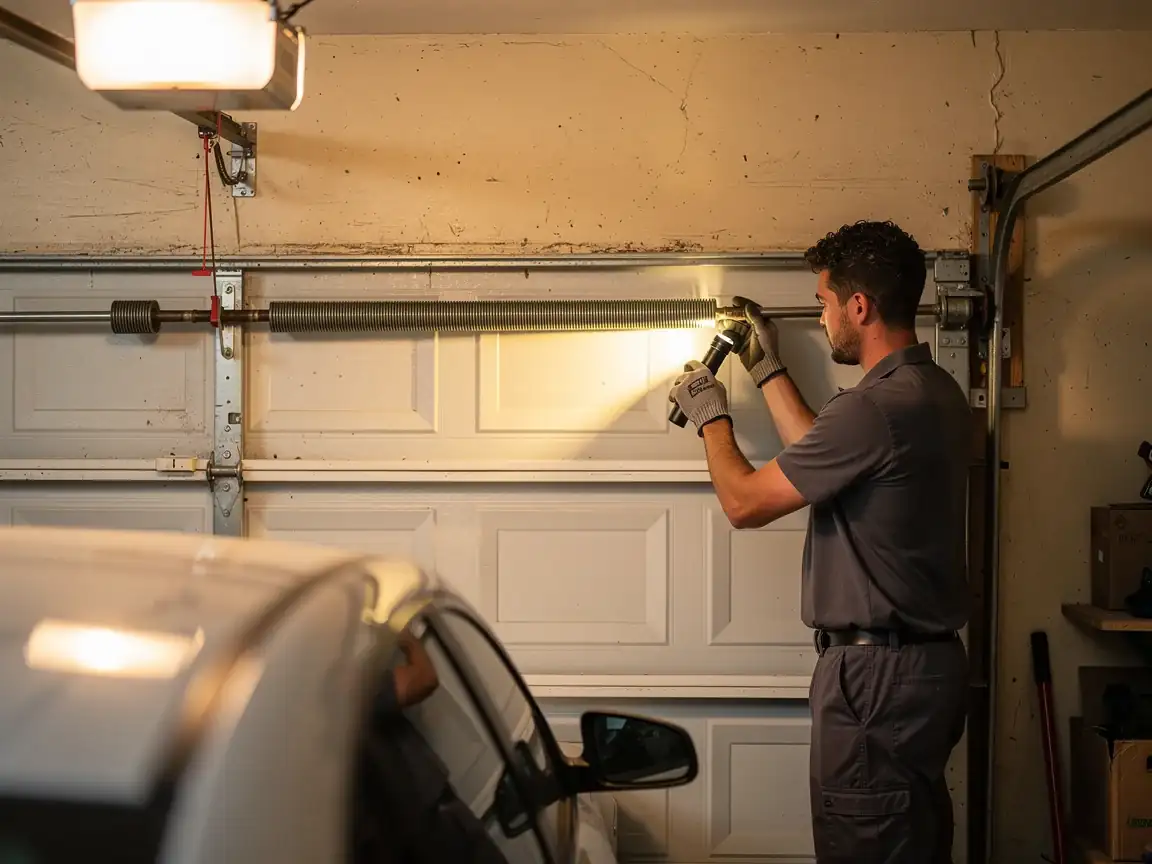
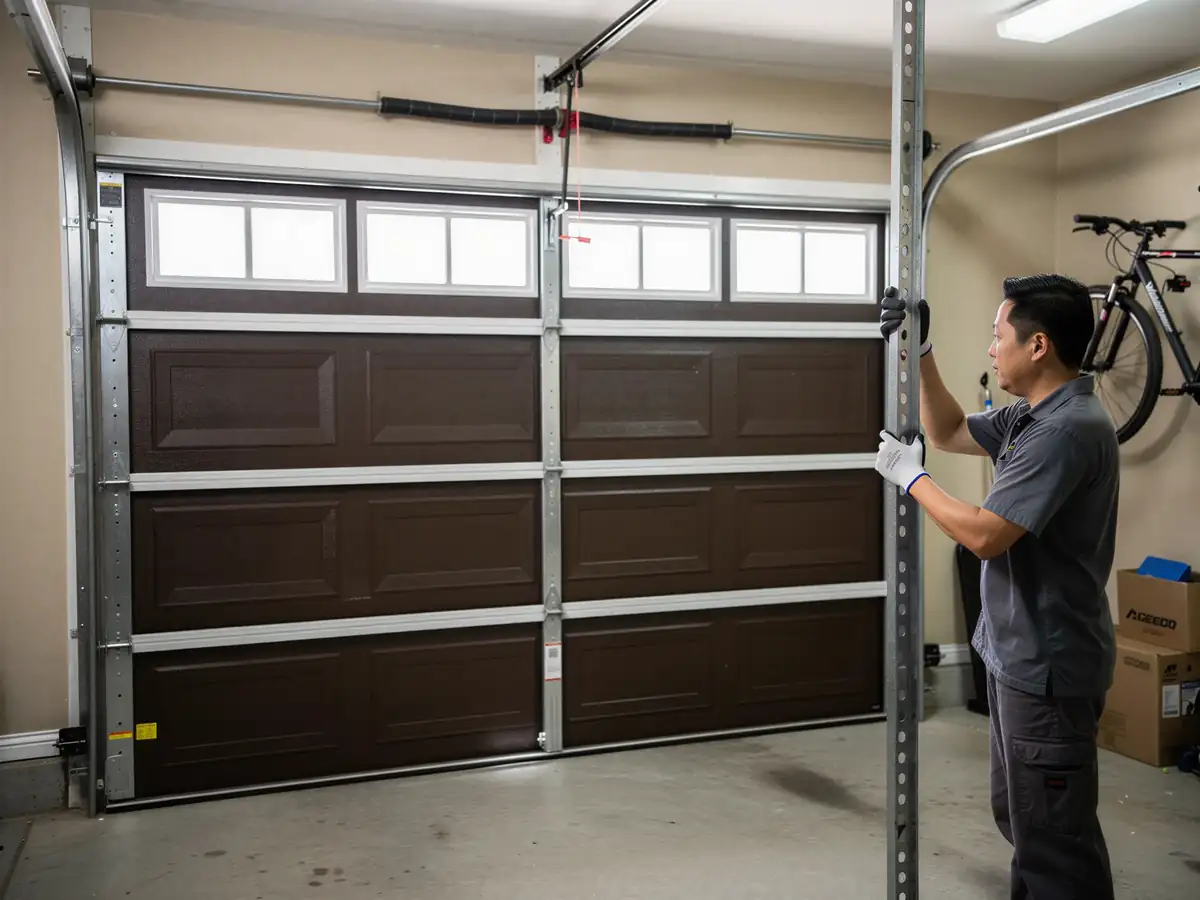
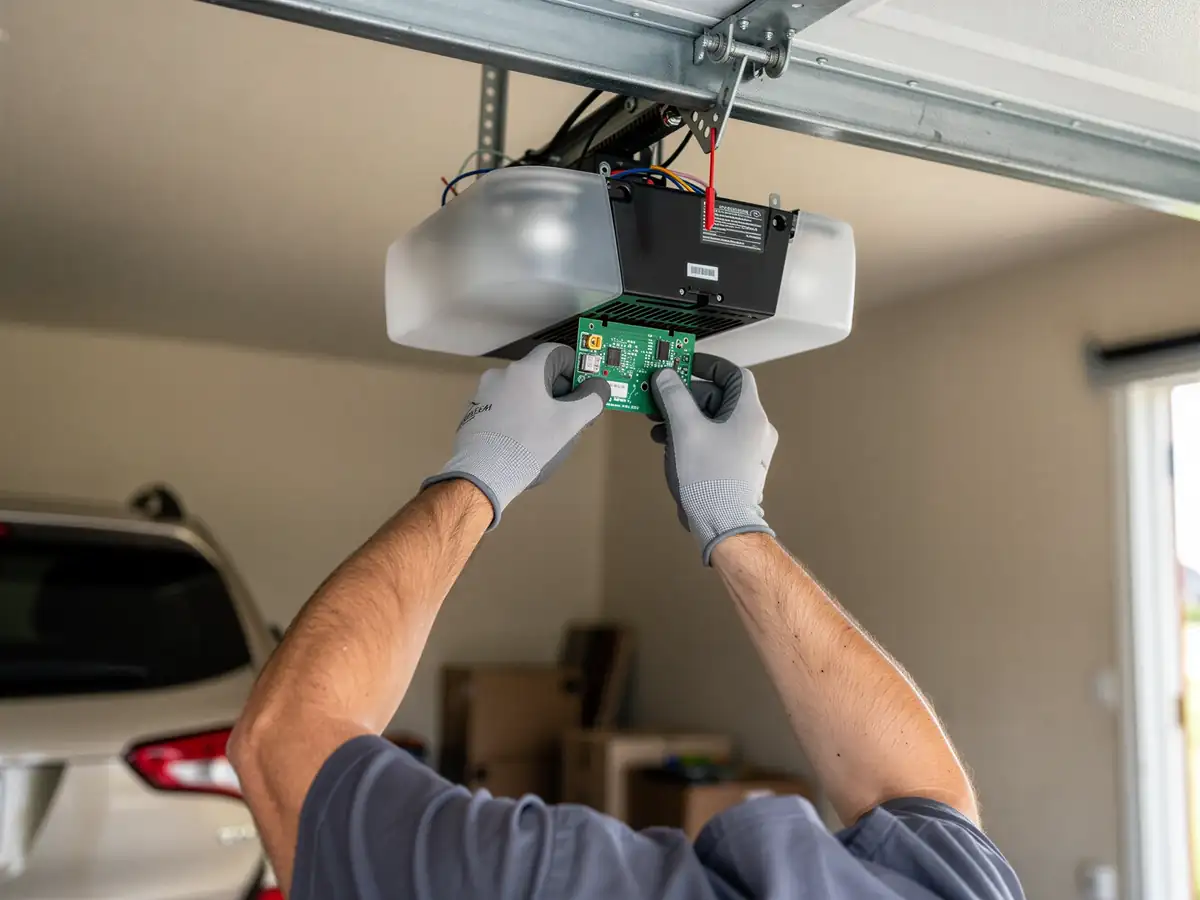
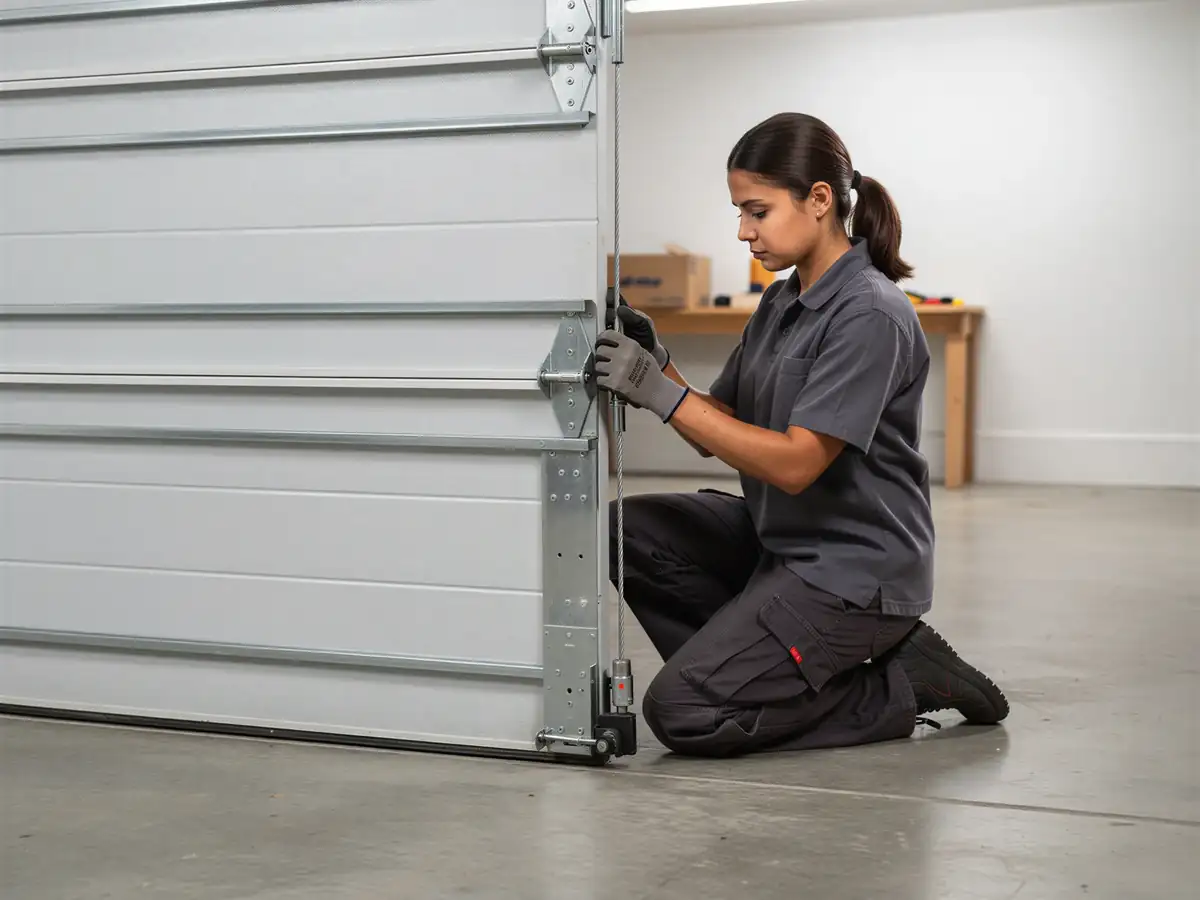
Rarely all three unless the door's been limping along broken for a while before someone calls. On a single-torsion-spring door from the 1980 era, replacing the spring means winding a new one to the right tension, which takes longer to do safely than it does to explain. We check the cable and drums while we're in there, since a spring that snapped from age often has a cable close behind it.
In a cold-moderate climate, winter calls run a little different than summer ones
Steel contracts, grease stiffens, and a marginal roller that was fine in August seizes in January. We carry lubricant rated for that swing, not the thin stuff that breaks down in cold.
Most single-spring jobs on an older door are done inside an hour once we're on site
Dual-spring doors, or anything where the opener logic board has to come out too, take longer. We won't promise a number before we see the door, but we'll tell you honestly once we're looking at it whether it's a one-hour job or a return-trip job.
The DIY Question
A torsion spring under tension can break a hand or worse, and that's true whether the house was built in 1980 or last year - we're not going to tell you it's fine to wind one yourself because the door's old. That's the one place we draw a hard line regardless of age or era.
What you can check yourself safely: whether the opener's unplugged and the track is visibly bent, whether a roller's jumped the rail, whether the door's just off-balance versus actually broken. If the door moves at all with the opener disconnected and you can lift it by hand without it fighting you, that's a lighter repair than a seized or snapped spring.
With roughly 684 households in Pumpkin Center and a median income here of $62,684, a little below the wider service area's $65,179, we get it that people want to save the service call where they safely can. Checking the track and the rollers costs you nothing. Touching a wound spring costs you a trip to urgent care. Know which side of that line you're on before you pick up a wrench.