What Causes It Around Here
North Topsail Beach sits about 17 miles from our shop in Jacksonville
And that drive shapes how a call out here actually works. We're not rolling a truck around the corner - we're planning the trip, which means we try to get the diagnosis right on the first visit instead of guessing and coming back.
- 17 miles
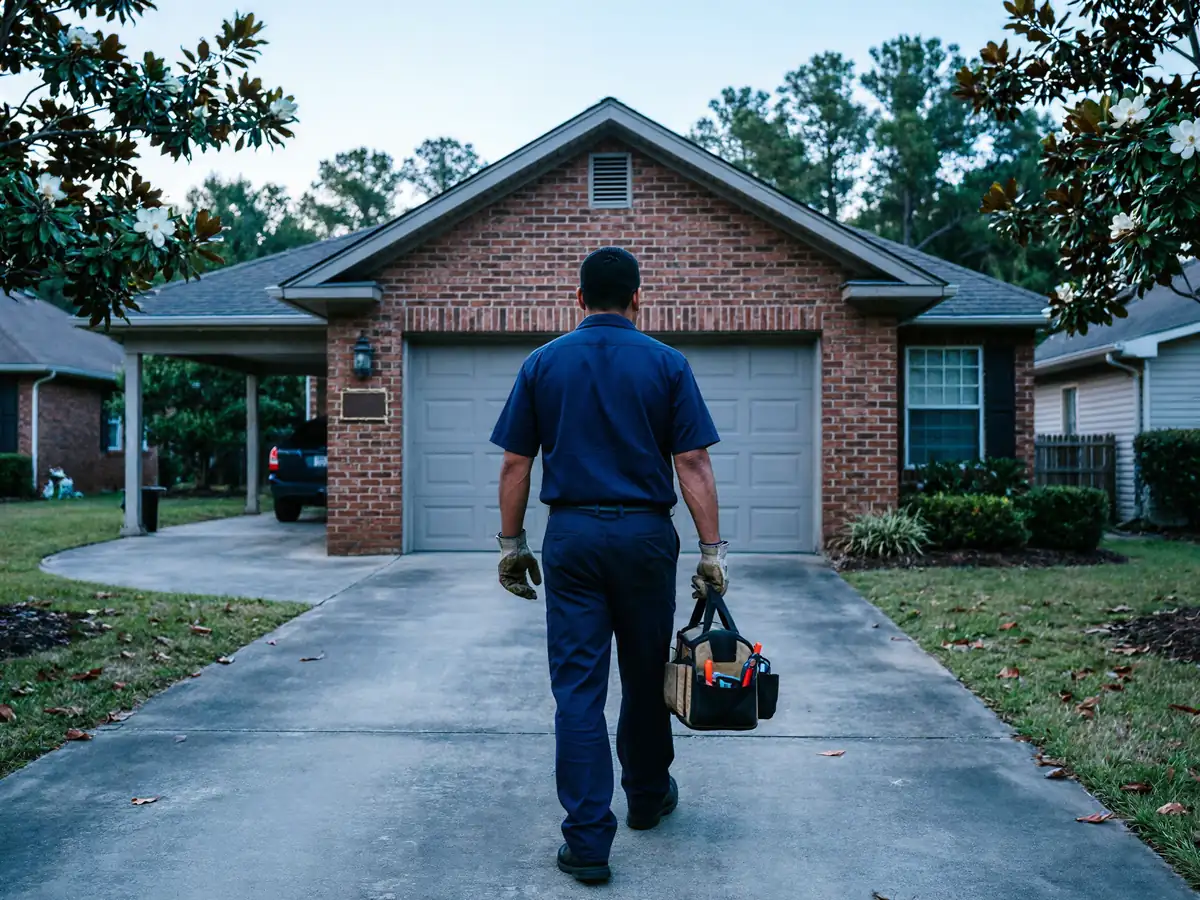
The houses here mostly date to around 1989
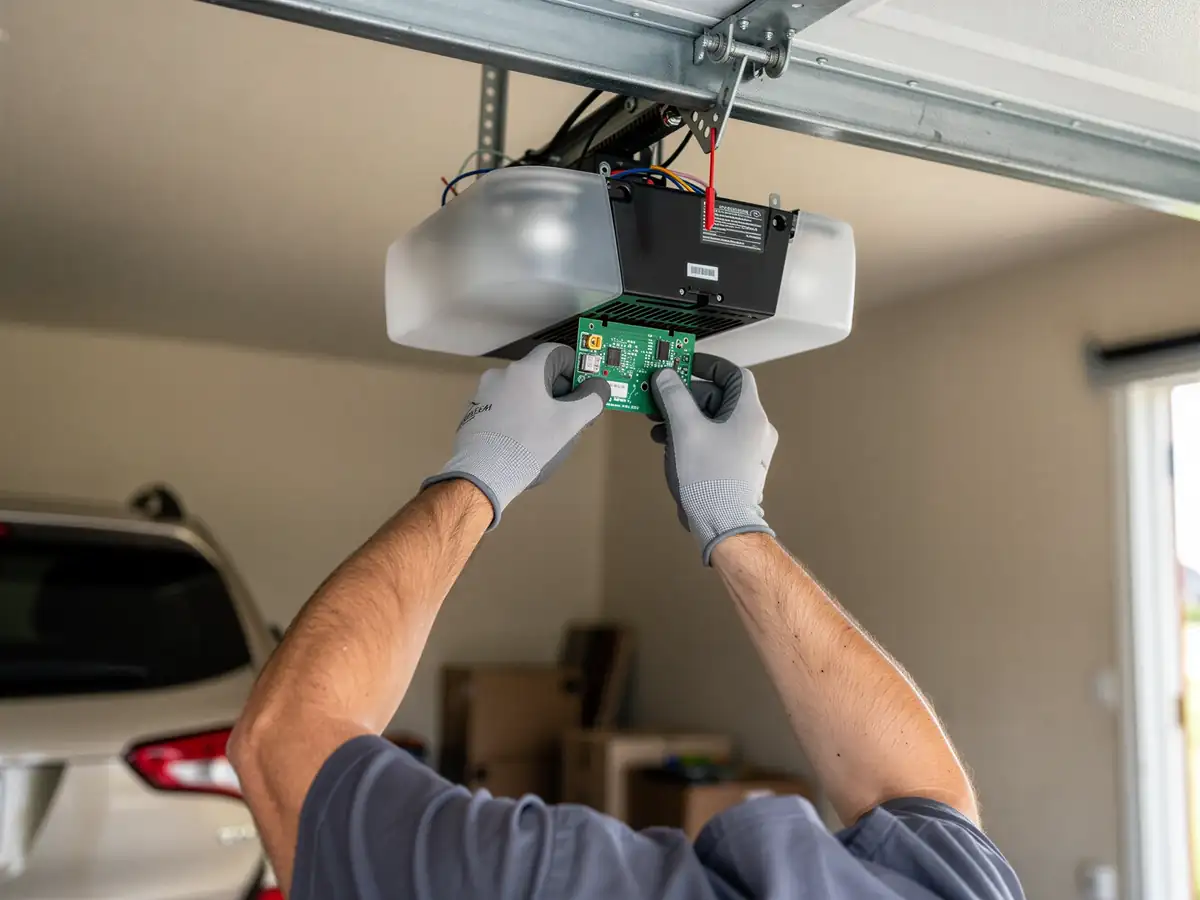
Which puts a lot of openers on their second or third unit by now if nobody's swapped the whole thing. Chain-drive units from that era and the decade after wear through the same parts: the drive gear strips, the capacitor on the motor goes, or the logic board stops talking to the wall button reliably. None of that is unique to this stretch of coast, but the age of the housing stock here means we see it concentrated in a narrower window of equipment than in neighborhoods built more recently.
Salt air off the water does a number on exposed metal hardware generally
But we don't have measured corrosion data specific to this town, so we won't guess at how much faster that wears a particular opener's parts here versus elsewhere.
What It Costs
We don't have a published price list broken out by town, and opener repair cost depends on what's actually wrong - a sensor out of alignment is a different job than a dead circuit board or a motor that's seized. What we can say is that the area's median household income runs well above Jacksonville's broader service-area figure, over $106,000 here, and in practice that tends to mean more homeowners choosing to replace an aging opener outright rather than keep patching one that's near the end of its life.
Because the drive out here is 17 miles each way, travel is a real part of how a job gets quoted and scheduled, even if we don't itemize it separately on your invoice. We'd rather tell you that up front than pretend the distance doesn't factor into anything.
If you want an actual number, that has to come from a look at your specific opener - brand, age, and what's failed. We're not going to put a figure here that isn't tied to your unit.
What You Are Seeing
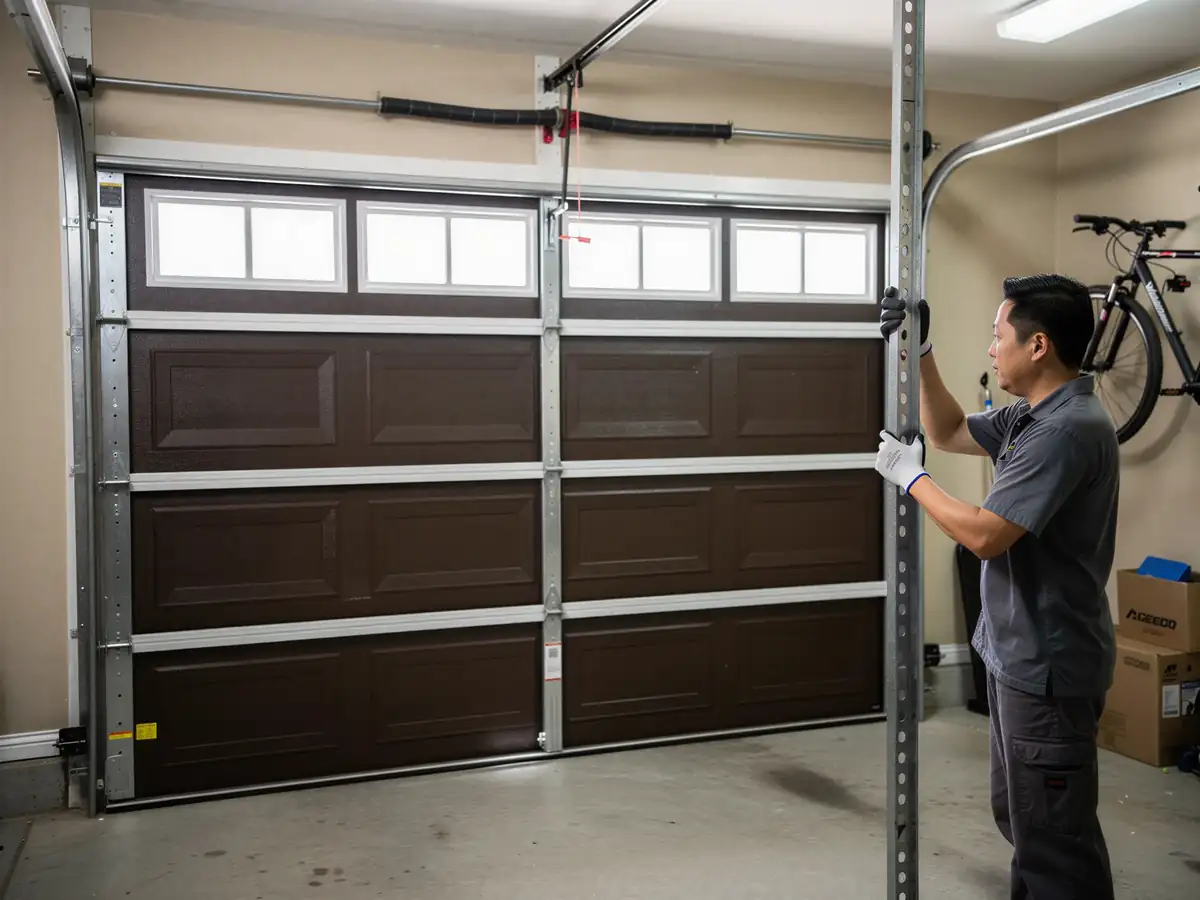
With a lot of the housing stock here going up around 1989, the openers we get called out for tend to be either original-to-the-house units nobody's ever replaced, or a first replacement that's itself now old enough to fail. Common signs: the door reverses for no reason partway down, the remote works intermittently but the wall button doesn't, or the motor runs but the trolley never grabs the chain.
A unit that hums and doesn't move the door at all is usually a capacitor or a stripped gear - not something to force by hand repeatedly, since that just adds strain to the opener's drive mechanism and can bend the rail.
We don't have a service record for this specific town's failure rates by brand or model, so we're not going to tell you which opener brand fails first out here. What we can tell you is that an opener's age matters more than its brand once it's past the point most units are designed to run.
Time on the Job
Because this town is a 17-mile drive from Jacksonville
We build that travel into how the day gets scheduled rather than treating North Topsail Beach calls like a quick add-on between closer jobs. That means we're not going to promise a same-hour arrival window the way we might for a stop a few minutes from the shop - the honest answer is that the drive adds time before the actual repair starts.
Once we're on site, most opener repairs
Sensor realignment, a logic board swap, a new drive gear - run within a normal service visit. A full opener replacement takes longer than a repair, mostly because of mounting and safety sensor setup rather than the drive out here.
With only 376 households in this part of the service area
We're not running a dedicated route through North Topsail Beach every day, so a call here gets scheduled around the trip rather than slotted into a route that's already passing by.
- 376 households