Time on the Job
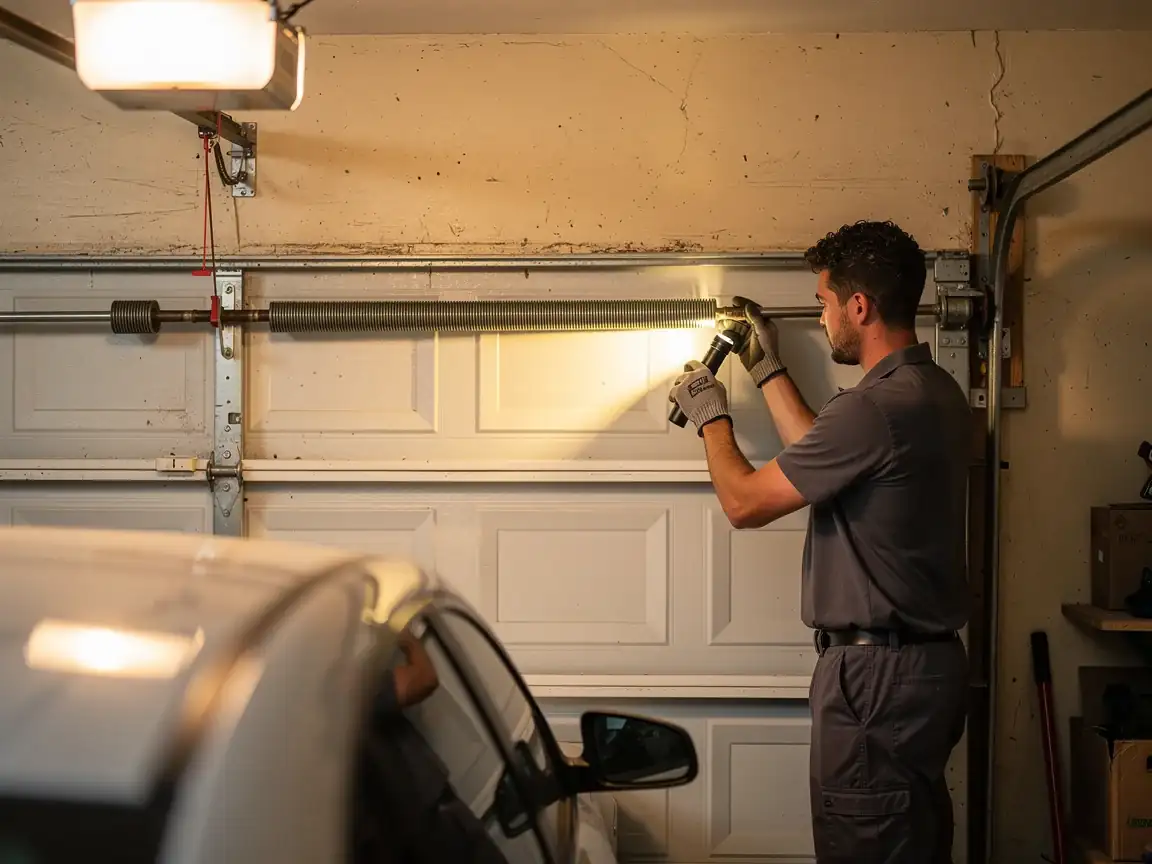
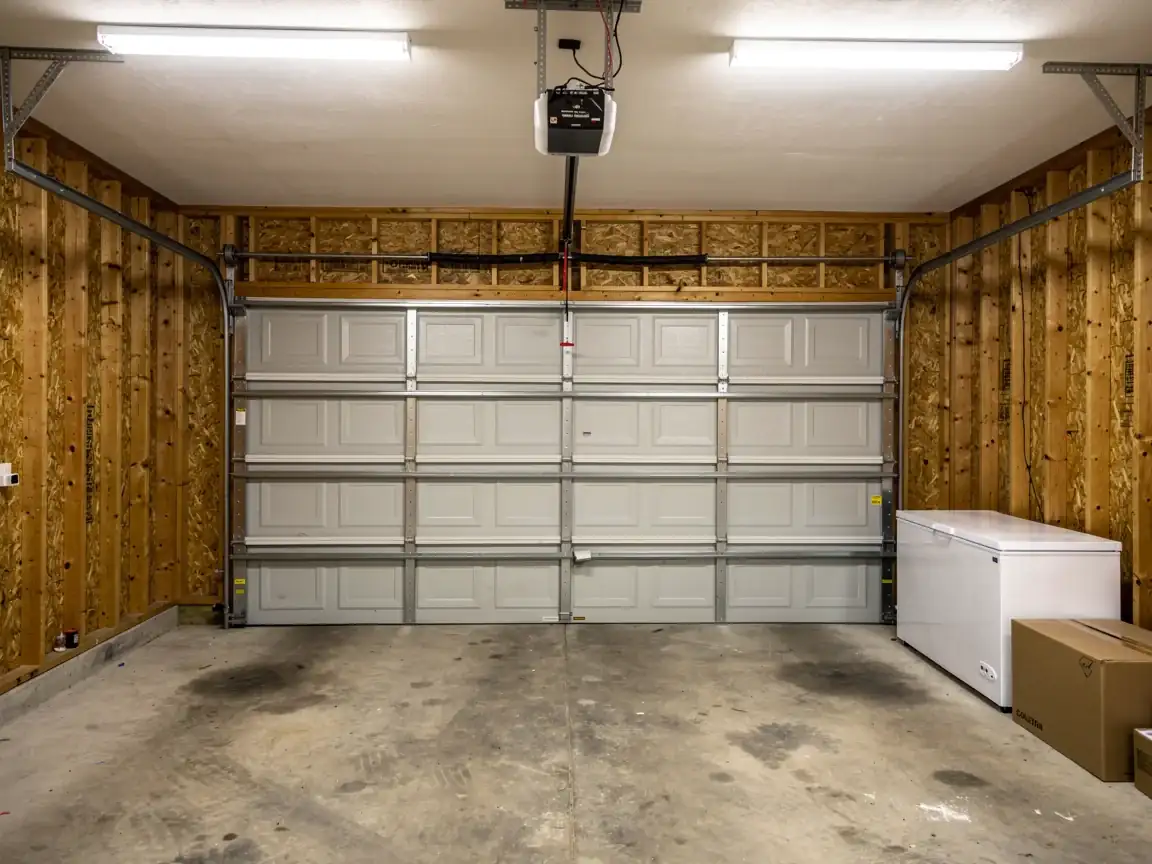
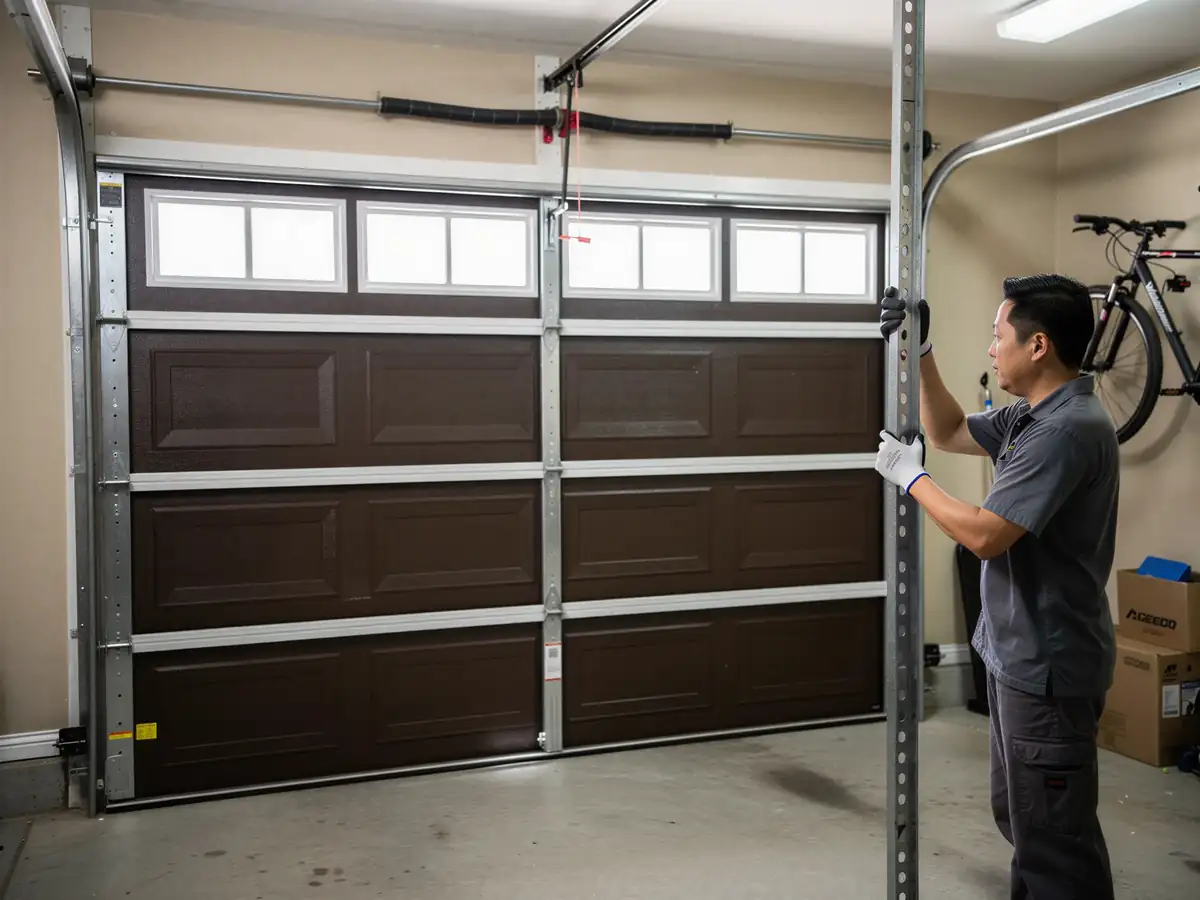
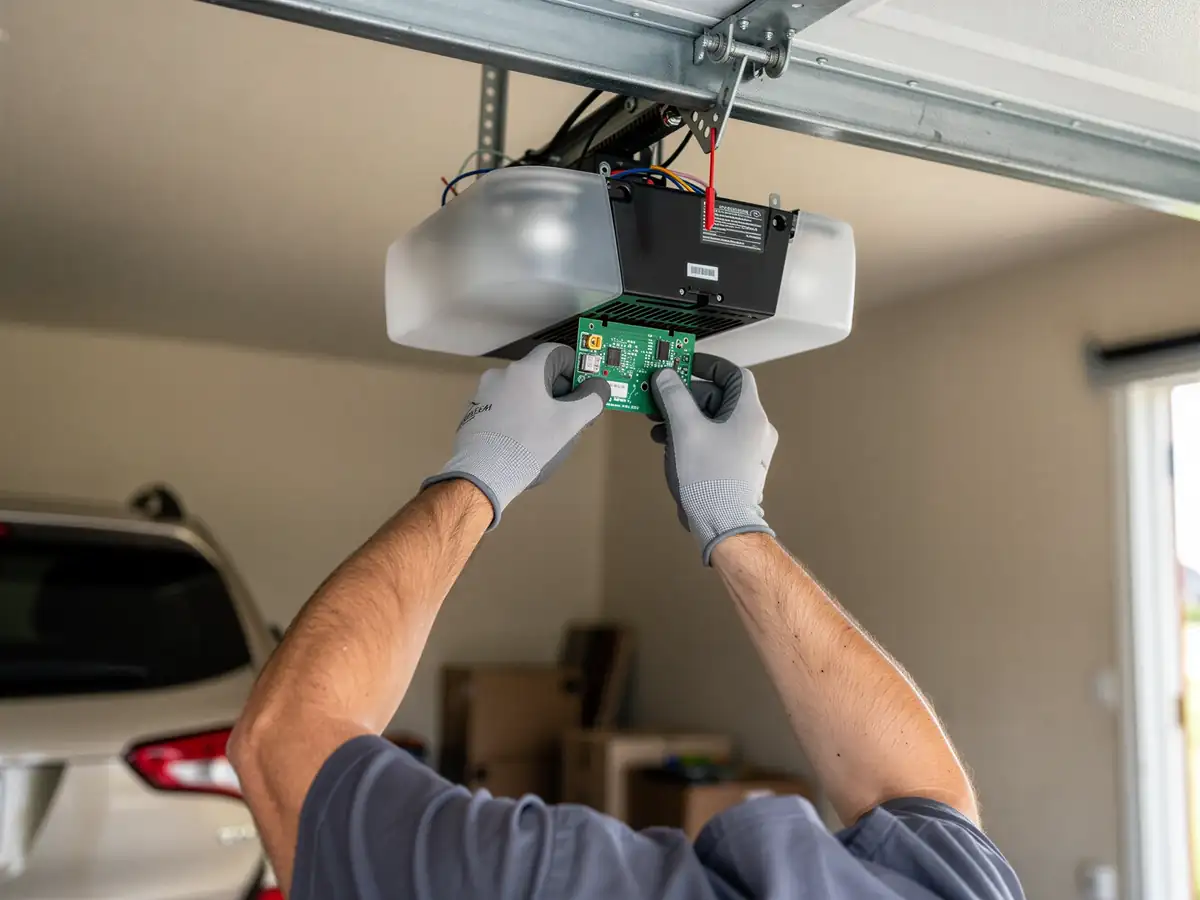
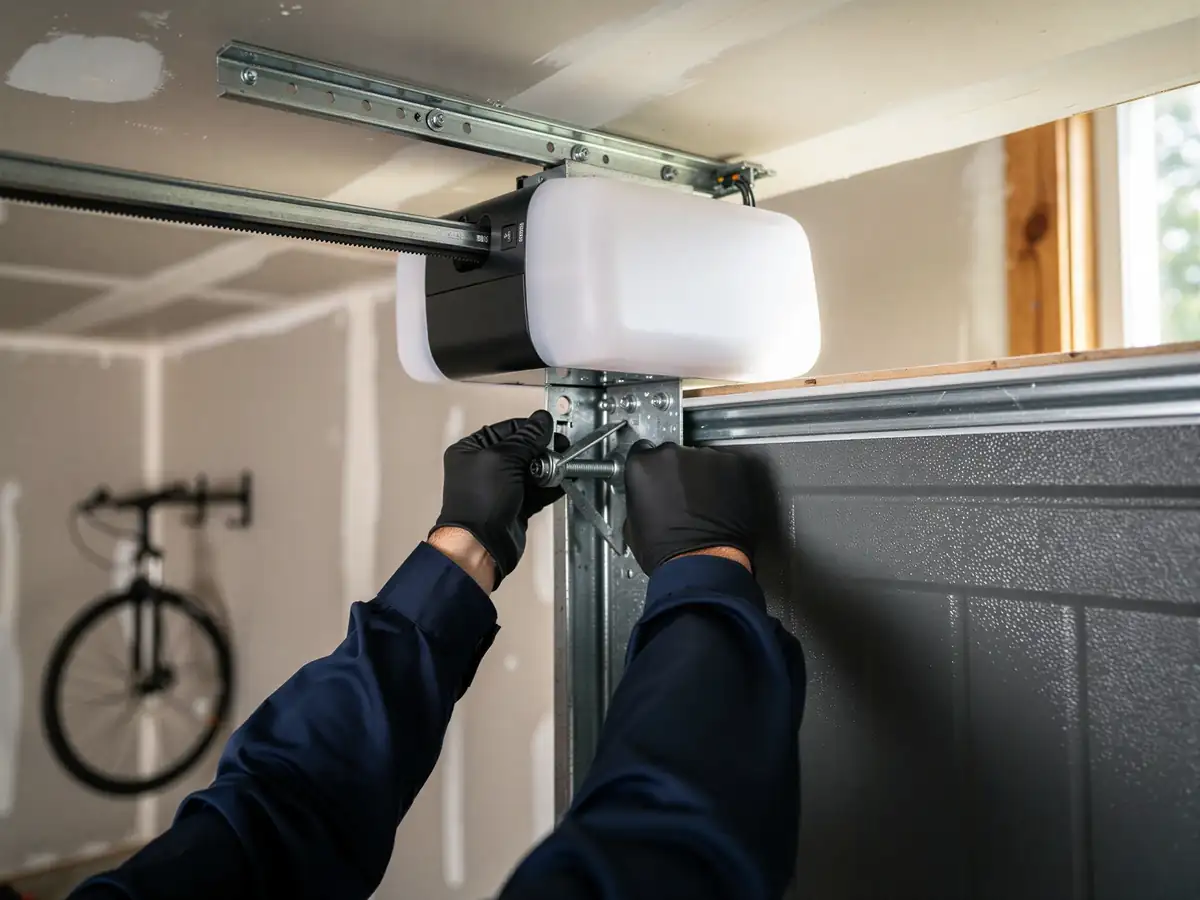
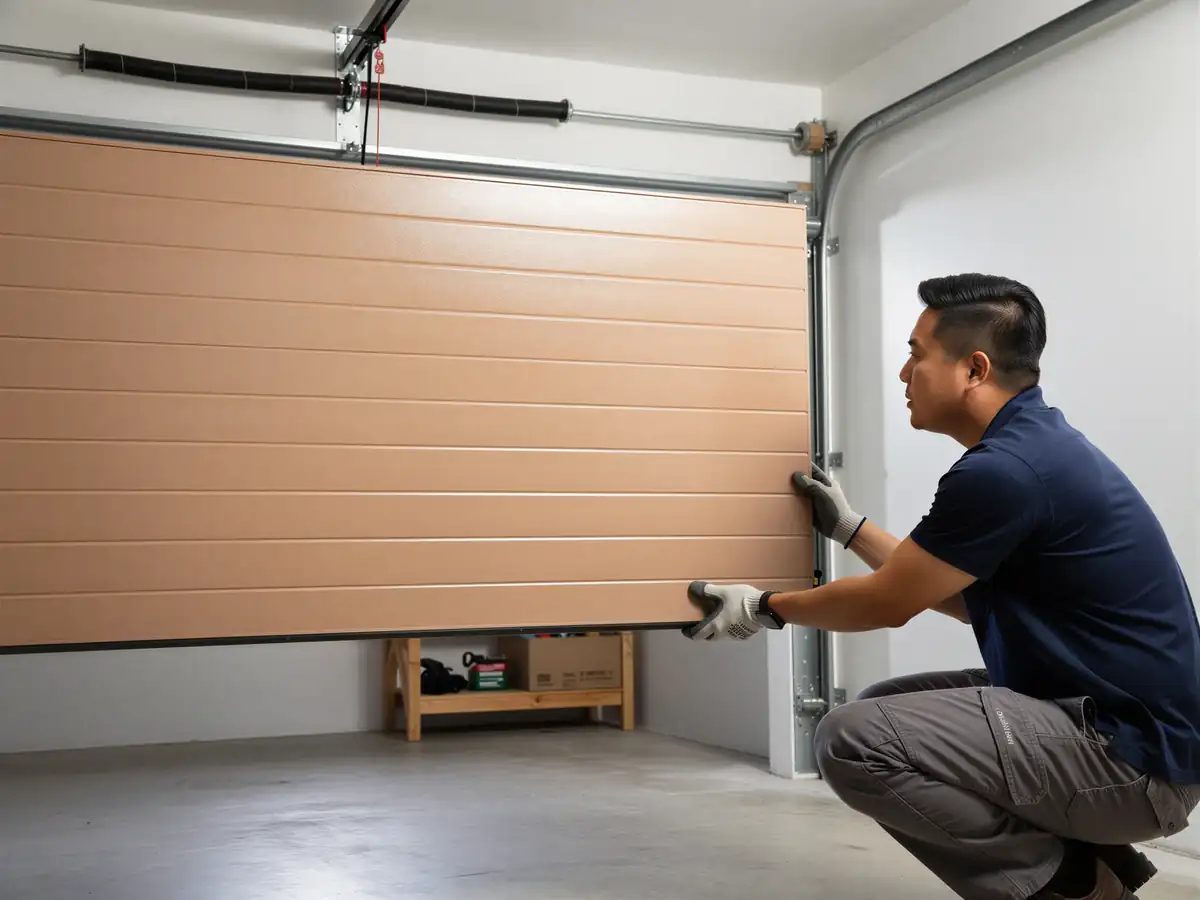
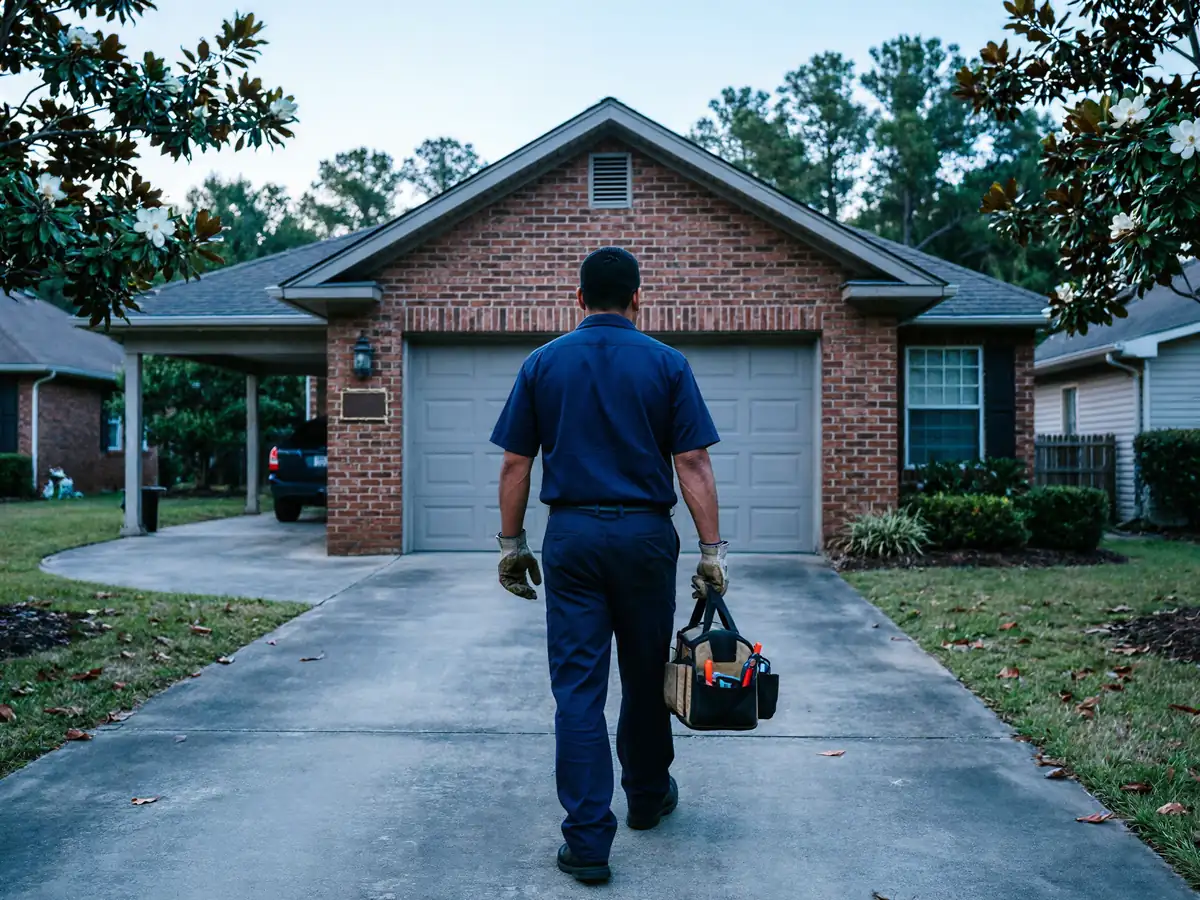
A spring job on original 1980s hardware usually runs long for one reason: the mounting bolts and brackets haven't been touched since the house was framed, and they don't want to let go. We budget extra time for seized hardware here rather than quoting the fast number and running over. Opener swaps on original wiring take a bit longer too - older houses in this part of the service area weren't always wired for a modern opener's circuit needs, so we check that before we hang anything. None of this is Sneads Ferry-specific magic; it's what 35-plus-year-old hardware does everywhere, and it's common enough here that we plan for it instead of treating it as a surprise.
Where This Job Goes Sideways
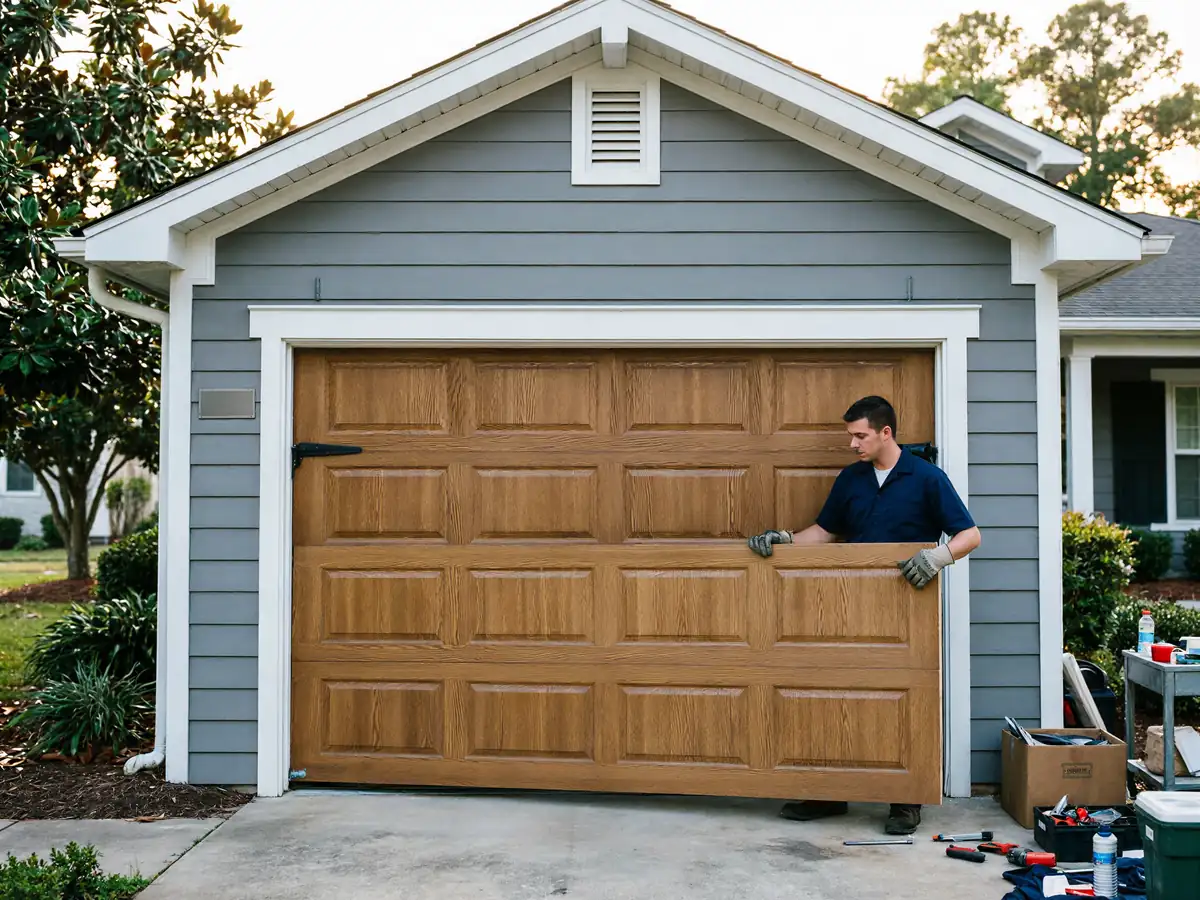
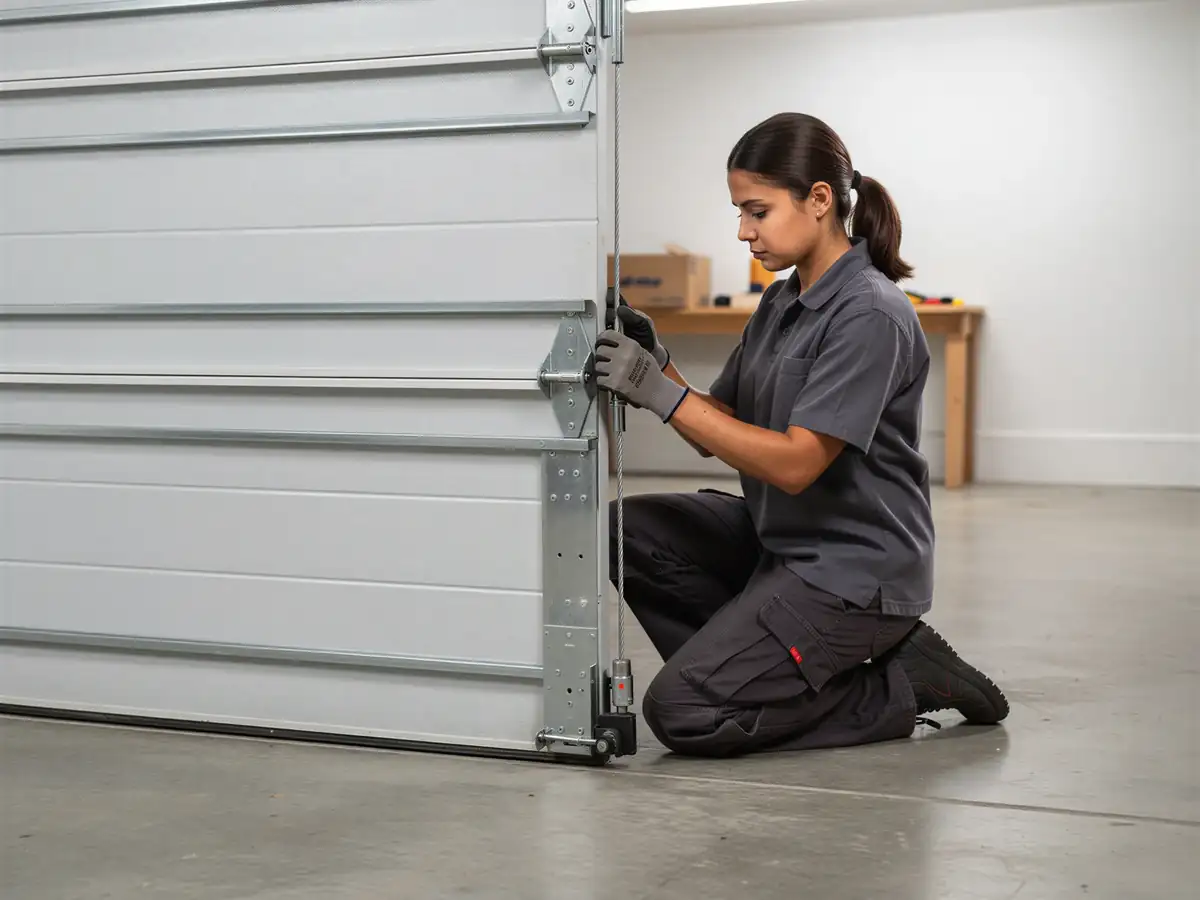
The failure we see most in this area is a cable that's frayed on an original drum because nobody's lubricated or adjusted it since the Reagan administration. By the time a homeowner calls, the door is sitting crooked in the track or won't budge at all. The other common one: a panel that's been fine for decades suddenly racks or won't seat right because the track bracket, original to the build, finally bent under a winter of cold-weather contraction and expansion. Coastal cold snaps aren't severe here, but they're enough to stress hardware that's already past its service life. Where it really goes sideways is when a homeowner tries to force a stuck door with the opener still engaged - that's how you turn a $200 spring job into a bent track and a cracked panel.
What It Costs
We don't post a flat number here because what a Sneads Ferry job costs depends heavily on whether you're dealing with original 1980s hardware or a door that's already been updated. Original-era jobs tend to run higher because more parts need replacing at once - springs, cables, and sometimes rollers together, rather than one component in isolation. We'll give you a number on-site once we've opened the door up, not before.
The DIY Question
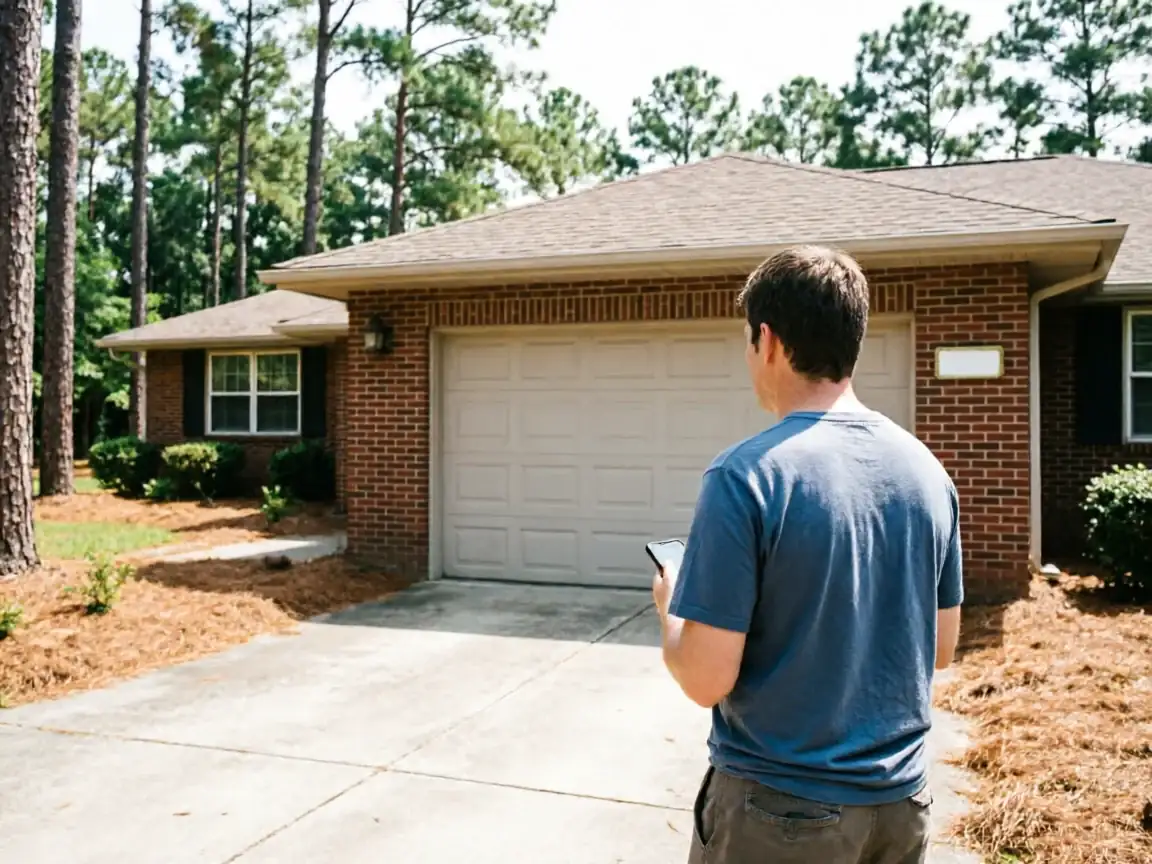
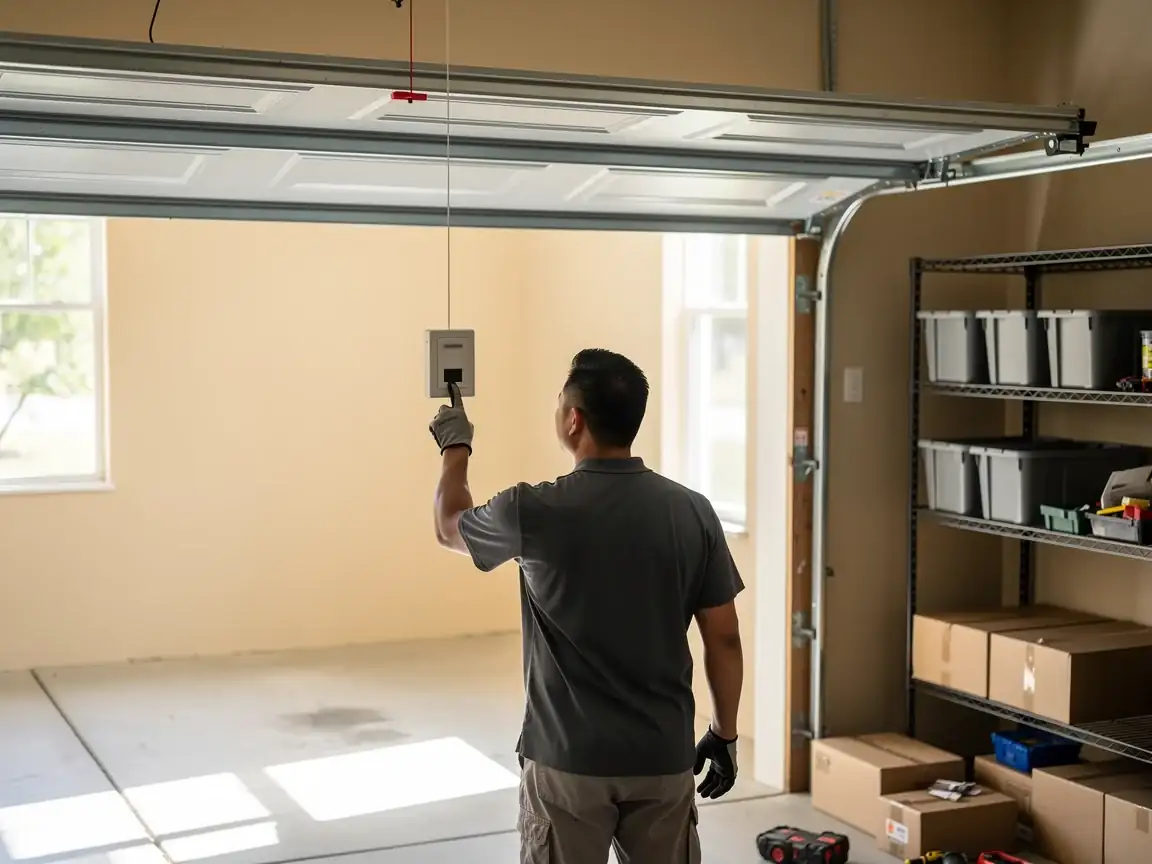
Springs are not a DIY repair, full stop, regardless of how old your door is. What a homeowner can reasonably check before calling: whether the tracks are visibly bent, whether the door is noticeably off-level when it's down, and whether the opener's safety sensors have anything blocking them. If your garage went up with the house around 1987 and you've never had the springs serviced, that's worth a call even if nothing's broken yet - original hardware at that age is closer to the end of its life than the middle, and a scheduled spring swap costs less than an emergency one.