Parts We Carry
Sneads Ferry's houses went up around 1987 on average
A few years ahead of the 1993 median you'd find across the rest of the Jacksonville service territory. That gap matters on an opener call. A house from the mid-80s is more likely to still have its original chain-drive unit, or a first replacement from the 90s, rather than the belt-drive, Wi-Fi-paired units going into newer construction closer to Jacksonville itself.
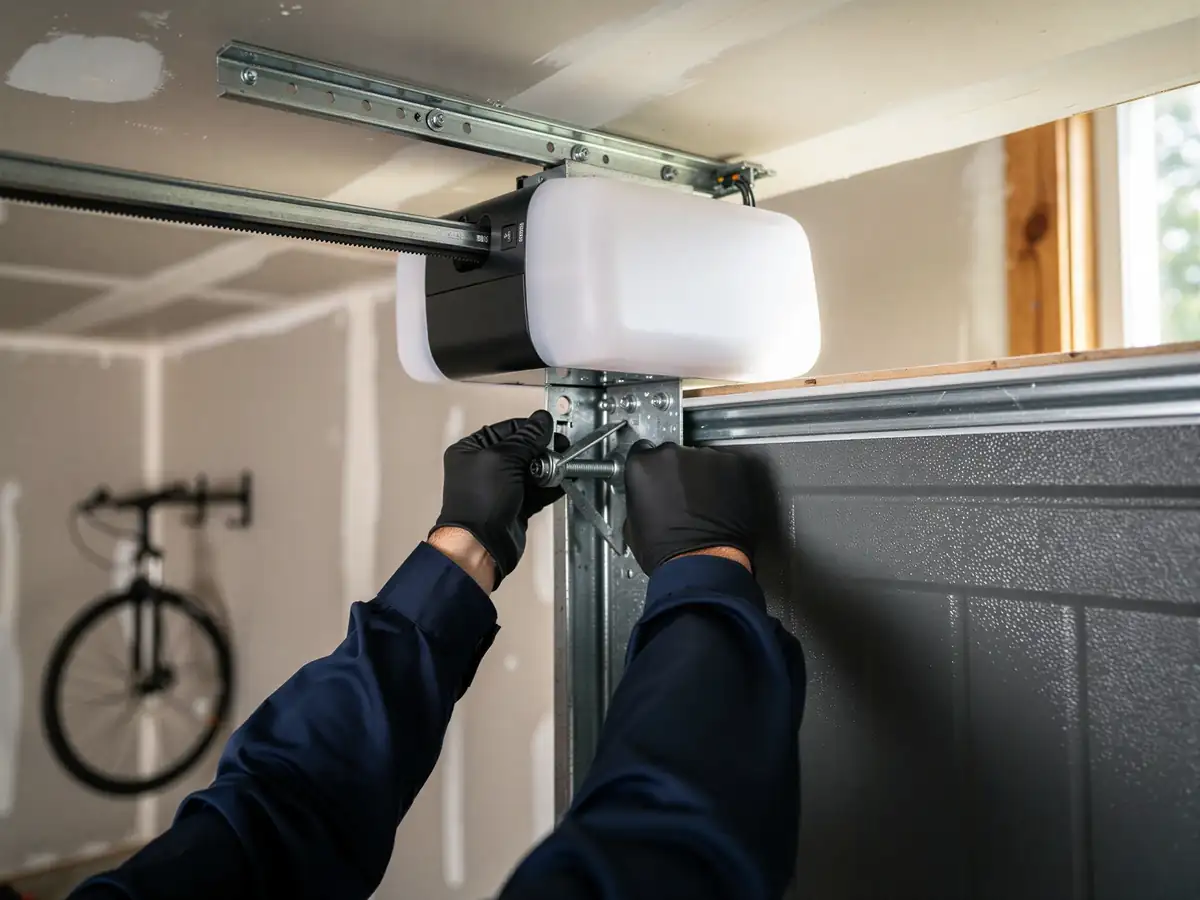
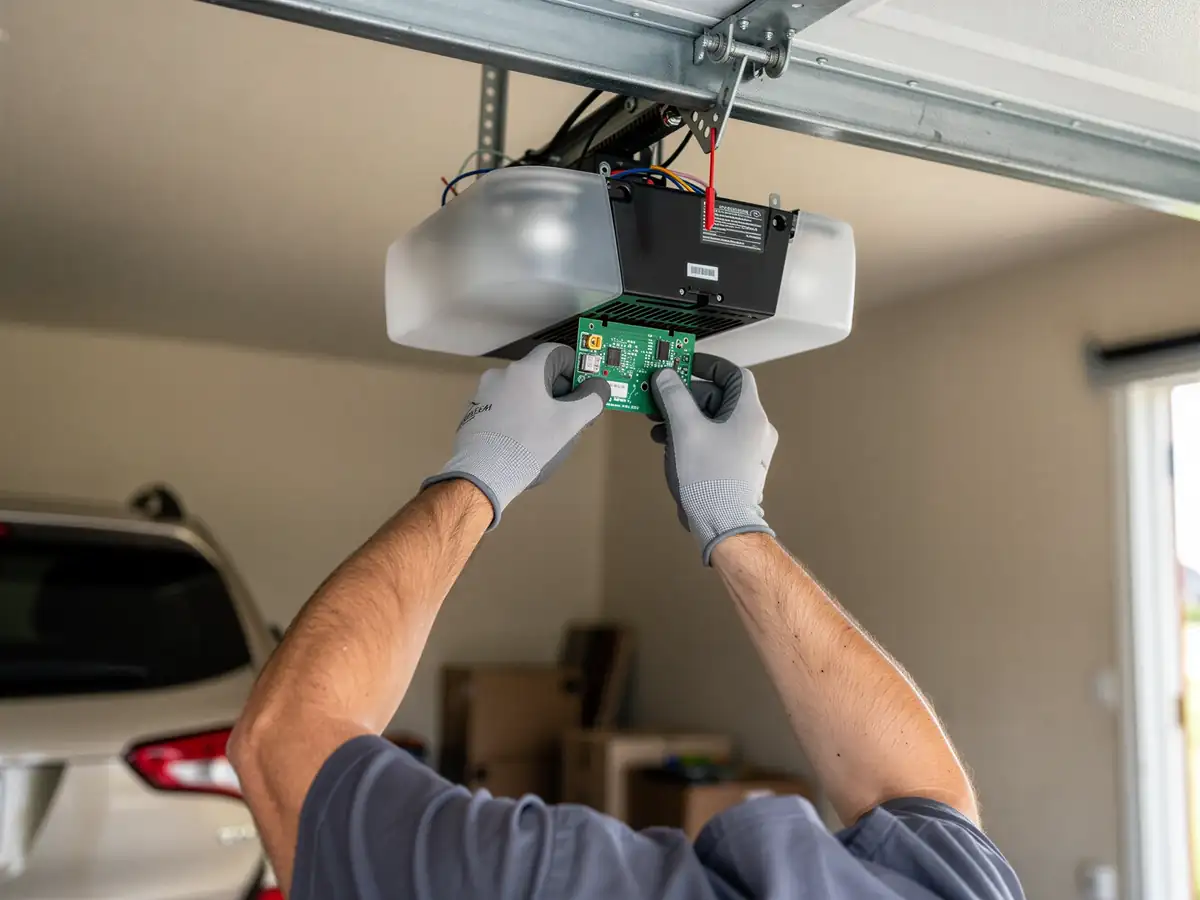
We carry logic boards for the chain and screw-drive openers that era of house tends to run, plus the sensor eyes, drive gears, and limit switches that wear out on units that old
What we don't stock is every discontinued board from every opener brand ever sold - if your unit is old enough that the manufacturer has stopped making the board entirely, we'll tell you that on site rather than string out a part order that goes nowhere. Sometimes the honest answer is a new opener, not a patched one.
Remotes and keypads are the easy swap regardless of the unit's age
The board and the drive gear are where the house's build year actually decides the job.
Time on the Job
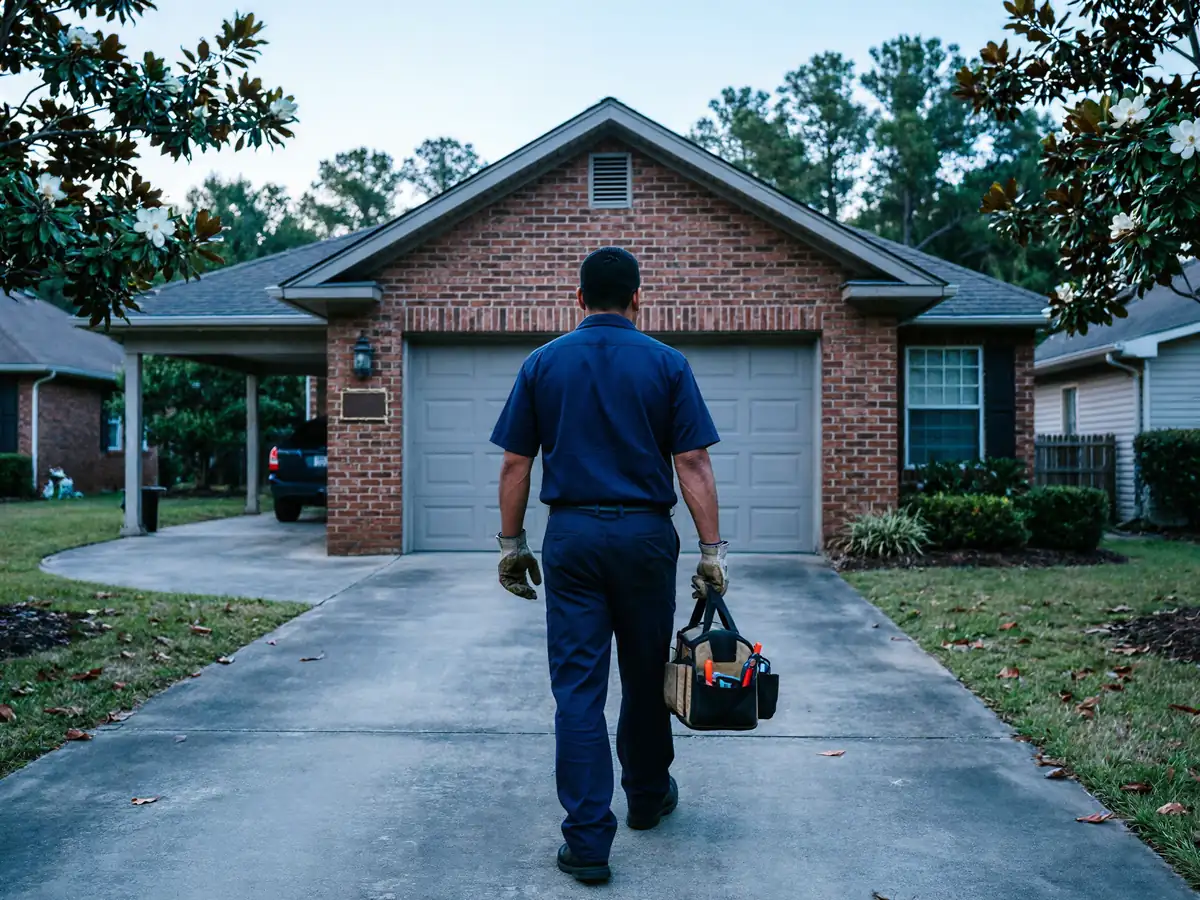
The drive out to Sneads Ferry from Jacksonville runs about 12 miles, and that's built into how we schedule the call - it's not a same-block job, so we batch it with other work in the area when we can. Once the truck's in the driveway, the opener work itself is usually the faster half of the visit; diagnosing which part failed takes longer than swapping it.
On a chain-drive unit from the late 80s or 90s, a board or gear swap is typically a one-visit fix. Where it stretches to a second visit is when the part isn't something we carry on the truck - an obsolete board for a unit that old sometimes has to be ordered, and lead time on parts for discontinued models is outside our control. We'll tell you up front if that's the situation rather than let you assume it's a same-day fix.
We don't advertise a fixed response window for Sneads Ferry specifically, since the call has to come from Jacksonville. What we can say is that the 12-mile trip is a known, fixed distance, not a variable one - it doesn't change with traffic patterns the way a longer haul might.
Where This Job Goes Sideways
The thing that turns a simple opener call into a longer one out here is age stacking on age. A house built around 1987 with its original opener means the board, the gears, and the wiring have all been in service three to four decades. When one part fails, the others are often close behind - we've opened up units where the board is dead and the drive gear is already stripped, just from decades of use.
The region sits in a cold-moderate climate band, which over a long service life means condensation cycles inside the opener housing. On an older board, that kind of slow moisture exposure corrodes contacts and connectors in ways that don't show up until the unit won't respond to the remote at all. It's not a dramatic failure, just a quiet one.
The other place this goes sideways: homeowners assume a dead opener means a dead door. Usually it doesn't. The springs and track can be fine while the opener's board has simply given out. Diagnosing which system actually failed is the first ten minutes of the call, before any part gets touched.
What the Repair Takes
We start by running the opener through its cycle and watching what it actually does
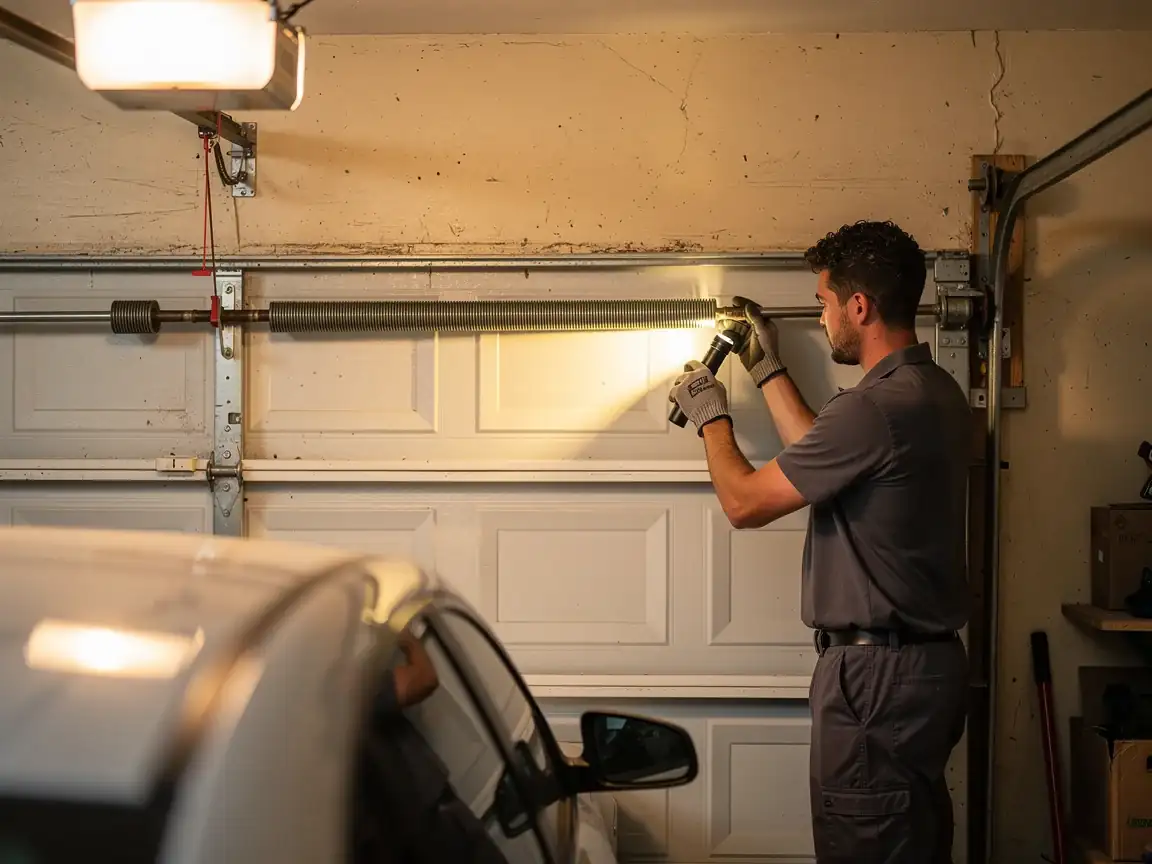
Does it hum and not move, move partway and reverse, or do nothing at all. Each of those points to a different part: a humming motor with no travel usually means a capacitor or gear; a reversal mid-cycle points to the safety sensors or the travel limit settings; total silence points to the board or the wiring feeding it.
On the chain and screw-drive units common to houses from this build era
We test the logic board's output directly rather than guessing from symptoms alone. If the board's bad, it gets swapped and the travel limits and force settings get reset from scratch - an old board holding settings that drift over time is a common, unglamorous cause of door reversal. If the drive gear's stripped, that's a physical swap, not an electrical one, and it's usually the simpler fix.
Safety sensors get checked and realigned every visit regardless of what else failed
Since on a unit this old the sensor brackets have often shifted slightly over the years without anyone noticing.
What It Costs
We're not going to put a number here that doesn't match what shows up on your invoice, so we won't invent one. What we can tell you is how the cost splits: a board swap or sensor realignment on an existing opener is a fraction of the cost of replacing the whole unit, and on a chain-drive opener from the late 80s or 90s, the parts themselves are usually not expensive - the labor and the drive out account for most of the bill.
Where the cost jumps is when the board is discontinued and there's no direct replacement, which pushes the job toward a full opener swap instead of a repair. That's not us upselling; it's that a part that isn't manufactured anymore can't be ordered at any price.
Sneads Ferry's median household income sits under the wider Jacksonville-area figure, and we mention that only because it's part of why we'd rather tell you plainly when a repair isn't worth it against a replacement, instead of running up a bill on a board that's going to fail again in a year anyway.
The DIY Question
Some of this is genuinely fine to do yourself. Reprogramming a remote, replacing the battery in a keypad, cleaning dust off the sensor eyes so they see each other again - none of that needs a truck.
What's not a good weekend project is anything involving the logic board or the wiring behind it. Openers carry household current and a capacitor that holds charge after it's unplugged, and on a unit built in the late 80s the wiring insulation is old enough that it doesn't always behave the way a wiring diagram from a newer manual suggests it will. If the door reverses unexpectedly or won't respond at all, that's a sensor or board issue, and it's also the kind of fault where guessing wrong means a door that drops on something it shouldn't.
Our honest limit: we don't travel out for a five-minute remote reprogram on its own - it's not worth the 12-mile trip for either of us. That one's worth trying yourself first.