Parts We Carry
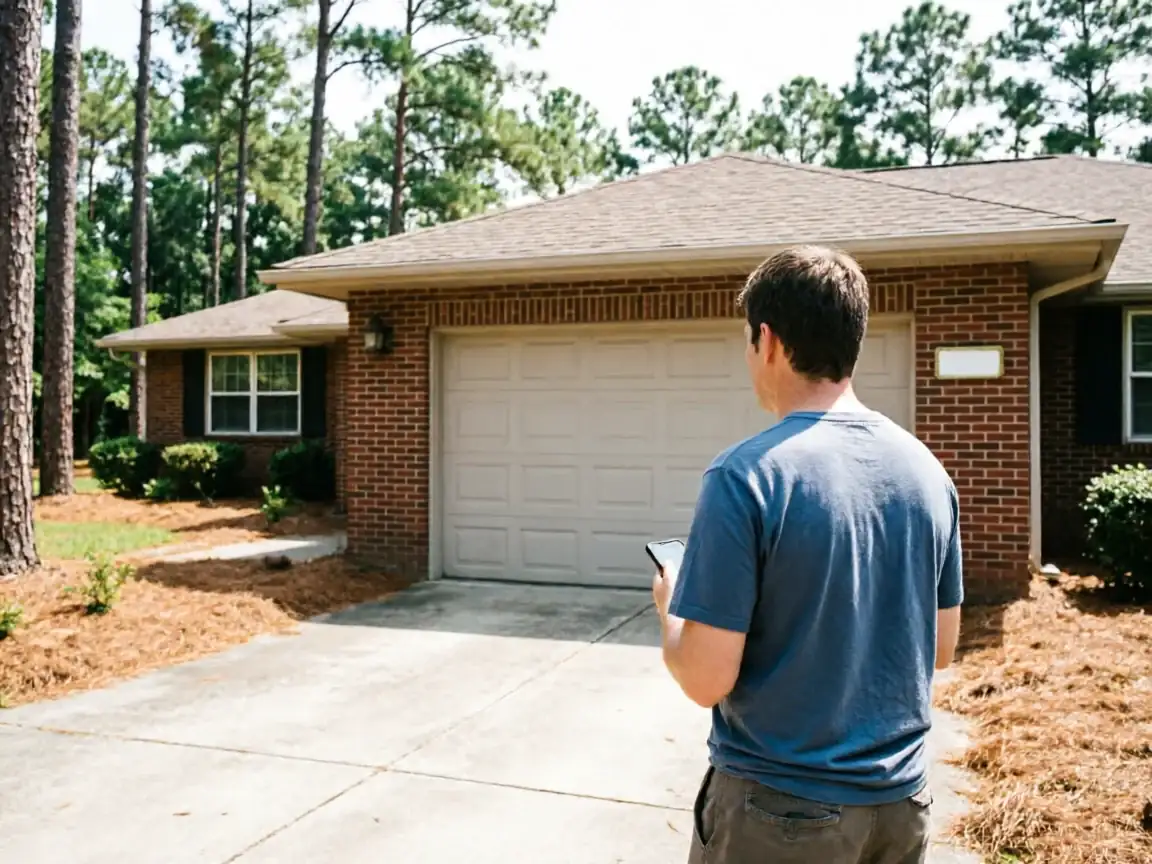
Most garages in Sneads Ferry sit on houses built around 1987
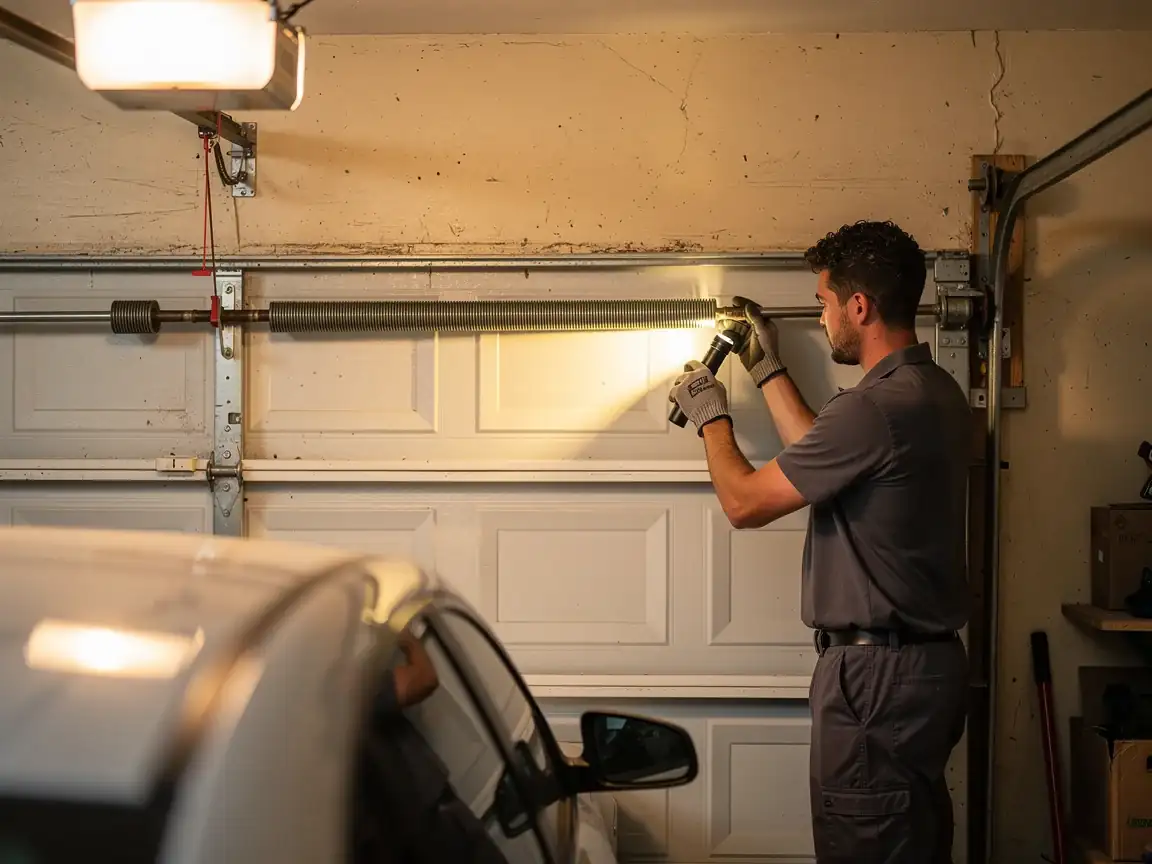
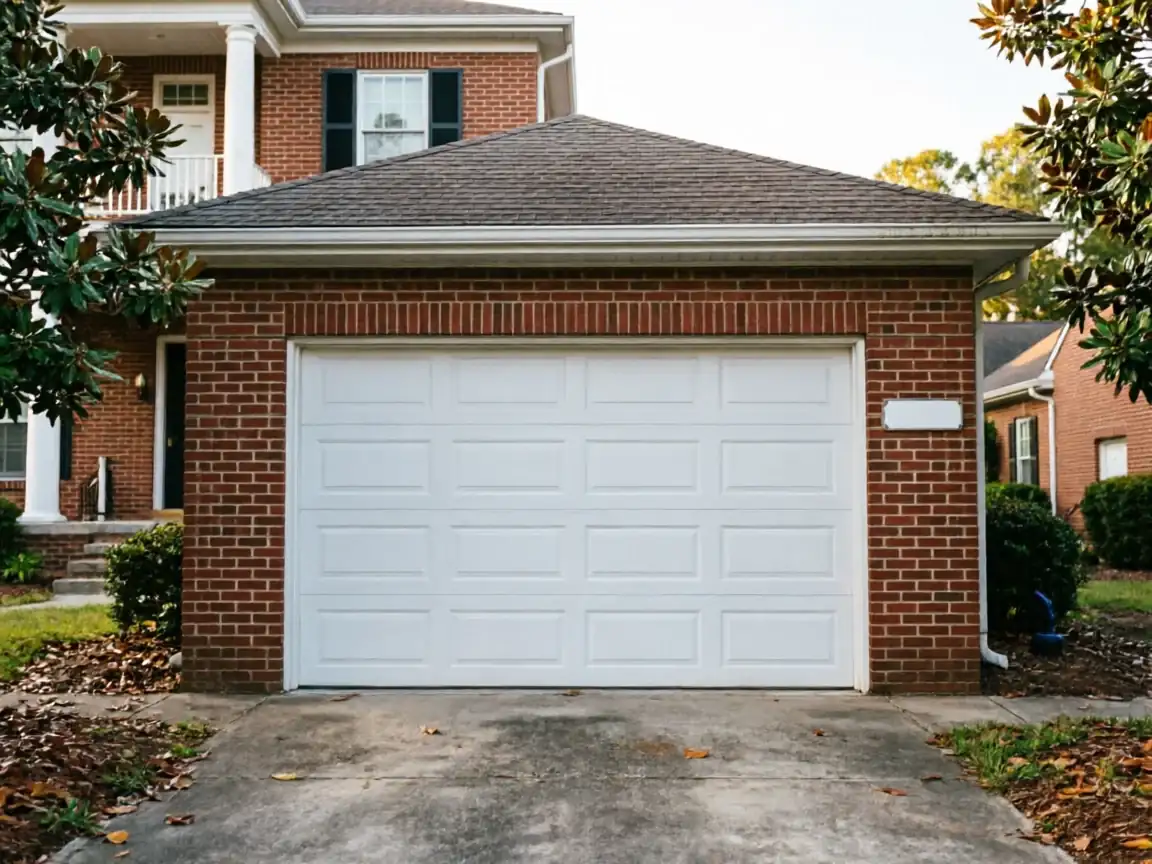
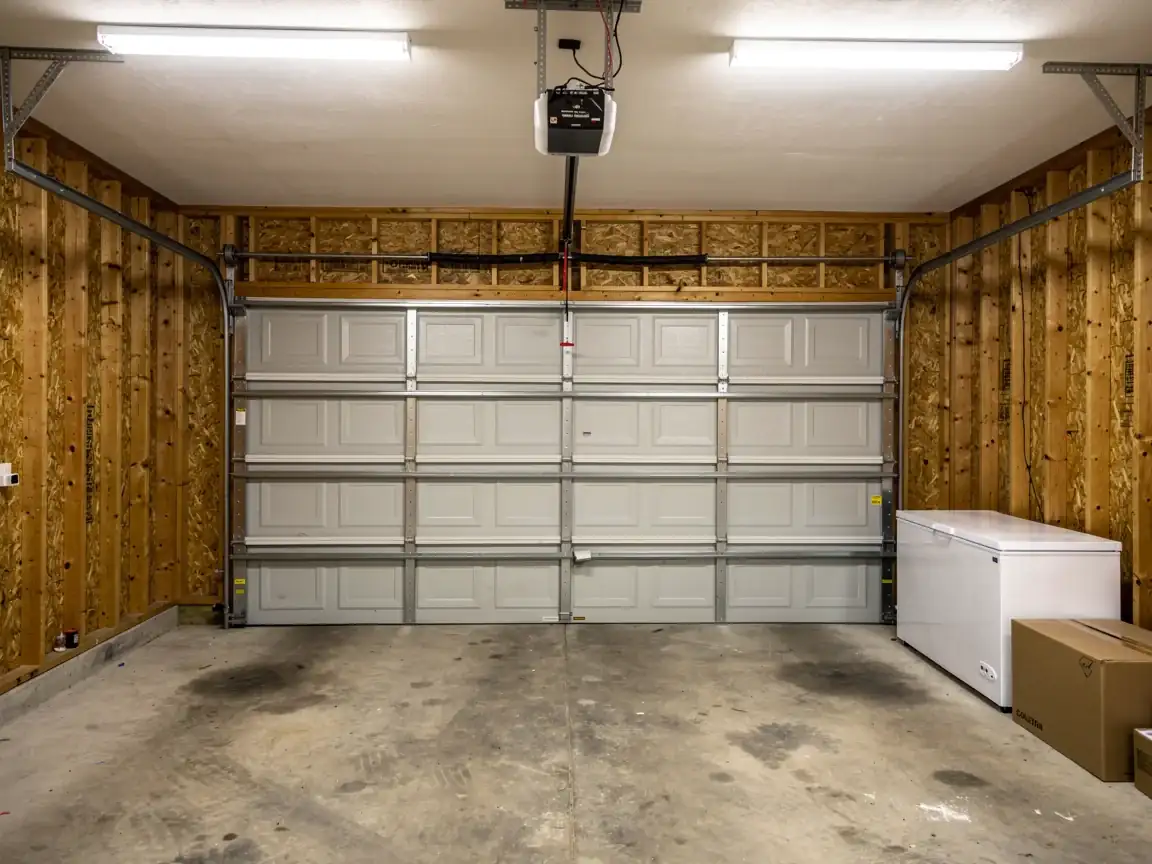
A few years ahead of the broader service area's 1993 median - which means a lot of what we pull off these openings is the same kind of door: a 16x7 or 9x7 steel sectional, single layer, no foam core, hung on an overhead extension spring setup rather than a torsion bar. Extension springs were still common builder-grade hardware into the late 80s before torsion systems became the default, so that's what we're usually replacing, not just the door itself.
What we carry to swap it out
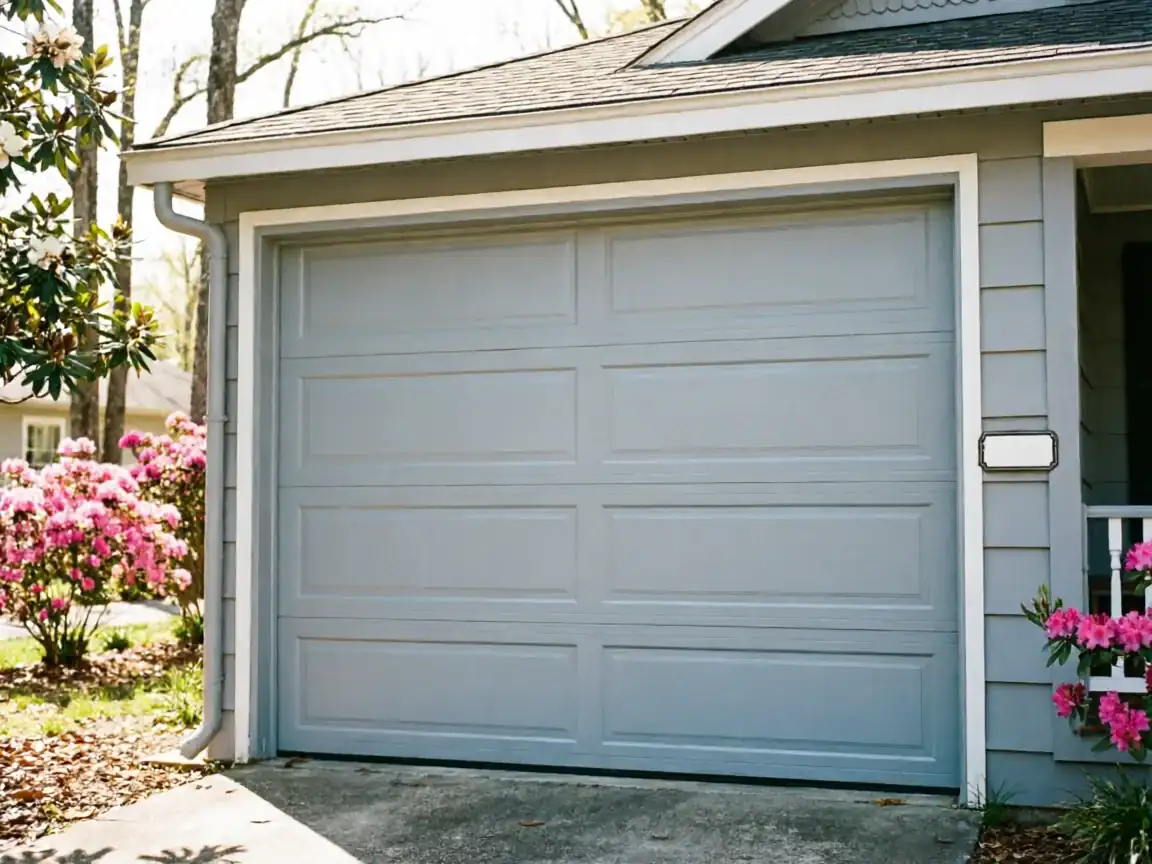
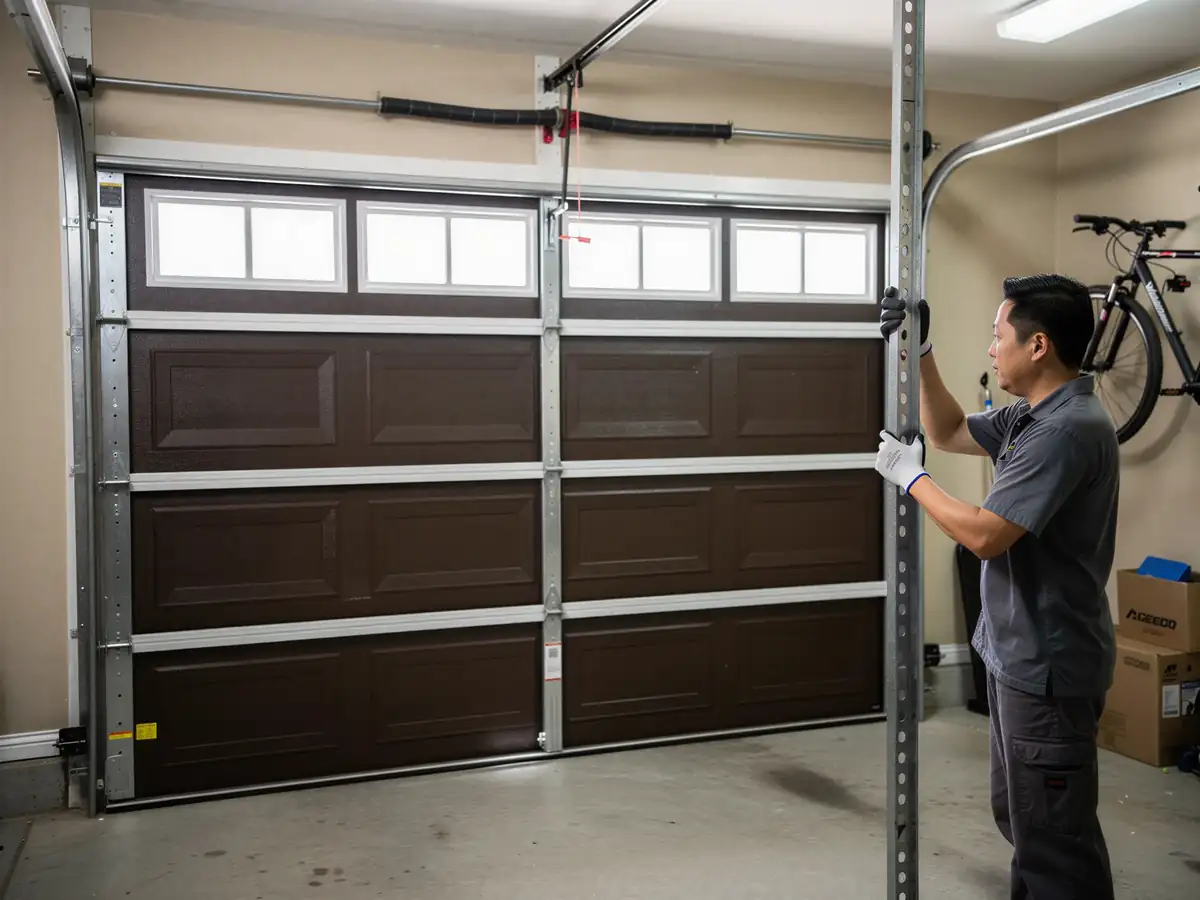
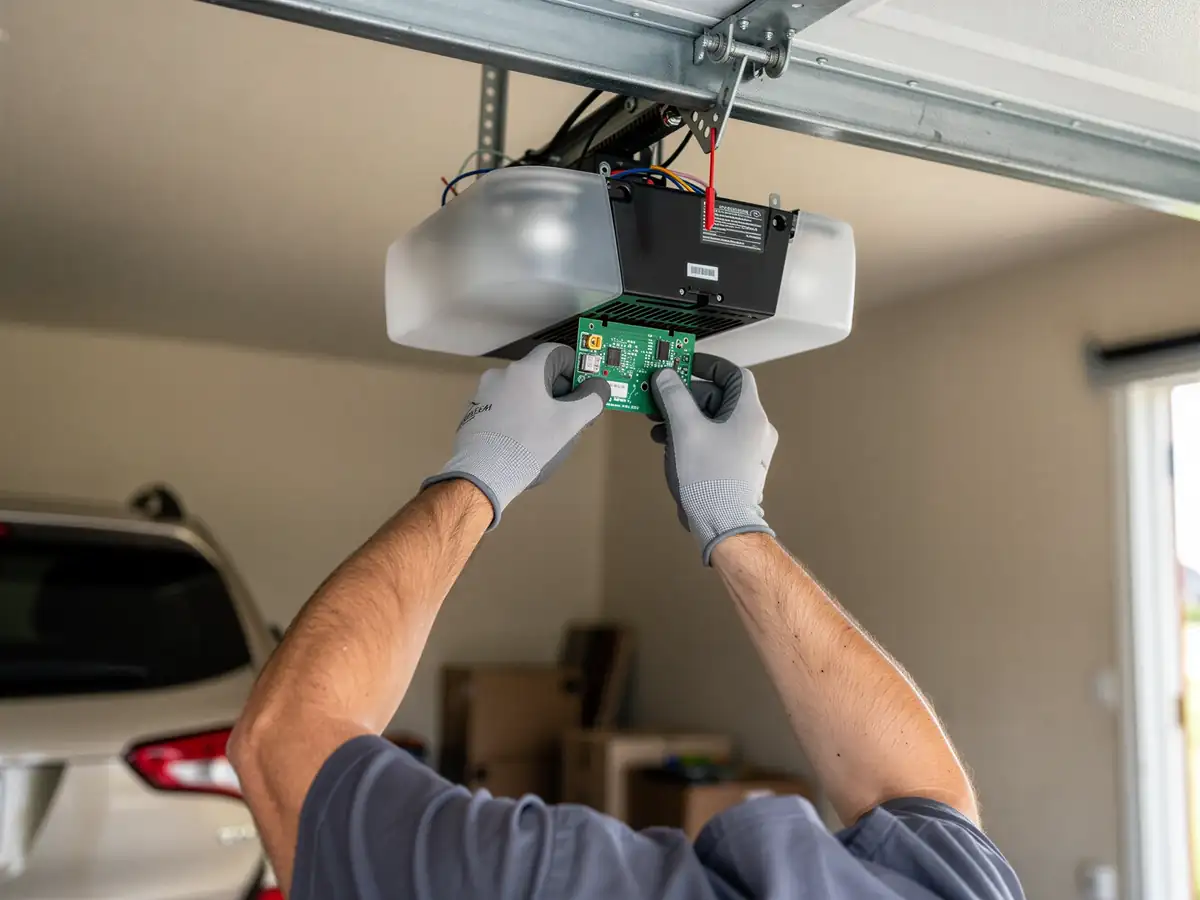
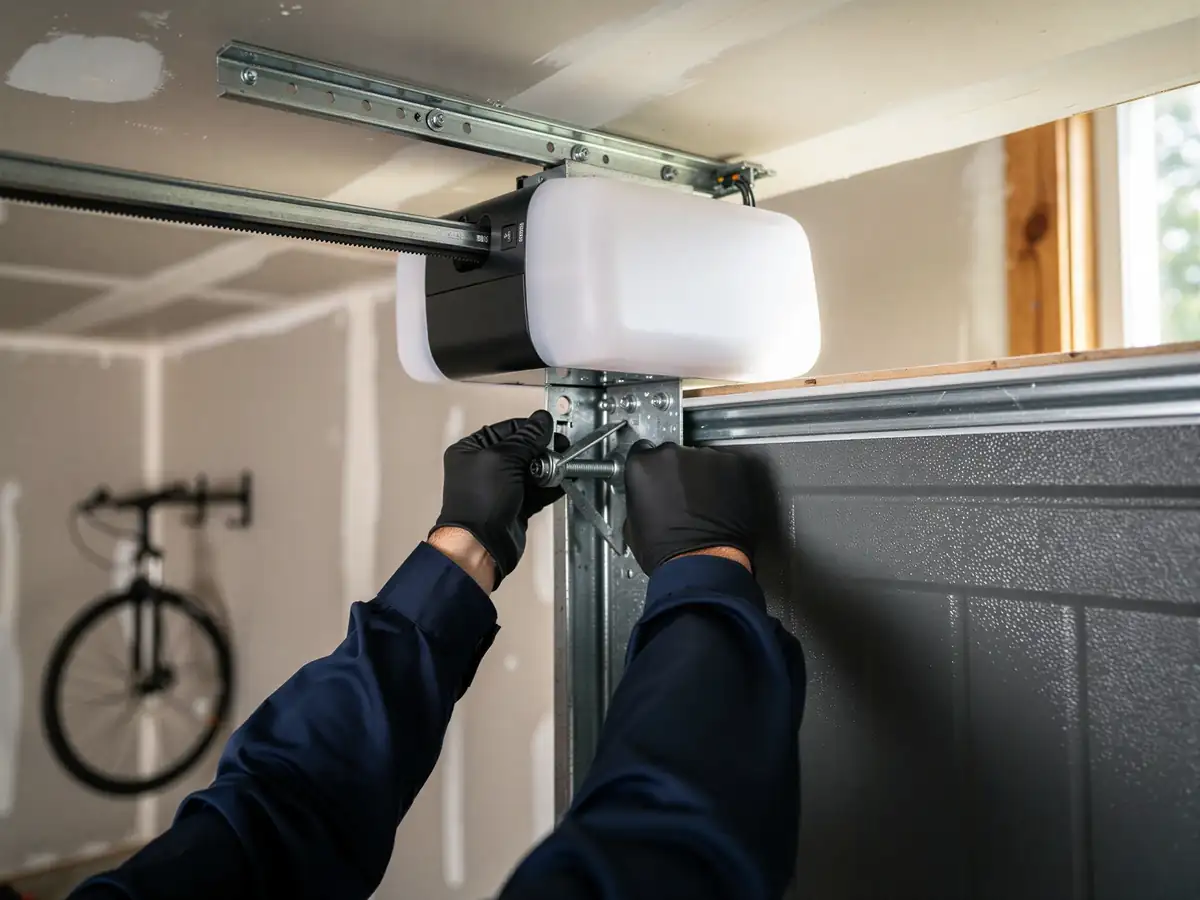
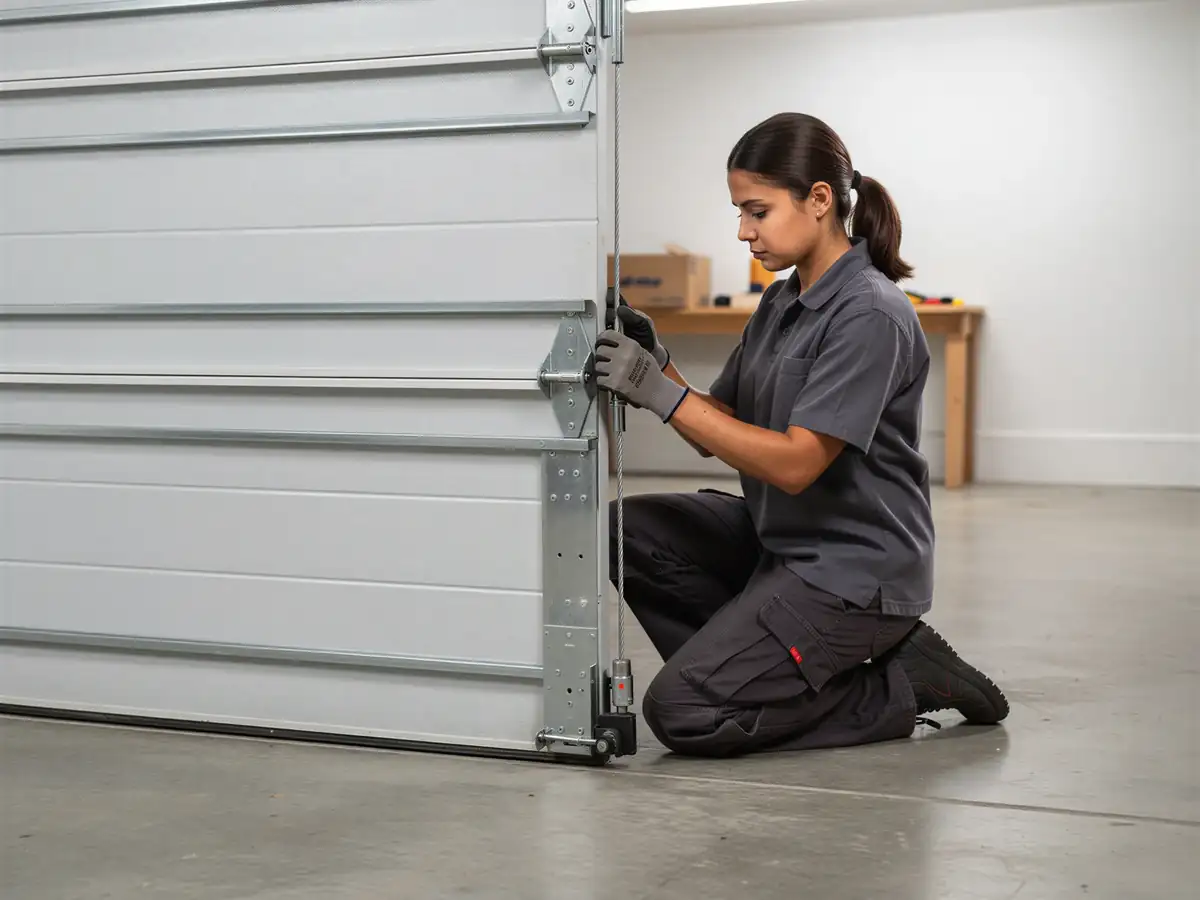
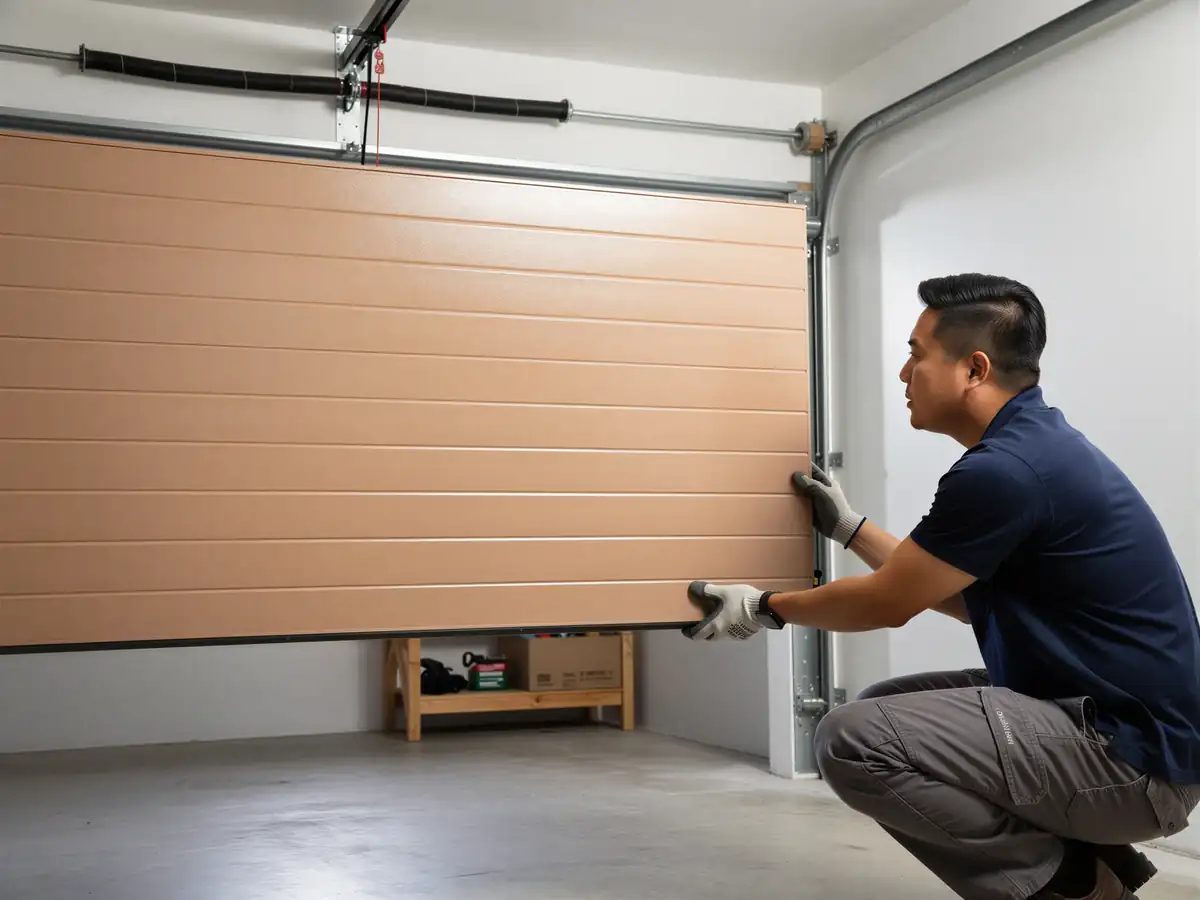
Insulated steel sections in standard local widths, torsion springs sized to the new door's weight (heavier than the old single-layer panel), new track sections since the originals are almost always bent or pitted by now, nylon rollers, lift cable, and a current belt or chain-drive opener to replace whatever chain unit has been grinding away since the house was new. Given the area's cold-but-moderate climate band, we default to insulated sections here - it's a real comfort difference in a garage that shares a wall with living space, which is common in this housing stock.
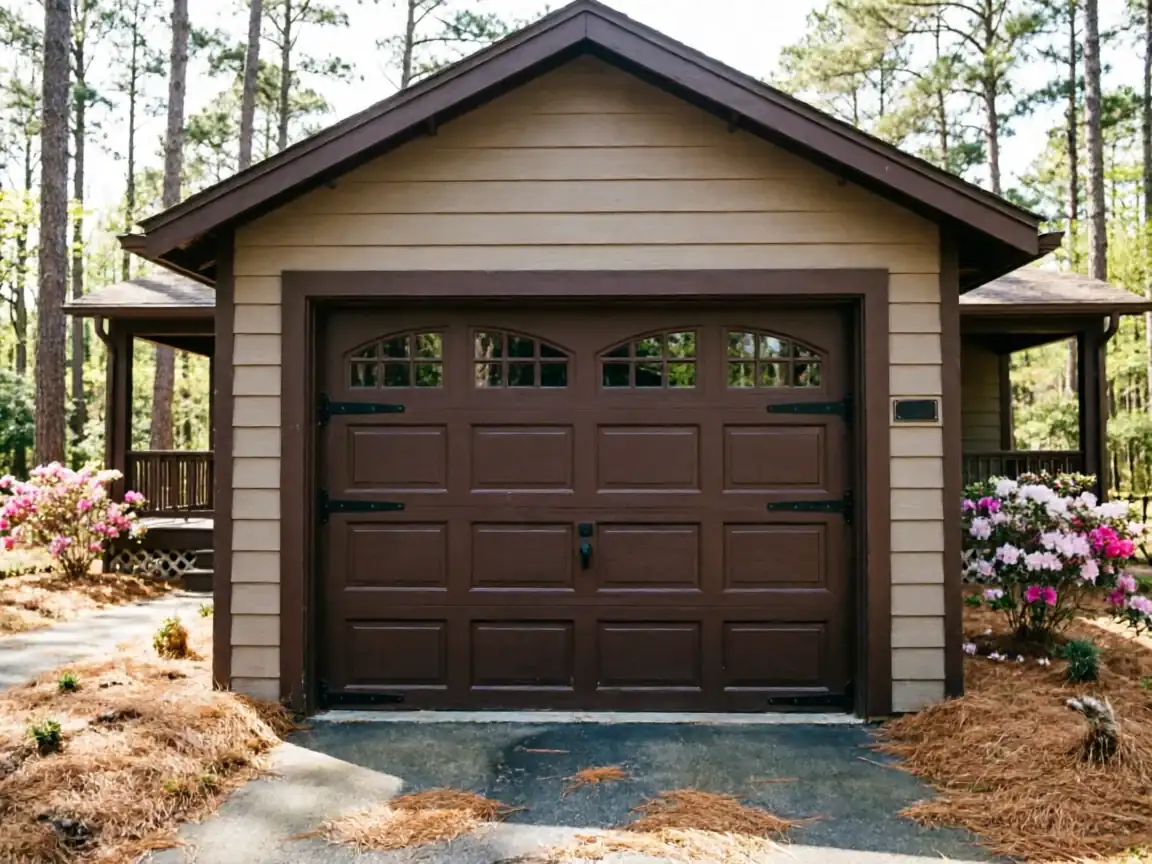
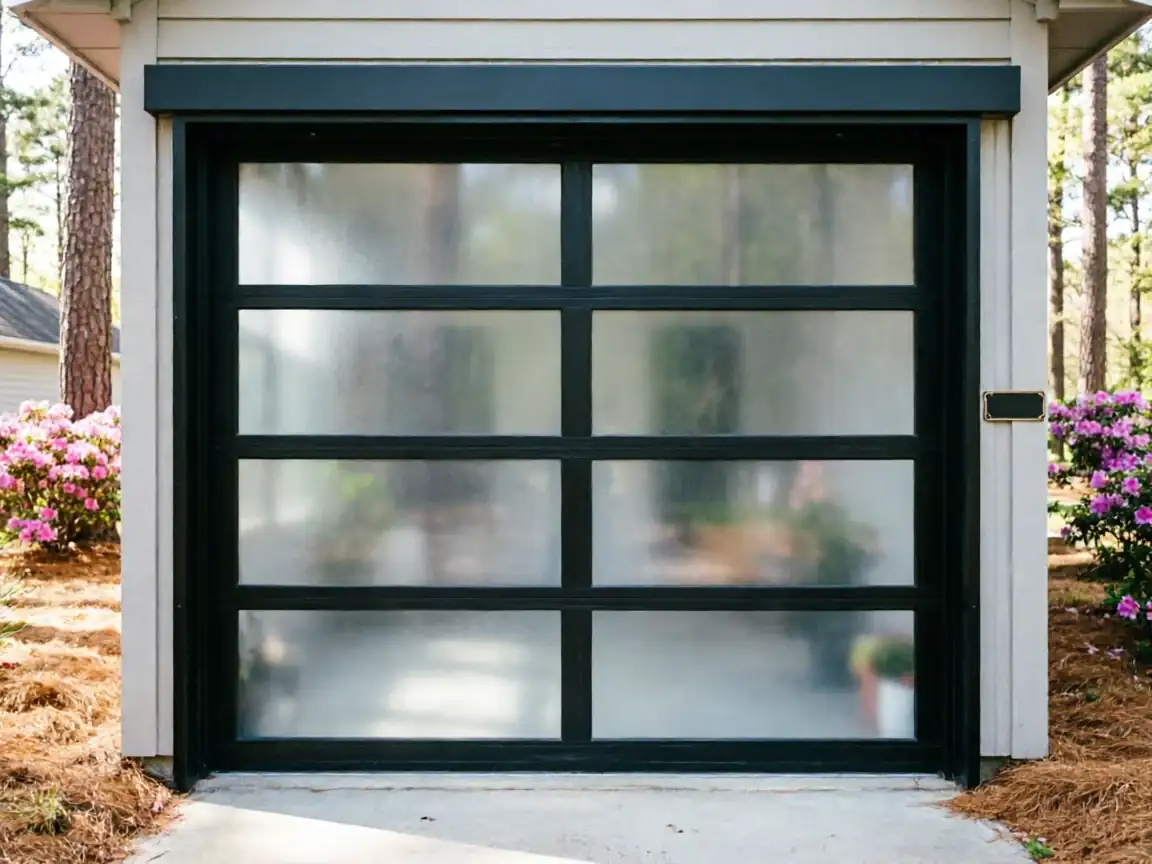
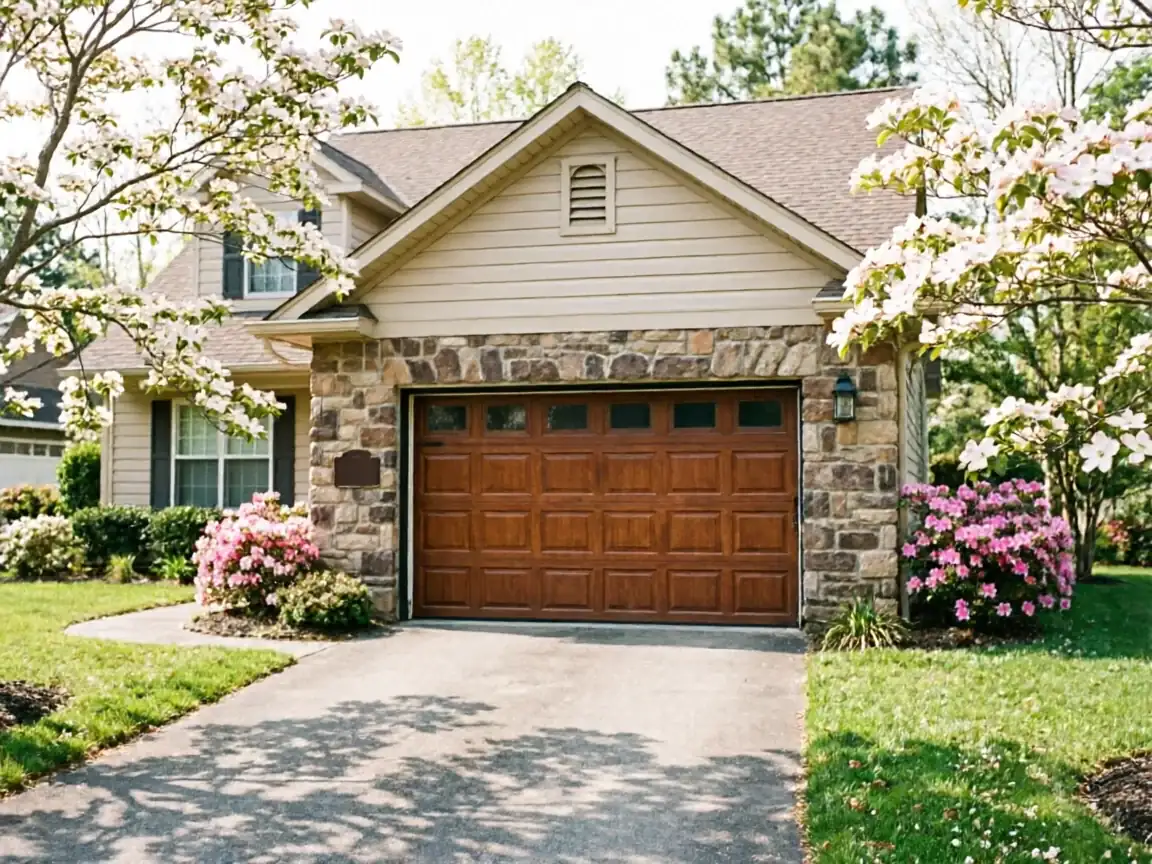
We don't stock specialty glass-panel or carriage-style doors on the truck
Those get special-ordered and quoted separately.
Time on the Job
Sneads Ferry runs about 12 miles from our shop in Jacksonville, and we fold that into the route rather than treat it as a special trip. A straightforward swap - same size opening, no framing surprises - is usually a one-visit job once the door and hardware are on the truck.
What stretches it: if the opening needs shimming because the jamb has shifted over three-plus decades, or if the old extension-spring rail needs to come out entirely to make room for a torsion setup, that's additional time on site, not a second visit. We'd rather tell a homeowner up front that a tricky frame adds an hour than rush it and leave a door that doesn't seat square.
We don't do emergency same-day installs here the way we might for an emergency spring repair - new installation is a planned job, scheduled around when the door's actually in stock.
Where This Job Goes Sideways
The most common surprise on 1980s-built openings in this area is a frame that's settled slightly out of square - not dramatically, but enough that a new door's factory-set track won't sit flush without adjustment. Builders in 1987 weren't working to today's tolerances, and thirty-plus years of ground movement does the rest.
Second most common: a homeowner expects torsion hardware because that's what's standard now, and finds extension springs mounted along the horizontal track instead. Swapping to torsion means relocating the spring assembly to the header above the door, which is a different job than a straight panel swap and takes more time.
Third: the dedicated outlet for the opener is often original to the house and not on a GFCI circuit, which code now calls for in a garage. We'll flag that rather than wire around it - that part may need an electrician before we hang the new opener.
What the Repair Takes
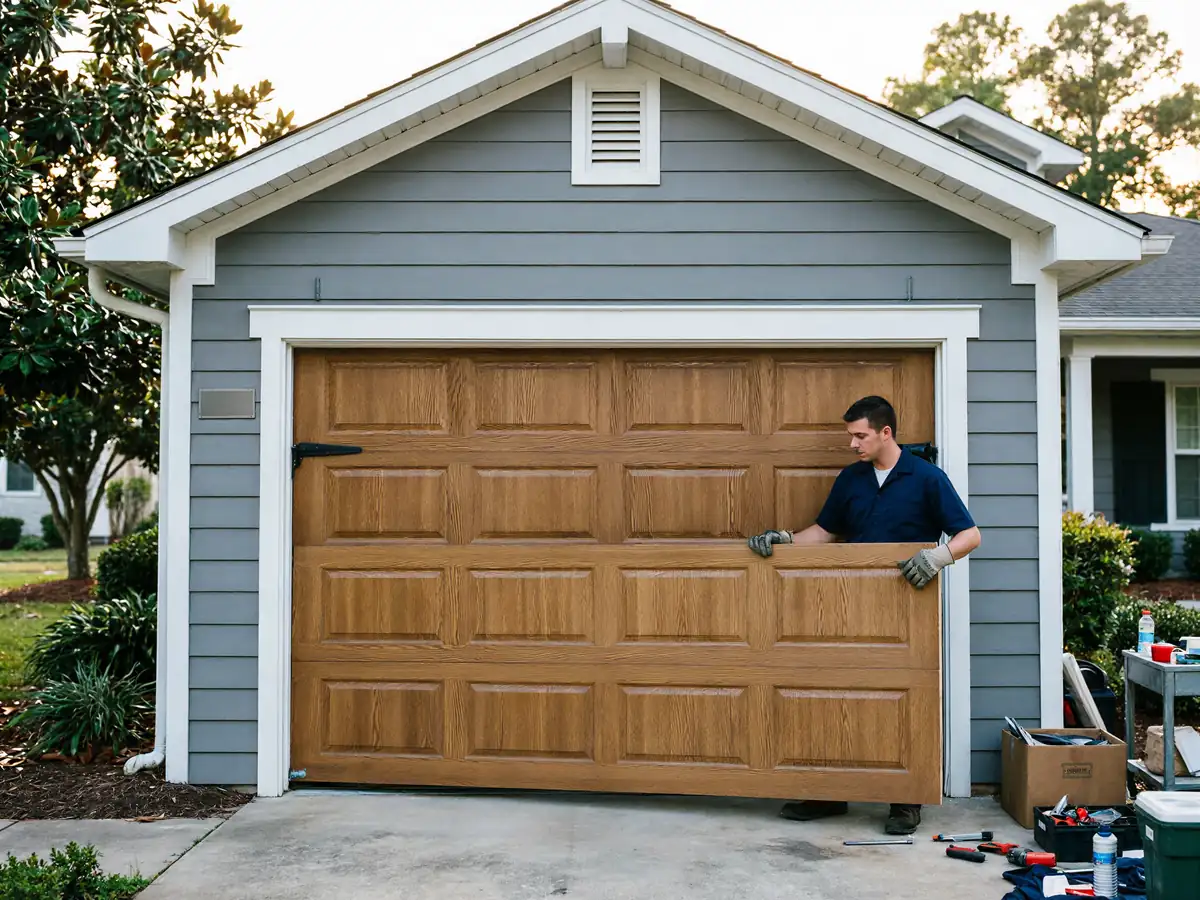
Install starts with pulling the old door and all the hardware tied to it
Track, springs, cable, the works. We don't leave the old spring system half-attached behind a new door.
Next we check the opening itself
Jamb square, header strength for the new spring assembly, and whether the slab slopes enough to need a bottom seal adjustment. On houses from this era, at least one of those three usually needs a shim or a bracket swap before the new track goes in.
Then the new track gets set and plumbed, torsion spring installed and tensioned to the door's actual weight (not guessed
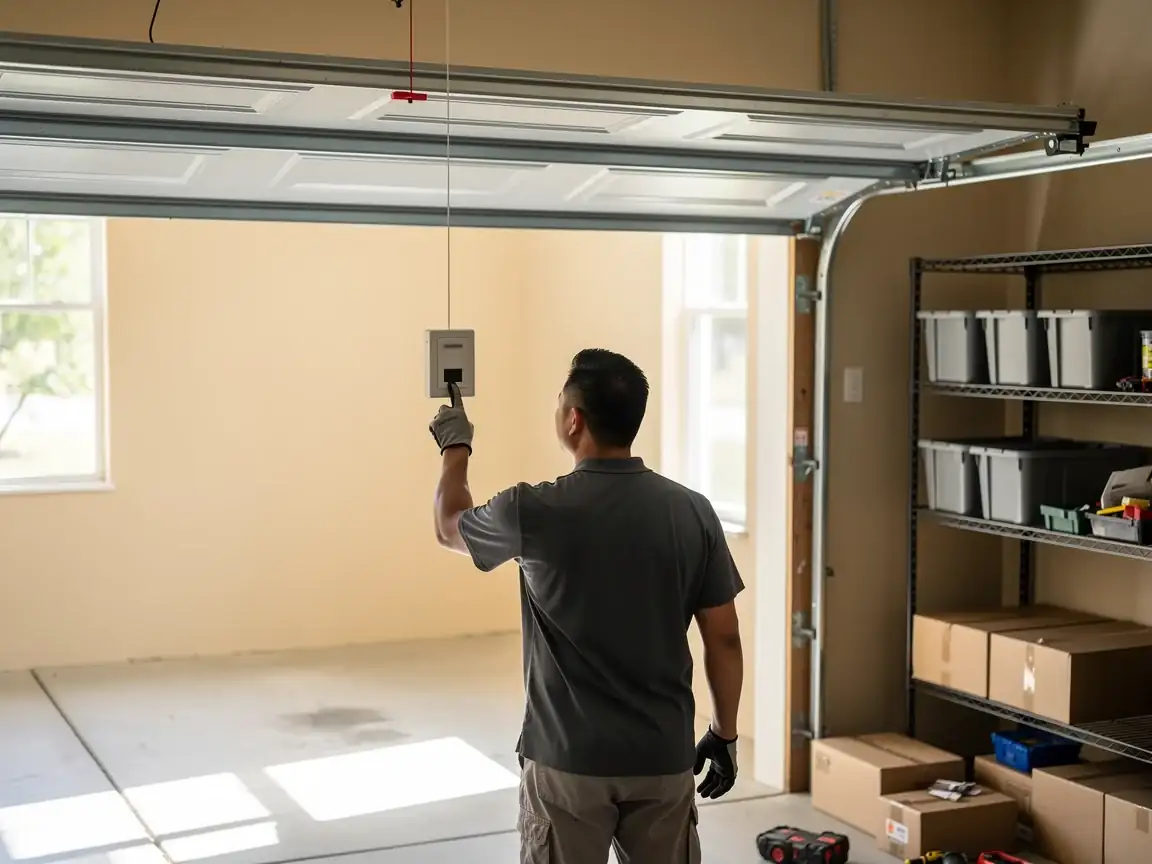
Weighed or calculated from the panel spec), sections stacked and pinned, and the opener mounted and programmed with travel limits and force settings matched to the new door. Last step is a manual balance test: disconnect the opener and the door should hold at waist height on its own. If it doesn't, something's still off, and we don't call the job done until it does.
What It Costs
We're not going to post a number here that doesn't hold up once we've seen the actual opening. Cost on a new install depends on door size, whether you're going insulated or single-layer, torsion versus extension conversion, and opener tier - and those choices vary more than the town does.
What we will say: median household income in Sneads Ferry runs around $59,783, a bit under the wider service area's $65,179, and in practice that shows up less in whether people replace a worn-out door and more in which insulation and opener tier they pick. Mid-range insulated steel with a basic chain-drive opener is the most common order here; full torsion conversions on top of a size change run higher because of the extra labor and header work.
We quote the job in person, after we've seen the opening, not over the phone from a square-footage guess.
The DIY Question
Don't do the spring yourself. A torsion spring on a double door holds enough stored energy to break a wrist or worse if it lets go while you're working on it, and extension springs aren't much gentler. That's the one place we'd push back hard on a homeowner wanting to save the labor cost.
Panel cosmetics, weatherstrip, and tightening loose hinge bolts - fine, those are reasonable DIY territory. But a full new-door install involves resetting the track plumb, tensioning a spring to the correct weight, and programming an opener's force limits correctly so it doesn't crush a hand or a bumper. Get any one of those wrong and the door either won't balance or becomes a hazard.
If what you actually need is a repair on your current door rather than a full replacement - a broken spring, a bent track, a cable that's frayed - that's a different job with a different scope; see our page on garage door repair for Sneads Ferry. And for the install itself, our main installation page out of Jacksonville covers the rest of what we do day to day.